-
Use Cases
-
Resources
-
Pricing
Sep 13, 1916
% complete
Roald Dahl was born in Cardiff, Wales, to Norwegian immigrant parents Harald and Sofie Magdalene Dahl. He was named after the Norwegian polar explorer Roald Amundsen. His birthplace, Villa Marie in Llandaff, would later be commemorated with a blue plaque.
Image source: Roald Dahl
Apr 1920
% complete
Dahl's elder sister Astri died of appendicitis at age seven. Devastated by her death, his father Harald died weeks later of pneumonia, leaving Sofie to raise six children alone.
Sep 1925
% complete
At age eight, Dahl was sent to St Peter's preparatory school in Weston-super-Mare, England. His experiences with strict discipline and harsh corporal punishment there later inspired his depictions of cruel adults in books like Matilda.
Image source: Weston-super-Mare
1929 - 1934
% complete
Dahl attended Repton School as a teenager. The Cadbury chocolate company occasionally sent test boxes of chocolates to students for evaluation, an experience Dahl later cited as inspiration for Charlie and the Chocolate Factory.
Image source: Repton School
1934
% complete
After graduating from Repton, Dahl joined the Shell Petroleum Company, hoping for a career abroad. After training in England, he was posted to Mombasa, Kenya, and then Dar es Salaam, Tanganyika, where he lived a life of adventure.
Image source: Shell plc
Jul 2, 1953
% complete
Dahl married American Academy Award-winning actress Patricia Neal at Trinity Church in New York City. The couple had five children together: Olivia, Tessa, Theo, Ophelia, and Lucy.
Image source: Patricia Neal
Nov 17, 1962
% complete
Dahl's eldest daughter Olivia died at age seven from measles encephalitis. Her death devastated the family and later inspired Dahl to become a passionate advocate for immunization.
Image source: Olivia Dahl
Nov 1939
% complete
Following Britain's declaration of war on Germany, Dahl traveled to Nairobi and enlisted in the Royal Air Force as an aircraftman. He began flight training with other volunteers on Tiger Moth biplanes.
Image source: Royal Air Force
Sep 19, 1940
% complete
While ferrying a Gladiator fighter plane toward Egypt during the North African campaign, Dahl crashed in the Western Desert near Alexandria, Libya, sustaining serious injuries including skull fractures. He spent months recovering in Alexandria before returning to flying duty.
Apr 1941 - Jun 1941
% complete
Dahl flew Hawker Hurricanes in combat over Greece against German aircraft during the Battle of Greece. Despite poor odds and limited experience, he scored several aerial victories before being evacuated as Greece fell.
Image source: German invasion of Greece
1942
% complete
After being declared unfit for further combat flying, Dahl was assigned to the British Embassy in Washington, D.C., as an assistant air attaché, where he promoted British interests and gathered intelligence among high society.
Image source: Embassy of the United Kingdom, Washington, D.C.
Aug 1, 1942
% complete
Dahl's first published short story appeared in The Saturday Evening Post under the title 'Shot Down Over Libya.' Based on his crash landing, it launched his writing career after C.S. Forester encouraged him to write down his wartime experiences.
1943
% complete
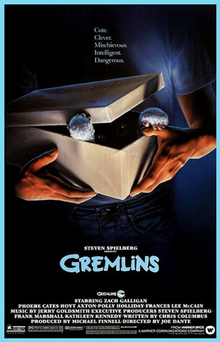
Dahl wrote The Gremlins, about mischievous mythical creatures that sabotaged RAF planes, which Walt Disney planned to adapt into a film. Though the film was never made, the book became Dahl's first foray into children's literature and even entered RAF slang.
Image source: Gremlins
1961
% complete
Dahl published his first successful children's novel, James and the Giant Peach, originally conceived as stories told to his own children. The fantastical tale of an orphaned boy who journeys inside a giant magical peach established Dahl's reputation as a children's author.
Image source: James and the Giant Peach
1964
% complete
Dahl's most famous work, Charlie and the Chocolate Factory, introduced readers to Willy Wonka's extraordinary chocolate factory. Drawing on his schoolboy chocolate-testing memories, the book became an enduring classic translated into dozens of languages.
Image source: Charlie and the Chocolate Factory
1967
% complete
Dahl wrote the screenplay for the fifth James Bond film, You Only Live Twice, starring Sean Connery. A friend of Ian Fleming, Dahl created an almost entirely original script based loosely on Fleming's novel, blending espionage with his signature dark humor.
Image source: You Only Live Twice (film)
1968
% complete
Dahl adapted Ian Fleming's novel into the screenplay for the musical film Chitty Chitty Bang Bang, starring Dick Van Dyke. His contribution added whimsical fantasy elements to the story of a magical flying car.
Image source: Chitty Chitty Bang Bang
1970
% complete
Dahl published Fantastic Mr Fox, the tale of a clever fox who outwits three greedy farmers to save his family and fellow animals. The book was later adapted into a stop-motion film by Wes Anderson in 2009.
Image source: Fantastic Mr Fox
1982
% complete
The BFG, dedicated to Dahl's late daughter Olivia, tells of a gentle giant who catches dreams and befriends orphan Sophie. The book won widespread acclaim and was adapted into animated and live-action films by Steven Spielberg in 2016.
Image source: The BFG
1983
% complete
The Witches, about a boy and his grandmother battling a secret society of child-hating witches, won the Whitbread Award and the World Fantasy Award. It was famously adapted into a 1990 film featuring Anjelica Huston.
Image source: The Witches (novel)
1988
% complete
Matilda, the story of a brilliant little girl with telekinetic powers who outsmarts her tyrannical headmistress Miss Trunchbull, became one of Dahl's most beloved works. It inspired the 1996 film, a celebrated West End and Broadway musical, and a Netflix adaptation.
Image source: Matilda (novel)
1990
% complete
Esio Trot, a whimsical love story between Mr Hoppy and Mrs Silver involving a tortoise and a clever scheme, was Dahl's last published children's book. He completed it shortly before his death the same year.
Image source: Esio Trot
Dec 1960
% complete
Dahl's infant son Theo suffered brain damage when his baby carriage was struck by a taxi. Dahl collaborated with neurosurgeon Kenneth Till and hydraulic engineer Stanley Wade to develop the Wade-Dahl-Till valve, a device that improved treatment for childhood hydrocephalus.
Image source: Wade-Dahl-Till valve
Feb 1965
% complete
Patricia Neal suffered three cerebral aneurysms while pregnant with their daughter Lucy. Dahl took charge of her demanding rehabilitation regimen, and she made a remarkable recovery, returning to acting and winning an Academy Award for Hud.
1983
% complete
After three decades of marriage marked by tragedy, Dahl and Patricia Neal divorced. Dahl soon married Felicity Crosland, whom he had met years earlier, and they remained together until his death.
1984
% complete
Dahl published Boy: Tales of Childhood, recounting his youth in Wales and England, including his schooldays and the chocolate-testing episode at Repton. A sequel, Going Solo, followed in 1986 covering his adult adventures.
Image source: Beautiful Boy: A Father's Journey Through His Son's Addiction
1990
% complete
In his final months, Dahl was diagnosed with myelodysplastic syndrome, a rare blood disorder affecting bone marrow. He faced the illness with characteristic resolve, continuing to work on projects until shortly before his death.
Image source: Myelodysplastic syndrome
Nov 23, 1990
% complete
Roald Dahl died at his home, Gipsy House, in Great Missenden, Buckinghamshire. He was buried according to his wishes with snooker cues, burgundy wine, pencils, and a power saw, overlooking the garden he loved.
1996
% complete
The Roald Dahl Children's Gallery opened in Aylesbury, Buckinghamshire, offering interactive exhibits based on his beloved stories, cementing the county's connection to the author who made it his home for decades.
Image source: Roald Dahl Museum and Story Centre
Sep 13, 2006
% complete
Roald Dahl Day was established to be celebrated every September 13, the author's birthday. Schools, libraries, and fans worldwide mark the occasion with themed events celebrating his stories and characters.
Image source: Roald Dahl
Or browse the full history timeline directory, with more than 2,000 topics.
This History of Roald Dahl timeline was generated with the help of AI, using information found on the internet.
We work hard to keep these timelines accurate, but mistakes do get through. If you spot one, email us at [email protected] and we'll fix it for future visitors.
Generate yours with AI or build it from scratch, for free.
Export your timeline, add your own events, edit or remove AI-generated events, and much more
No credit card required.
Cancel anytime.
Cancel anytime.
You can create an unlimited number of timelines with up to 10 events on each one, customize how they look, export them to PDF, PNG, PowerPoint, CSV, and Excel, and share them with a link. Paid plans raise the event limit and add features like spreadsheet imports and collaborators.
Yes. You can cancel your subscription from your account page at any time, and you will not be charged again. Your subscription stays active for the rest of the period you already paid for.
Yes. We will email you a reminder before the annual renewal, and we will also email you a receipt.
Yes. You can email us within 15 days of any payment, and we will issue you a full refund.
Check out our pricing docs or send us an email anytime: [email protected].