-
Use Cases
-
Resources
-
Pricing
800
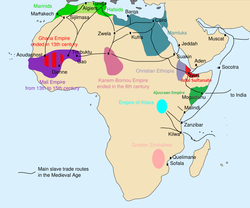
The Ghana Empire, centered further north, extended trade influence toward the Senegal River valley, linking the region to trans-Saharan gold and salt trade networks.
Image source: Ghana Empire
800
Takrur emerged as a powerful kingdom along the Senegal River, becoming one of the earliest centralized states in the region and a hub for trade and Islamic scholarship.
Image source: Takrur
1350
The Jolof Empire unified several Wolof kingdoms in what is now Senegal, dominating the region politically and economically for over two centuries.
1549
After the Battle of Danki, the vassal kingdom of Kajoor broke away, initiating the fragmentation of the Jolof Empire into independent Wolof states.
Image source: Jolof Empire
1444
Portuguese navigators reached the Senegalese coast in the mid-15th century, establishing early contact with local kingdoms and beginning European involvement in Atlantic trade.
Image source: Senegal
1617
The Dutch purchased Gorée Island from local rulers and built a fortified trading post, which later became a major center in the Atlantic slave trade.
Image source: Gorée
1659
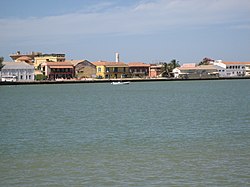
French traders established Saint-Louis on an island at the mouth of the Senegal River, which became the first permanent French colonial settlement in West Africa.
Image source: Saint-Louis, Senegal
1677
France captured Gorée from the Dutch, making it a key French base for commerce and the slave trade along the West African coast.
1700 - 1800
During the 18th century, ports like Gorée and Saint-Louis served as departure points for thousands of enslaved Africans shipped to the Americas, profoundly shaping the region's demography and economy.
Image source: Atlantic slave trade
1758 - 1816
Britain captured French posts including Saint-Louis and Gorée several times during the 18th and early 19th centuries, before France permanently regained control after the Napoleonic Wars.
Image source: History of Senegal
1848
The Second French Republic abolished slavery throughout French colonies, including Senegal, freeing enslaved people in Saint-Louis and Gorée.
Image source: Slavery in Africa
1857
France founded a fort and settlement on the Dakar peninsula, which grew rapidly into the leading port and administrative center of French West Africa.
Image source: Dakar
1859
French forces under Louis Faidherbe defeated the army of Lat Joor, damel of Kajoor, marking a decisive step in French expansion into the interior of Senegal.
Image source: Lat Jor
1872
Saint-Louis, Gorée, Dakar, and Rufisque were granted municipal status, and their inhabitants gradually obtained French citizenship, giving originaires unique political rights in colonial Africa.
Image source: Four Communes
1885 - 1898
Wassoulou emperor Samori Touré waged prolonged resistance against French expansion in the upper Niger and eastern Senegal regions until his capture in 1898.
Image source: Samori Ture
1886
Lat Joor, the celebrated resistance leader and damel of Kajoor, was killed fighting French forces, effectively ending organized Wolof military resistance to colonization.
1895
France created the federation of French West Africa (AOF), with Dakar later becoming its capital, integrating Senegal into a broader colonial administration.
Image source: French West Africa
1914
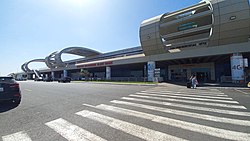
Blaise Diagne became the first Black African elected to the French Chamber of Deputies, representing Senegal and advocating for the rights of the originaires.
Image source: Blaise Diagne International Airport
1924
The railway connecting Dakar to Bamako was completed, transforming regional trade and cementing Dakar's role as the economic gateway of French West Africa.
Image source: Dakar–Niger Railway
Dec 1, 1944
French forces fired on West African tirailleurs at Camp Thiaroye near Dakar who were protesting unpaid wages after returning from World War II, killing dozens and fueling anticolonial sentiment.
Image source: Thiaroye massacre
1930
Senghor, alongside Aimé Césaire and Léon Damas, launched the Négritude literary movement in Paris, celebrating Black identity and culture and influencing anticolonial thought.
Image source: Négritude
Apr 4, 1959
Senegal and French Sudan merged to form the Mali Federation, which gained independence from France in June 1960 as a single state.
Image source: Mali Federation
Aug 20, 1960
Political tensions led Senegal to withdraw from the federation just two months after independence, leaving Senegal and Sudan (renamed Mali) as separate nations.
Sep 5, 1960
Following the federation's collapse, Senegal became an independent republic under President Léopold Sédar Senghor, adopting a constitution blending presidential authority with parliamentary institutions.
Dec 31, 1980
Senghor voluntarily stepped down after two decades in power, handing the presidency to Prime Minister Abdou Diouf in Africa's first peaceful voluntary transfer of power.
Image source: Abdou Diouf
1982 - 2014
Separatists of the MFDC launched a low-intensity insurgency in the Casamance region seeking independence, resulting in decades of intermittent violence before a fragile peace took hold.
Image source: Casamance conflict
Feb 1, 1982 - Sep 30, 1989
Senegal and The Gambia created a loose confederation to coordinate defense and economic policy, but it dissolved in 1989 amid disagreements over integration.
Image source: Senegambia Confederation
Mar 19, 2000
Opposition leader Abdoulaye Wade defeated incumbent Abdou Diouf, marking Senegal's first democratic transfer of power between parties since independence.
Image source: 2000 Senegalese presidential election
Jun 16, 2002 - Jun 21, 2002
Senegal's national football team stunned the world by defeating defending champions France and reaching the quarterfinals in their first World Cup appearance.
Image source: 2002 FIFA World Cup
Apr 3, 2010
President Wade inaugurated the massive bronze statue overlooking Dakar, symbolizing African renewal and commemorating 50 years of independence.
Image source: African Renaissance Monument
Mar 25, 2012
Macky Sall defeated incumbent Abdoulaye Wade in a runoff election, continuing Senegal's tradition of peaceful democratic transitions.
Image source: 2012 Senegalese presidential election
Or browse the full history timeline directory, with more than 2,500 topics.
This History of Senegal timeline was generated with the help of AI, using information found on the internet.
We work hard to keep these timelines accurate, but mistakes do get through. If you spot one, email us at [email protected] and we'll fix it for future visitors.
Generate yours with AI or build it from scratch, for free.
Export your timeline, add your own events, edit or remove AI-generated events, and much more
No credit card required.
Cancel anytime.
Cancel anytime.
You can create an unlimited number of timelines with up to 10 events on each one, customize how they look, export them to PDF, PNG, PowerPoint, CSV, and Excel, and share them with a link. Paid plans raise the event limit and add features like spreadsheet imports and collaborators.
Yes. You can cancel your subscription from your account page at any time, and you will not be charged again. Your subscription stays active for the rest of the period you already paid for.
Yes. We will email you a reminder before the annual renewal, and we will also email you a receipt.
Yes. You can email us within 15 days of any payment, and we will issue you a full refund.
Check out our pricing docs or send us an email anytime: [email protected].