-
Use Cases
-
Resources
-
Pricing
South Carolina's history spans centuries, beginning with Native American inhabitants such as the Cherokee, Catawba, and Yamasee. Founded as an English colony in 1670 with the establishment of Charles Town (Charleston), it grew into a wealthy rice and indigo-producing colony dependent on enslaved labor. South Carolina was a center of colonial resistance, hosting key battles of the Revolutionary War, and in 1860 became the first state to secede from the Union, triggering the Civil War. After Reconstruction, it developed textile manufacturing and, in the 20th century, diversified into tourism and industry, playing a pivotal role in the Civil Rights Movement. More Less
1526
% complete
Spanish explorer Lucas Vázquez de Ayllón attempted to establish the settlement of San Miguel de Gualdape, likely on the coast of present-day South Carolina. The colony, beset by disease, hunger, and internal conflict, failed within months after de Ayllón's death, marking one of the first European settlement attempts in North America.
Image source: San Miguel de Gualdape
Apr 1670
% complete
English colonists established Charles Town at Albemarle Point on the Ashley River, creating the first permanent European settlement in the Province of Carolina. The settlement later moved to the peninsula between the Ashley and Cooper rivers, becoming a major hub of trade and slavery in the American colonies.
Image source: Charleston, South Carolina
1715 - 1717
% complete
The Yamasee War was a conflict between British colonists of South Carolina and various Native American tribes, including the Yamasee, Creek, and Cherokee. The war nearly destroyed the colony but ended with a colonial victory that opened up the interior to further settlement and expanded the deerskin trade.
1729
% complete
In 1729, the Lords Proprietors sold their interests back to the Crown, and Carolina was officially divided into two royal provinces: South Carolina and North Carolina. This reorganization strengthened royal control over the colony's growing economy based on rice, indigo, and enslaved labor.
Image source: Province of South Carolina
Sep 9, 1739
% complete
Near the Stono River, about 20 enslaved Africans led by an enslaved man named Jemmy rebelled against their captors, killing whites and marching toward Spanish Florida seeking freedom. The rebellion was suppressed by militia, resulting in dozens of deaths, and prompted South Carolina to pass harsh new slave codes restricting enslaved people's activities.
Jun 28, 1776
% complete
American forces under Colonel William Moultrie successfully defended Fort Sullivan against a British naval attack, preventing the capture of Charles Town early in the Revolutionary War. The victory boosted patriot morale and inspired elements of the later South Carolina flag.
Image source: Battle of Sullivan's Island
Mar 29, 1780 - May 12, 1780
% complete
British forces under General Henry Clinton besieged Charleston, capturing the city along with thousands of American troops. It was the worst American defeat of the Revolutionary War, and the British then sought to conquer the rest of the Carolinas.
Image source: Siege of Charleston
Oct 7, 1780
% complete
Overmountain men and Patriot militia decisively defeated loyalist forces under Major Patrick Ferguson at Kings Mountain. Thomas Jefferson called it 'the turn of the tide of success,' and the battle disrupted the British southern strategy.
Image source: Battle of Kings Mountain
May 23, 1788
% complete
South Carolina became the eighth state to ratify the United States Constitution, joining the new federal union. Columbia had been designated as the new state capital two years earlier as part of efforts to shift power away from the Lowcountry elite.
Image source: History of South Carolina
1793
% complete
Eli Whitney's invention of the cotton gin made short-staple cotton profitable, revolutionizing agriculture across the South. In South Carolina it entrenched the plantation system and dramatically increased the demand for enslaved labor, shaping the state's economy for decades.
Image source: Cotton gin
1822
% complete
Authorities in Charleston uncovered a planned slave insurrection allegedly organized by Denmark Vesey, a free Black carpenter. Vesey and dozens of alleged co-conspirators were executed, and the scare led white leaders to tighten restrictions on Black residents and eventually build the Citadel to guard against future revolts.
Image source: Denmark Vesey
1832 - 1833
% complete
South Carolina declared the federal tariff laws null and void within its borders, threatening secession. President Andrew Jackson responded with forceful rhetoric and the Force Bill, while Congress passed a compromise tariff, defusing the crisis but setting a precedent for states' rights confrontations leading toward the Civil War.
Image source: Nullification crisis
Dec 20, 1860
% complete
Following Abraham Lincoln's election, South Carolina voted unanimously in a state convention to secede from the Union, citing threats to the institution of slavery. Its action triggered the secession of other Southern states and the formation of the Confederacy.
Image source: Secession in the United States
Apr 12, 1861 - Apr 13, 1861
% complete
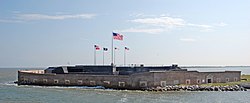
Confederate forces bombarded Fort Sumter in Charleston Harbor, forcing its Union garrison under Major Robert Anderson to surrender. The opening shots of the Civil War galvanized both North and South and began four years of devastating conflict.
Image source: Fort Sumter
Nov 7, 1861
% complete
A Union naval fleet under Samuel F. Du Pont captured Port Royal Sound, giving the North a crucial base for blockading operations along the Southern coast. Planters fled the Sea Islands, leaving thousands of formerly enslaved people who would become central to experiments in freedom and education like the Port Royal Experiment.
Image source: Port-Royal (Acadia)
Feb 1865
% complete
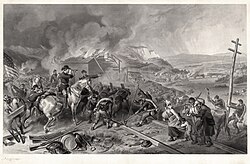
General William T. Sherman's Union army swept north from Savannah through South Carolina, burning much of Columbia on February 17, 1865. The destruction, seen by many as punishment for secession, crippled the state's infrastructure and hastened the Confederacy's collapse.
Image source: Sherman's March to the Sea
Jul 9, 1868
% complete
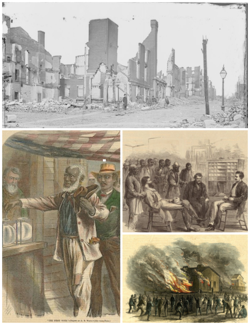
After adopting a new constitution guaranteeing civil rights and establishing public education, South Carolina was readmitted to the Union. During Reconstruction, African Americans gained significant political power, with Black legislators serving in large numbers in the state government.
Image source: Reconstruction era
Jul 8, 1876
% complete
White paramilitary groups led by figures including Matthew Butler attacked Black militiamen in Hamburg, South Carolina, killing several men. The violence exemplified the Red Shirts' campaign of intimidation during the 1876 election, which helped overthrow Reconstruction in the state.
Image source: Hamburg massacre
Dec 1876
% complete
Democrat Wade Hampton III won a bitterly contested and violent gubernatorial election backed by Red Shirt paramilitaries. His inauguration in 1877 marked the end of Republican Reconstruction government in South Carolina and the beginning of decades of Democratic dominance and racial segregation.
Image source: 1876 South Carolina gubernatorial election
1895
% complete
Governor Benjamin Ryan Tillman oversaw a constitutional convention that effectively disenfranchised Black voters through poll taxes and literacy tests. Tillman's agrarian populism and virulent racism shaped state politics for generations, with his statue still standing at the State House.
Aug 31, 1886
% complete
A powerful earthquake estimated at magnitude 7.0 struck near Charleston, killing around 60 people and destroying or damaging thousands of buildings. It remains the most destructive earthquake ever recorded in the eastern United States.
Image source: 1886 Charleston earthquake
1890 - 1920
% complete
South Carolina experienced rapid industrialization as cotton textile mills spread across the Piedmont, drawing poor white farmers into mill villages. Towns like Greenville, Spartanburg, and Anderson grew into manufacturing centers, diversifying the state's economy beyond agriculture.
Apr 1917 - 1918
% complete
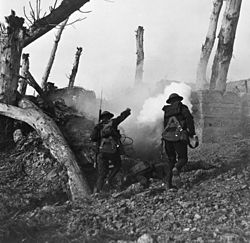
During World War I, South Carolina hosted major training camps such as Camp Jackson (now Fort Jackson) in Columbia and Camp Sevier near Greenville. Hundreds of thousands of soldiers trained in the state, beginning a lasting relationship between South Carolina and the U.S. military.
Image source: United States in World War I
Oct 1919
% complete
Longshoremen and other workers in Charleston launched a series of strikes demanding higher wages and better conditions, involving both Black and white laborers. The strikes reflected broader postwar labor unrest and challenged the racial and economic order of the South.
1947 - 1952
% complete
African American parents in Clarendon County petitioned for school buses for their children, escalating into a federal lawsuit challenging segregated schools. Briggs v. Elliott became one of five cases consolidated into Brown v. Board of Education, making South Carolina central to the fight against educational segregation.
Image source: Briggs v. Elliott
Feb 8, 1968
% complete
Highway patrol officers fired into a crowd of students protesting segregation at a local bowling alley outside South Carolina State College, killing three young men and wounding nearly thirty others. It was the first fatal campus shooting by police at an American university, predating Kent State by over two years.
Image source: Orangeburg Massacre
Sep 22, 1989
% complete
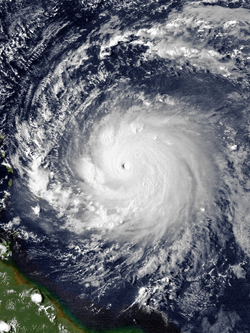
Hurricane Hugo slammed ashore near Sullivan's Island as a Category 4 storm, causing billions of dollars in damage and killing dozens statewide. The disaster devastated Charleston and the Lowcountry and triggered one of the largest recovery efforts in state history.
Image source: Hurricane Hugo
1994
% complete
German automaker BMW opened its first full manufacturing facility in the United States near Greer, South Carolina. The plant catalyzed a wave of foreign investment and transformed the Upstate into an international automotive manufacturing hub.
Image source: BMW in the United States
Jun 17, 2015
% complete
A white supremacist gunman murdered nine Black parishioners during Bible study at Emanuel African Methodist Episcopal Church in Charleston. The tragedy reignited national debates over racism and Confederate symbols, leading South Carolina to remove the Confederate flag from its State House grounds weeks later.
Image source: Charleston church shooting
Jul 10, 2015
% complete
Following bipartisan legislative action after the Emanuel AME Church shooting, the Confederate battle flag was lowered for the final time at the South Carolina State House, where it had flown since 1961. The ceremony marked a symbolic turning point in the state's reckoning with its history.
Image source: South Carolina State House
Or browse the full history timeline directory, with more than 2,000 topics.
This History of South Carolina timeline was generated with the help of AI, using information found on the internet.
We work hard to keep these timelines accurate, but mistakes do get through. If you spot one, email us at [email protected] and we'll fix it for future visitors.
Generate yours with AI or build it from scratch, for free.
Export your timeline, add your own events, edit or remove AI-generated events, and much more
No credit card required.
Cancel anytime.
Cancel anytime.
You can create an unlimited number of timelines with up to 10 events on each one, customize how they look, export them to PDF, PNG, PowerPoint, CSV, and Excel, and share them with a link. Paid plans raise the event limit and add features like spreadsheet imports and collaborators.
Yes. You can cancel your subscription from your account page at any time, and you will not be charged again. Your subscription stays active for the rest of the period you already paid for.
Yes. We will email you a reminder before the annual renewal, and we will also email you a receipt.
Yes. You can email us within 15 days of any payment, and we will issue you a full refund.
Check out our pricing docs or send us an email anytime: [email protected].