-
Use Cases
-
Resources
-
Pricing
North Carolina's history spans thousands of years, beginning with Indigenous peoples such as the Cherokee and Tuscarora. European colonization began in the late 16th century with the ill-fated Roanoke Colony, followed by permanent settlement in the 17th century. The state played pivotal roles in the American Revolution, the Civil War, the Civil Rights Movement, and emerged as a leader in research, banking, and technology in the 20th and 21st centuries. More Less
1585
% complete
The first English colony in the Americas was established on Roanoke Island under Sir Walter Raleigh's sponsorship. The settlement struggled with food shortages and hostile relations, and most colonists returned to England in 1586.
Image source: Roanoke Colony
1590
% complete
When Governor John White returned to Roanoke Island in 1590 after a delay in England, he found the settlement abandoned. The only clue was the word 'CROATOAN' carved into a post, creating one of America's oldest unsolved mysteries.
1663
% complete
King Charles II granted eight loyal noblemen, known as the Lords Proprietors, a vast charter to establish the Province of Carolina, laying the foundation for English colonization of the region.
Image source: Province of Carolina
1705
% complete
Bath was incorporated as North Carolina's first town, located near the mouth of the Pamlico River. It later became an early port and was briefly home to the pirate Blackbeard.
Image source: Bath, North Carolina
Sep 22, 1711 - 1715
% complete
The Tuscarora people attacked colonial settlements along the Neuse and Pamlico Rivers after years of encroachment and mistreatment. The brutal war ended with a decisive colonial victory, devastating the Tuscarora and forcing many to migrate north.
Image source: Tuscarora War
1729
% complete
After the Lords Proprietors sold their interests back to the Crown, North Carolina became a royal colony, distinct from South Carolina, ushering in decades of growth and new immigration from Scotland, Germany, and Ireland.
Image source: Province of North Carolina
May 16, 1771
% complete
Regulators, frontier farmers protesting corrupt colonial officials and excessive taxes, were defeated by royal militia led by Governor William Tryon. Often seen as a precursor to the American Revolution, it exposed deep tensions in the colony.
Image source: Battle of Alamance
May 31, 1775
% complete
Citizens of Mecklenburg County issued resolutions effectively declaring independence from Britain more than a year before the national Declaration of Independence, though historians debate its authenticity and impact.
Image source: Mecklenburg Resolves
Feb 27, 1776
% complete
Patriot forces defeated Loyalists, many of them Scottish Highlanders, near Wilmington, thwarting a British plan to rally Tory support in the South and boosting revolutionary momentum in North Carolina.
Image source: Battle of Moore's Creek Bridge
Apr 12, 1776
% complete
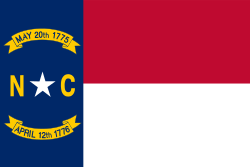
North Carolina's Fourth Provincial Congress authorized its delegates to vote for independence at Halifax, making it the first colony to officially instruct its representatives to support independence from Great Britain.
Image source: Halifax Resolves
1789
% complete
Chartered by the state legislature, the University of North Carolina at Chapel Hill opened in 1795 as the first public university in the United States to enroll students.
Image source: University of North Carolina at Chapel Hill
Nov 21, 1789
% complete
After initially delaying admission due to concerns over federal power and western lands, North Carolina became the twelfth state to join the Union following ratification of the U.S. Constitution.
1796
% complete
Having earlier relinquished claims to its western territories that briefly formed the ill-fated State of Franklin, North Carolina's ceded lands became part of the Southwest Territory and later the new state of Tennessee.
Image source: Southwest Territory
1799 - 1848
% complete
Following the discovery of a 17-pound gold nugget by Conrad Reed in Cabarrus County, North Carolina became the leading gold-producing state until the California Gold Rush. The Charlotte Mint opened in 1838 to process local gold.
Image source: Carolina gold rush
1831
% complete
Nat Turner's uprising in neighboring Virginia sent shockwaves through North Carolina's slaveholding society, prompting harsher slave codes and increased restrictions across the state.
Image source: Nat Turner's slave rebellion
1856
% complete
After years of advocacy by reformer Dorothea Dix, North Carolina opened one of the nation's first psychiatric hospitals in Raleigh, marking a milestone in the humane treatment of mental illness.
Image source: Dorothea Dix Hospital
May 20, 1861
% complete
Reluctant at first, North Carolina seceded only after President Lincoln called for troops to suppress the rebellion, joining the Confederacy. It ultimately supplied more soldiers to the Confederate army than any other state.
Image source: North Carolina in the American Civil War
Jan 13, 1865 - Jan 15, 1865
% complete
Union forces captured Fort Fisher, which had protected the vital blockade-runner port of Wilmington, closing the South's last major supply line and hastening the Confederacy's collapse.
Image source: Second Battle of Fort Fisher
Apr 26, 1865
% complete
General Joseph E. Johnston surrendered nearly 90,000 Confederate troops to General William T. Sherman at Bennett Place near Durham, the largest surrender of the Civil War.
Image source: Bennett Place
Nov 10, 1898
% complete
White supremacists violently overthrew the legally elected biracial government of Wilmington, killing dozens of Black residents and expelling many others, in the only successful coup d'état in U.S. history.
Image source: Wilmington insurrection of 1898
Dec 17, 1903
% complete
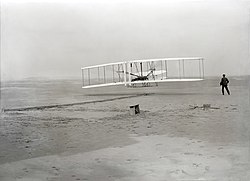
Orville and Wilbur Wright achieved the first sustained, controlled powered airplane flight on the windswept dunes of Kill Devil Hills near Kitty Hawk, forever changing transportation history.
Image source: Wright Flyer
1929 - 1939
% complete
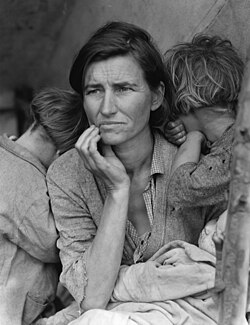
Falling prices for tobacco, cotton, and textiles plunged North Carolina farm families and mill towns into hardship, spurring New Deal programs such as rural electrification and public works projects across the state.
Image source: Great Depression in the United States
Sep 11, 1935 - 1987
% complete
As a New Deal public works project, construction started on the scenic Blue Ridge Parkway, linking Shenandoah and Great Smoky Mountains national parks and becoming one of America's most visited parkways.
Image source: Blue Ridge Parkway
Oct 15, 1954
% complete
One of the deadliest and costliest hurricanes of the season slammed into the North Carolina coast near Calabash, destroying thousands of homes and reshaping coastal development policies.
Image source: Hurricane Hazel
1959
% complete
Established between Raleigh, Durham, and Chapel Hill, Research Triangle Park grew into one of the world's largest research campuses, transforming North Carolina's economy toward technology, pharmaceuticals, and innovation.
Image source: Research Triangle Park
Feb 1, 1960
% complete
Four freshmen from North Carolina A&T State University sat at a segregated Woolworth's lunch counter in Greensboro, sparking a wave of sit-in protests across the South and energizing the civil rights movement.
Image source: Greensboro sit-ins
1980 - 1989
% complete
Spurred by aggressive bank expansion, notably NCNB (later NationsBank and Bank of America) and First Union, Charlotte grew into the second-largest banking center in the United States after New York City.
Image source: Economy of North Carolina
Sep 16, 1999
% complete
Just weeks after Hurricane Dennis saturated eastern North Carolina, Hurricane Floyd dropped record rainfall, causing historic floods that killed dozens and damaged tens of thousands of homes.
Image source: Hurricane Floyd
May 11, 2010
% complete
Charlotte, long the heartland of stock car racing with teams and speedways throughout the region, celebrated its racing heritage with the opening of the NASCAR Hall of Fame in uptown Charlotte.
Image source: NASCAR Hall of Fame
Sep 4, 2012 - Sep 6, 2012
% complete
President Barack Obama accepted his party's nomination for a second term at the Democratic National Convention in Charlotte, spotlighting the city's rise as a major national destination.
Image source: 2012 Democratic National Convention
Or browse the full history timeline directory, with more than 2,000 topics.
This History of North Carolina timeline was generated with the help of AI, using information found on the internet.
We work hard to keep these timelines accurate, but mistakes do get through. If you spot one, email us at [email protected] and we'll fix it for future visitors.
Generate yours with AI or build it from scratch, for free.
Export your timeline, add your own events, edit or remove AI-generated events, and much more
No credit card required.
Cancel anytime.
Cancel anytime.
You can create an unlimited number of timelines with up to 10 events on each one, customize how they look, export them to PDF, PNG, PowerPoint, CSV, and Excel, and share them with a link. Paid plans raise the event limit and add features like spreadsheet imports and collaborators.
Yes. You can cancel your subscription from your account page at any time, and you will not be charged again. Your subscription stays active for the rest of the period you already paid for.
Yes. We will email you a reminder before the annual renewal, and we will also email you a receipt.
Yes. You can email us within 15 days of any payment, and we will issue you a full refund.
Check out our pricing docs or send us an email anytime: [email protected].