-
Use Cases
-
Resources
-
Pricing
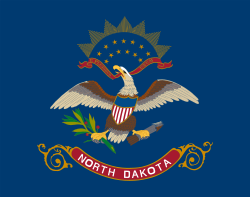
The History of North Dakota traces thousands of years of Indigenous habitation by peoples such as the Mandan, Hidatsa, and Lakota, followed by European exploration and fur trading, large-scale homesteading and railroads in the 19th century, admission as the 39th state in 1889, agricultural development through droughts and the Dust Bowl era, and recent economic transformation driven by the Bakken oil boom. More Less
1700
The first Europeans explored the area in the 18th century, establishing some limited trade with the native peoples who had long inhabited the northern plains.
Image source: History of North Dakota

1738
French explorer Pierre Gaultier de Varennes, sieur de la Vérendrye visited the Mandan tribes around 1738 and was astounded by their level of development. Limited trade with European powers followed through the end of the century.
Image source: Mandan

1739 - 1799
Following early exploration, limited trade with European powers continued through the end of the 18th century, linking the region's native peoples to broader commercial networks.
Image source: Fur trade

1833 - 1834
Prince Maximilian of Wied spent the winter of 1833–1834 at Fort Clark during his expedition through the upper Missouri. His account, Travels in the Interior of North America in the Years 1832 to 1834, later appeared in Reuben Gold Thwaites' Early Western Travels series (1905–1906).
Image source: Prince Maximilian of Wied-Neuwied

1849
Much of the area that would become North Dakota was first organized by the United States as part of the Minnesota Territory before later being included in the Dakota Territory.
Image source: Minnesota Territory

1851 - 1889
During the 19th century, a number of Native American tribes entered into treaties with the United States government as settlement expanded across the northern plains.
Image source: Treaty of Fort Laramie (1851)

Mar 2, 1861
In 1861, the area that is now North Dakota was incorporated into the new Dakota Territory along with what is now South Dakota.
Image source: Dakota Territory

1862
The 1862 Homestead Act, together with railroad expansion and favorable environmental conditions, set the stage for the massive Dakota Boom that followed in the 1870s and 1880s.
Image source: Homestead Acts

1883
The territorial capital's relocation from Yankton on the Nebraska state line to Bismarck in the north proved to be the last straw, and mainly the southern part began to call for division of the territory.
Image source: Bismarck, North Dakota

Nov 8, 1887
At the 1887 territorial election, voters agreed to split the territory, setting the stage for admission of two separate states.
This History of North Dakota timeline was generated with the help of AI, using information found on the internet.
We work hard to keep these timelines accurate, but mistakes do get through. If you spot one, email us at [email protected] and we'll fix it for future visitors.
Generate yours with AI or build it from scratch, for free.