-
Use Cases
-
Resources
-
Pricing
The National Football League (NFL) is the premier professional American football league in the United States. Founded in 1920 as the American Professional Football Association, it grew from a small regional circuit into a multi-billion dollar sports empire. Key milestones include the 1958 'Greatest Game Ever Played,' the 1966 merger agreement with the AFL that created the Super Bowl, and the league's expansion into a cultural phenomenon dominating American sports. More Less
Sep 17, 1920
% complete
Representatives of professional football teams met in Canton, Ohio, at the Hupmobile showroom to form the American Professional Football Conference, soon renamed the American Professional Football Association. The league was founded with teams from Ohio, Indiana, Illinois, New York, and Pennsylvania, laying the groundwork for what would become the National Football League.
Image source: National Football League
Jan 1, 1921
% complete
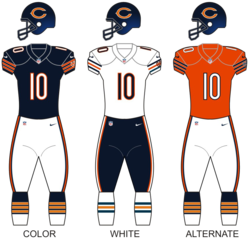
George Halas took control of the Decatur Staleys franchise and moved it to Chicago, where it became known as the Chicago Bears. Halas would become one of the most influential figures in NFL history as a player, coach, owner, and league innovator over more than six decades.
Image source: Chicago Bears
Jun 24, 1922
% complete
At a meeting in Cleveland, the American Professional Football Association officially changed its name to the National Football League. This rebranding helped establish a more formal identity for professional football as it competed with college football for fans' attention.
Jan 1, 1933
% complete
The NFL liberalized its passing rules, allowing passes to be thrown from anywhere behind the line of scrimmage rather than five yards behind it. These changes made offenses more dynamic and helped distinguish the pro game from college football.
Image source: Forward pass
Dec 17, 1933
% complete
The NFL held its first official championship game, with the Chicago Bears defeating the New York Giants 23-21 at Wrigley Field. The creation of a title game gave the league a marquee event and helped boost its popularity during the Great Depression.
Image source: 1933 NFL Championship Game
Aug 21, 1946
% complete
Kenny Washington signed with the Los Angeles Rams, becoming the first African American player in the modern NFL. His signing, along with Woody Strode's, reintegrated the league twelve years after Black players had been excluded, paving the way for future generations of players.
Image source: Kenny Washington (American football)
Jan 1, 1950
% complete
After the rival All-America Football Conference folded following the 1949 season, three of its strongest franchises—the Cleveland Browns, San Francisco 49ers, and Baltimore Colts—were absorbed into the NFL. The Browns immediately proved their strength by winning the 1950 NFL championship.
Image source: All-America Football Conference
Dec 28, 1958
% complete
The Baltimore Colts defeated the New York Giants 23-17 in sudden-death overtime at Yankee Stadium in the first NFL championship decided in overtime. Broadcast nationally on NBC, the dramatic contest is often credited with launching the NFL into national prominence and fueling television-driven growth.
Image source: 1958 NFL Championship Game
Jan 26, 1960
% complete
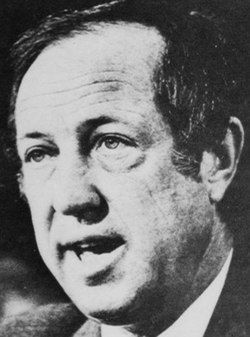
The 33-year-old Pete Rozelle was elected commissioner on the 23rd round of voting. During his nearly three decades leading the league, he negotiated landmark television contracts, oversaw the AFL-NFL merger, and created the Super Bowl, transforming the NFL into America's most popular sports league.
Image source: Pete Rozelle
Sep 9, 1960
% complete
The upstart American Football League launched as a direct competitor to the NFL, featuring innovative offensive play, aggressive signing of college stars, and lucrative television deals with ABC. Its success forced the NFL to expand and eventually led to merger talks.
Image source: American Football League
Jan 15, 1967
% complete
The Green Bay Packers defeated the Kansas City Chiefs 35-10 in the first AFL-NFL World Championship Game at the Los Angeles Memorial Coliseum. Packers coach Vince Lombardi cemented his legend as his team asserted early NFL dominance over the rival league.
Image source: Super Bowl I
Jan 14, 1968
% complete
Vince Lombardi's Green Bay Packers routed the Oakland Raiders 33-14 in Super Bowl II, completing back-to-back world championships before Lombardi stepped down as coach. The trophy awarded to the Super Bowl champion was later named the Vince Lombardi Trophy in his honor.
Jan 12, 1969
% complete
Baltimore Colts quarterback guarantee aside, Jets quarterback Joe Namath famously guaranteed victory and then delivered, leading the AFL's New York Jets to a stunning 16-7 win over the heavily favored Colts. The upset validated the AFL as an equal to the NFL ahead of their full merger.
Image source: Super Bowl III
Feb 1, 1970
% complete
The full merger of the American Football League and National Football League took effect, creating two conferences—the AFC and NFC—under one league banner. The merged NFL became a 26-team colossus with unified scheduling, drafting, and a single championship game: the Super Bowl.
Sep 21, 1970
% complete
Monday Night Football premiered with a broadcast featuring Keith Jackson, Howard Cosell, and Don Meredith. The prime-time showcase became a cultural institution, blending sports and entertainment and further expanding the NFL's television audience.
Image source: Monday Night Football
Jul 1, 1972 - Jan 14, 1973
% complete
The Miami Dolphins completed the only perfect season in NFL history, going 17-0 including a 14-7 victory over the Washington Redskins in Super Bowl VII. Coached by Don Shula and led by Bob Griese and Larry Csonka, the team remains unmatched more than fifty years later.
Image source: 1972 Miami Dolphins season
Dec 23, 1972
% complete
In an AFC divisional playoff game, Steelers rookie Franco Harris caught a deflected pass just before it hit the ground and ran for a game-winning touchdown against the Raiders. One of the most famous plays in NFL history, it remains debated and celebrated to this day.
Image source: Immaculate Reception
Jan 12, 1975
% complete
The Pittsburgh Steelers defeated the Minnesota Vikings 16-6 in Super Bowl IX, capturing the franchise's first championship. Pittsburgh went on to win four Super Bowls in six seasons during the 1970s, powered by the Steel Curtain defense and stars like Terry Bradshaw and Franco Harris.
Image source: Super Bowl IX
Jan 25, 1981
% complete
The Oakland Raiders became the first wild card team to win a Super Bowl, crushing the Philadelphia Eagles 27-10. Quarterback Jim Plunkett, once considered a bust, earned MVP honors in a storybook turnaround season.
Image source: Super Bowl XV
Mar 6, 1983
% complete
The United States Football League began play as a springtime alternative to the NFL, signing stars like Herschel Walker, Steve Young, and Reggie White. Despite initial success, escalating costs and a failed antitrust lawsuit led to the league folding after the 1985 season.
Image source: United States Football League
Jan 26, 1986
% complete
The 1985 Chicago Bears, featuring the legendary 46 defense and personalities like William 'Refrigerator' Perry, crushed the New England Patriots 46-10 in Super Bowl XX. The team's charisma, including the 'Super Bowl Shuffle,' made them pop culture icons.
Image source: 1985 Chicago Bears season
Oct 26, 1989
% complete
Paul Tagliabue succeeded Pete Rozelle as commissioner. Over his tenure through 2006, he expanded the league, secured massive television contracts, fostered labor peace, and guided the NFL to unprecedented financial growth and popularity.
Image source: Paul Tagliabue
Jan 31, 1993
% complete
Troy Aikman, Emmitt Smith, and Jerry Rice-less Dallas overwhelmed Buffalo 52-17 in Super Bowl XXVII, starting a run of three championships in four years. The Cowboys became 'America's Team' of the decade under owner Jerry Jones and coach Jimmy Johnson.
Image source: Super Bowl XXVII
Mar 1, 1993
% complete
A new collective bargaining agreement introduced unrestricted free agency and a salary cap, fundamentally changing how teams built rosters. Player movement increased dramatically, reshaping competitive balance across the league.
Feb 9, 1996
% complete
Owner Art Modell moved the Cleveland Browns franchise to Baltimore, where it was renamed the Ravens. Fan outrage led to an agreement that kept the Browns name and history in Cleveland, with a new expansion Browns team beginning play in 1999.
Image source: Cleveland Browns relocation controversy
Feb 3, 2002
% complete
Second-year quarterback Tom Brady led the New England Patriots to a stunning 20-17 victory over the heavily favored St. Louis Rams on Adam Vinatieri's last-second field goal. The win launched a dynasty that would define the next two decades of NFL football.
Image source: Super Bowl XXXVI
Sep 8, 2002
% complete
The Houston Texans played their first game, returning NFL football to Houston after the Oilers' departure in 1997. As the league's 32nd team, they triggered a divisional realignment that created eight four-team divisions.
Image source: Houston Texans
Sep 1, 2006
% complete
Roger Goodell succeeded Paul Tagliabue as commissioner. His tenure has included record revenues and media deals, international expansion efforts, but also controversies over player conduct, concussions, and protests during the national anthem.
Image source: Roger Goodell
Feb 3, 2008
% complete
Eli Manning and the New York Giants stunned the previously undefeated New England Patriots 17-14, highlighted by Manning's escape and David Tyree's famous helmet catch. The upset is considered one of the greatest in Super Bowl history.
Image source: Super Bowl XLII
Feb 7, 2010
% complete
Drew Brees led the New Orleans Saints past the Indianapolis Colts 31-17, delivering the franchise's first championship. The victory carried deep emotional significance for a city still recovering from Hurricane Katrina.
Image source: Super Bowl XLIV
Apr 22, 2015
% complete
The NFL agreed to a settlement expected to cost roughly $1 billion to compensate thousands of former players suffering from concussion-related injuries. The deal followed years of litigation and growing scrutiny of brain trauma in football.
Image source: NFL Players Association
Feb 4, 2018
% complete
Backup-turned-starter Nick Foles led the Philadelphia Eagles to a 41-33 victory over Tom Brady's Patriots, including the famous 'Philly Special' trick play touchdown catch by Foles himself. It was Philadelphia's first NFL title since 1960.
Image source: Super Bowl LII
Feb 2, 2020
% complete
Patrick Mahomes rallied the Kansas City Chiefs from a 10-point fourth-quarter deficit to beat the San Francisco 49ers 31-20, delivering the franchise's first championship in 50 years and signaling the arrival of a new generation of stars.
Image source: Super Bowl LIV
Or browse the full history timeline directory, with more than 2,000 topics.
This History of the NFL timeline was generated with the help of AI, using information found on the internet.
We work hard to keep these timelines accurate, but mistakes do get through. If you spot one, email us at [email protected] and we'll fix it for future visitors.
Generate yours with AI or build it from scratch, for free.
Export your timeline, add your own events, edit or remove AI-generated events, and much more
No credit card required.
Cancel anytime.
Cancel anytime.
You can create an unlimited number of timelines with up to 10 events on each one, customize how they look, export them to PDF, PNG, PowerPoint, CSV, and Excel, and share them with a link. Paid plans raise the event limit and add features like spreadsheet imports and collaborators.
Yes. You can cancel your subscription from your account page at any time, and you will not be charged again. Your subscription stays active for the rest of the period you already paid for.
Yes. We will email you a reminder before the annual renewal, and we will also email you a receipt.
Yes. You can email us within 15 days of any payment, and we will issue you a full refund.
Check out our pricing docs or send us an email anytime: [email protected].