-
Use Cases
-
Resources
-
Pricing
The Super Bowl is the annual championship game of the National Football League (NFL), first played in January 1967 following the merger agreement between the NFL and its rival, the American Football League (AFL). It has grown into one of the most-watched sporting events in the world, famous for its halftime shows and commercials as well as the game itself. More Less
Jun 8, 1966
% complete
The American Football League and the National Football League announced their merger, to be completed by 1970. As part of the agreement, the two leagues would play an annual championship game between their winners, which came to be known as the Super Bowl.
Jan 15, 1967
% complete
The first AFL–NFL World Championship Game was played at the Los Angeles Memorial Coliseum. Vince Lombardi's Green Bay Packers defeated the Kansas City Chiefs 35–10, with quarterback Bart Starr named the game's first MVP.
Image source: Super Bowl I
Jan 14, 1968
% complete
Green Bay repeated as champions, beating the Oakland Raiders 33–14 in Miami. It was Vince Lombardi's final game as the Packers' head coach, cementing the franchise as the NFL's early dynasty.
Jan 12, 1969
% complete
Joe Namath famously guaranteed victory before leading the New York Jets to a shocking 16–7 win over the heavily favored Baltimore Colts. The upset proved the AFL could compete with the established NFL.
Image source: Super Bowl III
Jan 11, 1970
% complete
Kansas City defeated Minnesota 23–7 in New Orleans, giving the AFL a 2–2 record in Super Bowls before the leagues formally merged into one NFL for the 1970 season.
Image source: Super Bowl IV
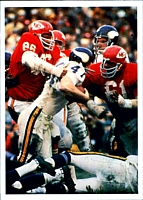
Jan 17, 1971
% complete
Baltimore beat Dallas 16–13 on Jim O'Brien's last-second field goal in a turnover-filled game remembered as the 'Blunder Bowl.' It was the first Super Bowl played after the AFL–NFL merger.
Jan 16, 1972
% complete
Dallas dominated Miami 24–3 in New Orleans, shedding its reputation for falling short in big games. Quarterback Roger Staubach was named MVP as the Cowboys finally captured their first title.
Jan 14, 1973
% complete
Miami finished 17–0, defeating Washington 14–7 in Los Angeles to cap the only perfect season in modern NFL history. The Dolphins' achievement remains unmatched more than five decades later.
Image source: 1972 Miami Dolphins season
Jan 13, 1974
% complete
Miami crushed Minnesota 24–7 in Houston behind Larry Csonka's powerful running game, becoming the second team ever to win back-to-back Super Bowls.
Jan 12, 1975
% complete
Pittsburgh's famed 'Steel Curtain' defense smothered Minnesota 16–6, launching a decade of dominance that would produce four championships in six years.
Image source: Super Bowl IX
Jan 18, 1976
% complete
Lynn Swann's acrobatic catches helped Pittsburgh defeat Dallas 21–17 in Miami, earning Swann MVP honors and giving the Steelers their second consecutive title.
Image source: Super Bowl X
Jan 9, 1977
% complete
Oakland finally broke through, routing Minnesota 32–14 in Pasadena to capture the franchise's first championship after years of playoff heartbreak.
Image source: Super Bowl XI
Jan 21, 1979
% complete
Terry Bradshaw threw four touchdown passes as Pittsburgh outlasted Dallas 35–31 in one of the most thrilling Super Bowls ever played, avenging their loss three years earlier.
Image source: Super Bowl XIII
Jan 20, 1980
% complete
Pittsburgh held off the Los Angeles Rams 31–19 in Pasadena, completing an unprecedented run of four titles in the 1970s and establishing the NFL's greatest dynasty to that point.
Image source: Super Bowl XIV
Jan 25, 1981
% complete
Oakland became the first wild card team to win a Super Bowl, crushing Philadelphia 27–10 in New Orleans behind linebacker Rod Martin's record three interceptions.
Image source: Super Bowl XV
Jan 24, 1982
% complete
Joe Montana led San Francisco past Cincinnati 26–21 in Pontiac, Michigan, marking the rise of the West Coast offense and the beginning of a 49ers dynasty.
Image source: Super Bowl XVI
Jan 22, 1984
% complete
Marcus Allen rushed for 191 yards as the Raiders demolished Washington 38–9 in Tampa, the most lopsided Super Bowl result to that time.
Image source: Super Bowl XVIII
Jan 20, 1985
% complete
Joe Montana outdueled Dan Marino in a matchup of legendary quarterbacks, as San Francisco beat Miami 38–16 in Stanford for its second championship.
Image source: Super Bowl XIX
Jan 26, 1986
% complete
Chicago's vaunted '46 defense' crushed New England 46–10 in New Orleans. The charismatic 1985 Bears, featuring William 'Refrigerator' Perry, became one of pop culture's most beloved teams.
Image source: 1985 Chicago Bears season
Jan 25, 1987
% complete
Phil Simms completed 22 of 25 passes as the New York Giants beat Denver 39–20 in Pasadena, capturing the franchise's first Super Bowl title.
Image source: Super Bowl XXI
Jan 31, 1988
% complete
Doug Williams became the first Black quarterback to start and win a Super Bowl, throwing four touchdowns in the second quarter alone as Washington scored 35 points en route to a 42–10 win in San Diego.
Image source: Super Bowl XXII
Jan 22, 1989
% complete
Joe Montana drove San Francisco 92 yards in the final minutes, hitting John Taylor for the winning touchdown in a 20–16 victory over Cincinnati in Miami.
Image source: Super Bowl XXIII
Jan 28, 1990
% complete
San Francisco won its fourth title of the decade in record-setting fashion, blowing out Denver 55–10 in New Orleans as Joe Montana earned his third Super Bowl MVP award.
Image source: Super Bowl XXIV
Jan 27, 1991
% complete
Scott Norwood's missed field goal in the final seconds preserved a 20–19 Giants victory over Buffalo in Tampa. Played during the Gulf War, the game is also remembered for Whitney Houston's national anthem.
Image source: Super Bowl XXV
Jan 26, 1992
% complete
Washington dominated Buffalo 37–24 in Minneapolis, handing the Bills the second of what would become four consecutive Super Bowl losses.
Image source: Super Bowl XXVI
Jan 31, 1993
% complete
Troy Aikman, Emmitt Smith, and Michael Irvin led Dallas past Buffalo 52–17 in Pasadena, launching the Cowboys' run of three titles in four years.
Image source: Super Bowl XXVII
Jan 29, 1995
% complete
Steve Young threw a record six touchdown passes as San Francisco beat San Diego 49–26 in Miami, giving the 49ers an NFL-best fifth championship.
Image source: Super Bowl XXIX
Jan 26, 1997
% complete
Desmond Howard's kickoff return touchdown earned him MVP honors as Green Bay beat New England 35–21 in New Orleans, returning the Lombardi Trophy to its namesake city.
Image source: Super Bowl XXXI
Jan 25, 1998
% complete
Denver ended the AFC's long Super Bowl drought, upsetting defending champion Green Bay 31–24 in San Diego and finally delivering Elway his elusive championship.
Image source: Super Bowl XXXII
Jan 31, 1999
% complete
Elway was named MVP in his final game as Denver beat Atlanta 34–19 in Miami, capping his Hall of Fame career with back-to-back championships.
Image source: Super Bowl XXXIII
Jan 30, 2000
% complete
Kurt Warner, the league MVP, threw for 414 yards as St. Louis edged Tennessee 23–16 in Atlanta when Mike Jones tackled Kevin Dyson one yard short of the tying score as time expired.
Image source: Super Bowl XXXIV
Feb 3, 2002
% complete
Tom Brady, in his first season as starter, led New England on a game-winning drive capped by Adam Vinatieri's field goal for a 20–17 upset of St. Louis, launching the Patriots' dynasty.
Image source: Super Bowl XXXVI
Feb 1, 2004
% complete
Vinatieri kicked another game-winning field goal as New England edged Carolina 32–29 in Houston in a game also infamous for the 'wardrobe malfunction' halftime incident involving Janet Jackson and Justin Timberlake.
Image source: Super Bowl XXXVIII
Feb 6, 2005
% complete
New England defeated Philadelphia 24–21 in Jacksonville, joining the 1990s Cowboys as the only teams to win three Super Bowls in four seasons.
Image source: Super Bowl XXXIX
Feb 5, 2006
% complete
Pittsburgh beat Seattle 21–10 in Detroit, with Hines Ward winning MVP. Ben Roethlisberger became the youngest starting quarterback to win a Super Bowl at age 23.
Image source: Super Bowl XL
Feb 4, 2007
% complete
Indianapolis beat Chicago 29–17 in a rain-soaked Miami game, making Peyton Manning the first quarterback drafted first overall to win a Super Bowl and Tony Dungy the first Black head coach to win one.
Image source: Super Bowl XLI
Feb 3, 2008
% complete
Eli Manning's escape from a sack and David Tyree's famous helmet catch set up the winning touchdown as the Giants stunned previously undefeated New England 17–14 in Glendale, Arizona.
Image source: Super Bowl XLII
Feb 7, 2010
% complete
Drew Brees led New Orleans past Indianapolis 31–17 in Miami, with Tracy Porter's pick-six sealing the first championship in Saints history and providing a symbol of hope for hurricane-ravaged New Orleans.
Image source: Super Bowl XLIV
Feb 5, 2012
% complete
Eli Manning again got the better of Tom Brady, throwing a deep completion to Mario Manningham along the sideline to set up the winning score in New York's 21–17 victory in Indianapolis.
Image source: Super Bowl XLVI
Feb 3, 2013
% complete
Baltimore beat San Francisco 34–31 in New Orleans in a game delayed by a bizarre 34-minute power outage. Brothers John and Jim Harbaugh faced each other as opposing head coaches.
Image source: Super Bowl XLVII
Feb 2, 2014
% complete
Seattle's 'Legion of Boom' defense throttled Peyton Manning's record-breaking Denver offense 43–8 in East Rutherford, New Jersey, the first Super Bowl played outdoors in a cold-weather northern city.
Image source: Super Bowl XLVIII
Feb 1, 2015
% complete
Malcolm Butler intercepted Russell Wilson at the goal line in the final seconds, preserving New England's 28–24 win over Seattle in Glendale after Julian Edelman's clutch catch tied the game.
Image source: Super Bowl XLIX
Feb 7, 2016
% complete
Denver's defense battered Cam Newton as the Broncos beat Carolina 24–10 in Santa Clara, giving Peyton Manning a storybook ending to his career with his second championship.
Image source: Super Bowl 50
Feb 5, 2017
% complete
New England rallied from a 28–3 deficit against Atlanta — the largest comeback in Super Bowl history — to win 34–28 in overtime, the first Super Bowl decided in extra time.
Image source: Super Bowl LI
Feb 4, 2018
% complete
Backup quarterback Nick Foles caught the 'Philly Special' touchdown pass and threw for 373 yards as Philadelphia outlasted New England 41–33 in Minneapolis for the Eagles' first-ever title.
Image source: Super Bowl LII
Feb 3, 2019
% complete
New England beat the Los Angeles Rams 13–3 in Atlanta, the lowest-scoring Super Bowl in history, giving Tom Brady and Bill Belichick their record sixth championship together.
Image source: Super Bowl LIII
Feb 2, 2020
% complete
Patrick Mahomes led Kansas City back from a 10-point fourth-quarter deficit to beat San Francisco 31–20 in Miami, ending the Chiefs' half-century championship drought dating to 1969.
Image source: Super Bowl LIV
Feb 7, 2021
% complete
Tom Brady won his seventh Super Bowl in his first season away from New England, leading Tampa Bay to a 31–9 home-field victory over Kansas City — the first team to win a Super Bowl in its own stadium.
Image source: Super Bowl LV
Or browse the full history timeline directory, with more than 2,000 topics.
This Super Bowl timeline was generated with the help of AI, using information found on the internet.
We work hard to keep these timelines accurate, but mistakes do get through. If you spot one, email us at [email protected] and we'll fix it for future visitors.
Generate yours with AI or build it from scratch, for free.
Export your timeline, add your own events, edit or remove AI-generated events, and much more
No credit card required.
Cancel anytime.
Cancel anytime.
You can create an unlimited number of timelines with up to 10 events on each one, customize how they look, export them to PDF, PNG, PowerPoint, CSV, and Excel, and share them with a link. Paid plans raise the event limit and add features like spreadsheet imports and collaborators.
Yes. You can cancel your subscription from your account page at any time, and you will not be charged again. Your subscription stays active for the rest of the period you already paid for.
Yes. We will email you a reminder before the annual renewal, and we will also email you a receipt.
Yes. You can email us within 15 days of any payment, and we will issue you a full refund.
Check out our pricing docs or send us an email anytime: [email protected].