-
Use Cases
-
Resources
-
Pricing
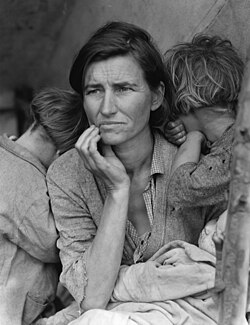
The Dust Bowl was a period of severe dust storms and ecological devastation that struck the American Great Plains during the 1930s. Caused by prolonged drought and poor farming practices that stripped the land of native grasses, it displaced hundreds of thousands of farmers, many of whom migrated to California, and led to major federal soil conservation programs. More Less
1862
The federal government encouraged settlement and development of the Plains for agriculture via the Homestead Act of 1862, offering settlers 'quarter section' 160-acre (65 ha) plots. This policy drew waves of farmers to the Great Plains and set the stage for the extensive cultivation that would later contribute to the Dust Bowl.
Image source: Homestead Acts

1865
With the end of the Civil War in 1865 and the completion of the first transcontinental railroad in 1869, waves of new migrants and immigrants reached the Great Plains and greatly increased the acreage under cultivation.
Image source: Great Plains

1886
While initial agricultural endeavors were primarily cattle ranching, the harsh winters' adverse effect on the cattle beginning in 1886, a short drought in 1890, and general overgrazing led many landowners to increase the amount of land under cultivation.
Image source: Dust Bowl

1900
Waves of European settlers arrived in the plains at the beginning of the 20th century, dramatically expanding agriculture across the region.
1900 - 1930
In the Llano Estacado of eastern New Mexico and northwestern Texas, the area of farmland doubled between 1900 and 1920, then tripled between 1925 and 1930, illustrating the rapid expansion of cultivation before the Dust Bowl.
Image source: Llano Estacado

1904
The government expanded on the 160 acres offered under the Homestead Act, granting 640 acres (260 ha) to homesteaders in western Nebraska under the Kinkaid Act of 1904.
Image source: Kinkaid Act

1909
The Enlarged Homestead Act of 1909 granted 320 acres (130 ha) to homesteaders elsewhere in the Great Plains, further accelerating settlement and cultivation of marginal lands.
1920 - 1929
Fairly favorable climatic conditions in the 1920s, with good rainfall and relatively moderate winters, permitted increased settlement and cultivation in the Great Plains, encouraging farmers to plow up native grasslands.
1930 - 1940
Between 1930 and 1940, about 3.5 million people moved out of the Plains states — more than the number of migrants to that area during the 1849 gold rush.
1935
In 1935, many families were forced to leave their farms as dust storms and drought made agriculture impossible, joining the growing exodus from the Plains states.
This Dust Bowl timeline was generated with the help of AI, using information found on the internet.
We work hard to keep these timelines accurate, but mistakes do get through. If you spot one, email us at [email protected] and we'll fix it for future visitors.
Generate yours with AI or build it from scratch, for free.