-
Use Cases
-
Resources
-
Pricing
Super Mario is one of the most influential video game franchises of all time. Created by Nintendo and largely shaped by designer Shigeru Miyamoto, the series follows Mario, a plumber from the Mushroom Kingdom, as he battles Bowser to rescue Princess Peach. Beginning with Super Mario Bros. in 1985, the franchise has defined platform gaming for decades, spawning sequels, spin-offs like Mario Kart and Paper Mario, films, merchandise, and a lasting cultural legacy. More Less
1983
% complete
The American video game crash of 1983 was a regional market recession that had not directly affected the mature Japanese market. Nintendo later deliberately rebranded the Famicom platform internationally in the wake of this crash, shaping how Super Mario titles were introduced abroad.
Image source: Video game crash of 1983
Feb 1986
% complete
The conception of a third Super Mario installment began shortly after the release of The Legend of Zelda in February 1986, setting development in motion for what would become Super Mario Bros. 3.
Image source: Super Mario Bros. 2
1987
% complete
Shortly after the release of Yume Kōjō: Doki Doki Panic in summer 1987, Nintendo of America sought a more accessible Super Mario sequel with new gameplay and better graphics, worrying that The Lost Levels' drastic difficulty increase would discourage new players.
Jul 10, 1987
% complete
Kensuke Tanabe recalled being pulled over to Fuji Television one day, handed a sheet with game characters, and told to make a game with them. He re-implemented that prototype's elements in his new advergame-themed title for the Family Computer Disk System.
Image source: Super Mario Bros. 2
1988
% complete
Summarizing Tanabe's recollections within a 2011 interview, Wired noted that although the initial concept had been scrapped, the development of the original two-player cooperative prototype inspired all the innovative gameplay of the resulting Super Mario titles.
Jul 1988 - Aug 1988
% complete
A late prototype of the game covering its gameplay changes was exhibited in the first issue of Nintendo Power, dated July/August 1988, giving fans an early look at the upcoming release.
Image source: Nintendo Power
1985
% complete
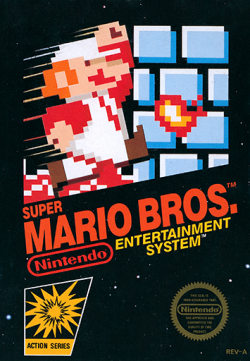
In 1985, Nintendo quickly released an adaptation of the original game with advanced difficulty titled Super Mario Bros., establishing the foundation for one of the most successful video game franchises in history.
Image source: Super Mario Bros.
1986
% complete
In 1986, a coin-operated arcade version of the original Super Mario Bros. was released, bringing the console hit to arcades and expanding the franchise's reach.
Jun 3, 1986
% complete
Nintendo released Super Mario Bros. 2, known as Super Mario Bros.: The Lost Levels, for its Japanese market on June 3, 1986, for the Family Computer Disk System. It was later released as part of Super Mario All-Stars for the Super NES.
Jul 10, 1987
% complete
Yume Kōjō: Doki Doki Panic was released for the Family Computer Disk System in Japan on July 10, 1987. Based on a prototype platforming game, it served as an advergame for Fuji Television's Yume Kōjō '87 media technology expo.
Oct 9, 1988
% complete
Super Mario Bros. 2, a platform game developed and published by Nintendo for the Nintendo Entertainment System, was first released in North America on October 9, 1988. This international adaptation of the Famicom platform was based on Yume Kōjō: Doki Doki Panic.
Apr 28, 1989
% complete
Following its North American debut, Super Mario Bros. 2 was released in Europe and Australia on April 28, 1989, extending the game's reach across international markets.
Sep 14, 1992
% complete
Due to its commercial success and substantial contributions over Yume Kōjō: Doki Doki Panic, the game was eventually re-released in Japan on September 14, 1992, for the Family Computer under the title Super Mario USA. Four Famitsu editors reviewed it that year.
Jul 14, 1993
% complete
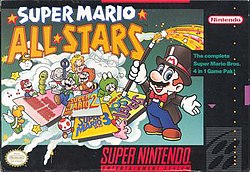
In 1993, Nintendo released an enhanced Super Nintendo Entertainment System compilation titled Super Mario All-Stars on July 14, which included Super Mario Bros. 2 remade alongside other classic entries.
Image source: Super Mario All-Stars
Jul 14, 1993
% complete
Japanese players finally received Super Mario Bros. 2 in America in the form of Super Mario Bros.: The Lost Levels, included as part of the 1993 re-release compilation Super Mario All-Stars on the Super NES.
Image source: Super Mario Bros.: The Lost Levels
Mar 21, 2001
% complete
Super Mario Advance was released as a launch game for the Game Boy Advance on March 21, 2001, marking the second remake of the game. The re-release received generally positive reviews, garnering an aggregate score of 84/100 on Metacritic.
Image source: Super Mario Advance
Jul 16, 2014
% complete
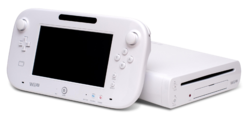
The game was released for the Wii U Virtual Console on July 16, 2014, in Japan, making it available to a new generation of players through digital distribution.
Image source: Wii U
Nov 6, 2014
% complete
Later in 2014, following its Japanese Virtual Console debut, the game was released for the Wii U Virtual Console in North America on November 6, continuing its digital availability worldwide.
May 26, 2023
% complete
The game was released for the Nintendo Switch as a part of the Nintendo Classics service on May 26, 2023, ensuring continued access to the classic title on modern hardware.
Oct 1988 - Nov 1989
% complete
Super Mario Bros. 2 was the top-selling video game in the United States for fourteen consecutive months, from October 1988 into 1989 through spring and summer, ending in November 1989 — an extraordinary commercial achievement.
1990
% complete
By early 1990, 3.5 million copies were sold in the United States, eventually totaling 7.46 million copies worldwide, making it the fourth highest-selling game ever released on the Nintendo Entertainment System.
Mar 1990
% complete
In the Pak Source edition, Nintendo Power rated all NES games released in North America from October 1985 to March 1990, ranking Super Mario Bros. among the system's finest titles.
1991
% complete
Entertainment Weekly picked the game as the #6 greatest game available in 1991, saying: "The second and still the best of the Super Mario franchise", cementing its critical legacy.
1997
% complete
In 1997, Electronic Gaming Monthly ranked the All-Stars edition as the 14th-best console video game of all time, calling the level designs "unlike anything you've seen before" and highly praising the boss challenges.
2001
% complete
Game Informer placed the game 30th on their top 100 video games of all time in 2001, further recognizing its enduring influence on the medium.
2009
% complete
In 2009, Official Nintendo Magazine ranked the game 27th on a list of greatest Nintendo games, affirming its lasting status within the company's storied catalog.
2012
% complete
The staff complimented the game and other third-generation titles for being a greater improvement than sequels around 2012, which they thought had seen only small improvements over their predecessors.
1989
% complete
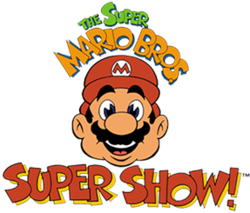
The 1989 cartoon television show The Super Mario Bros. brought the beloved video game characters to television audiences, expanding the franchise's cultural presence beyond gaming.
Image source: The Super Mario Bros. Super Show!
Mar 1996 - Apr 1996
% complete
In March–April 1996, Nintendo's partnership with the St. Louis broadcaster produced special programming related to the Super Mario franchise.
Jun 3, 1996 - Jun 29, 1996
% complete
A single rerun of the broadcasts was conducted in the same weekly format from June 3, 1996, to June 29, 1996, airing from 5:00 to 6:00 PM.
Or browse the full history timeline directory, with more than 2,000 topics.
This History of Super Mario timeline was generated with the help of AI, using information found on the internet.
We work hard to keep these timelines accurate, but mistakes do get through. If you spot one, email us at [email protected] and we'll fix it for future visitors.
Generate yours with AI or build it from scratch, for free.
Export your timeline, add your own events, edit or remove AI-generated events, and much more
No credit card required.
Cancel anytime.
Cancel anytime.
You can create an unlimited number of timelines with up to 10 events on each one, customize how they look, export them to PDF, PNG, PowerPoint, CSV, and Excel, and share them with a link. Paid plans raise the event limit and add features like spreadsheet imports and collaborators.
Yes. You can cancel your subscription from your account page at any time, and you will not be charged again. Your subscription stays active for the rest of the period you already paid for.
Yes. We will email you a reminder before the annual renewal, and we will also email you a receipt.
Yes. You can email us within 15 days of any payment, and we will issue you a full refund.
Check out our pricing docs or send us an email anytime: [email protected].