
-
Use Cases
-
Resources
-
Pricing
Pokemon is a Japanese media franchise created by Satoshi Tajiri and Ken Sugimori, centered on fictional creatures called Pokemon that humans catch, train, and battle. Launched as a pair of video games for the Nintendo Game Boy, it expanded into an animated TV series, trading card game, films, merchandise, and one of the most successful entertainment brands in history. More Less
Apr 26, 1989
% complete
Inspired by his childhood hobby of collecting insects, Satoshi Tajiri co-founded the video game development studio Game Freak. The company initially published a magazine before transitioning into game development, eventually creating the Pokemon franchise.
Image source: Game Freak
Feb 27, 1996
% complete
Pokemon Red Version and Green Version were released in Japan for the Nintendo Game Boy after roughly six years of development. Created by Satoshi Tajiri with art by Ken Sugimori, the games introduced 151 creatures and a trading mechanic that exploited the Game Boy link cable.
Image source: Pokémon Red, Blue, and Yellow
May 1996
% complete
Players discovered an undocumented programming exploit that allowed them to encounter the mythical Pokemon Mew, which was not obtainable through normal gameplay. The glitch spread through Japanese gaming magazines and playground rumors, fueling massive interest in the games.
Image source: Mew (Pokémon)
Sep 28, 1998
% complete
Nintendo released Pokemon Red and Blue in North America, introducing Western audiences to the phenomenon. The games became best-sellers almost immediately, sparking 'Pikachu fever' and establishing Pokemon as a global entertainment powerhouse.
Image source: Pokémon Red, Blue, and Yellow
Nov 21, 1999
% complete
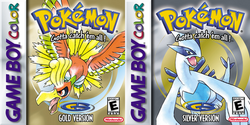
The second generation of Pokemon games introduced 100 new species, the Dark and Steel types, breeding, held items, and a real-time day/night cycle. Set in Johto with the ability to revisit Kanto, they are widely considered among the best entries in the series.
Image source: Pokémon Gold and Silver
Dec 14, 2000
% complete
Released in Japan as an enhanced version of Gold and Silver, Crystal was the first mainline game to allow players to choose a female character. It also introduced animated Pokemon battle sprites and the Battle Tower facility.
Image source: Pokémon Crystal
Nov 21, 2002
% complete
The first mainline games for the Game Boy Advance introduced the Hoenn region, double battles, Pokemon abilities, natures, and contests. They sold millions of copies and refreshed the formula while retaining the core catching-and-battling gameplay.
Image source: Pokémon Ruby and Sapphire
Nov 21, 2003
% complete
Developed by Genius Sonority for the Nintendo GameCube, Pokemon Colosseum offered a darker storyline where players snatched Shadow Pokemon from villains rather than catching wild ones. It connected to the Game Boy Advance games via link cable.
Image source: Pokémon Colosseum
Jan 29, 2004
% complete
Game Freak remade the original Red and Green/Blue games for the Game Boy Advance with updated graphics and mechanics. The remakes introduced the Wireless Adapter accessory and restored compatibility with newer generations via the Sevii Islands postgame.
Image source: Pokémon FireRed and LeafGreen
Sep 16, 2004
% complete
Emerald enhanced Ruby and Sapphire with the Battle Frontier, Rayquaza-centric storyline, and animated battle intros. It is frequently ranked among the greatest Pokemon games and remains beloved for its postgame content.
Image source: Pokémon Emerald
Sep 28, 2006
% complete
The first mainline games for the Nintendo DS introduced the Sinnoh region, online trading and battling via Nintendo Wi-Fi Connection, and 107 new Pokemon including legendary mascots Dialga and Palkia. Global Trade System revolutionized player connectivity.
Image source: Pokémon Diamond and Pearl
Sep 12, 2009
% complete
These DS remakes of Gold and Silver allowed any Pokemon to walk alongside the trainer outside its ball, following Pikachu's precedent from Pokemon Yellow. They are often cited as the definitive versions of the second generation and fan favorites overall.
Image source: Pokémon HeartGold and SoulSilver
Sep 18, 2010
% complete
Set in the Unova region inspired by New York City, Black and White featured only new Pokemon until the postgame, seasonal changes, and fully animated battle sprites. Their story about ideals versus truth received critical acclaim.
Image source: Pokémon Black and White
Jul 6, 2016
% complete
Niantic's augmented reality mobile game let players catch Pokemon in the real world using GPS. It became a global phenomenon overnight, drawing crowds to parks and landmarks, adding billions to Nintendo's market value, and introducing Pokemon to millions of new fans.
Image source: Pokémon Go
Nov 18, 2016
% complete
The tropical Alola region replaced traditional gyms with island trials, introduced regional variants of classic Pokemon, and celebrated the series' twentieth anniversary. The games sold briskly and refreshed long-standing series conventions.
Image source: Pokémon Sun and Moon
Nov 15, 2019
% complete
The first mainline entries for the Nintendo Switch brought the Galar region, Dynamaxing battles, and open Wild Areas. Despite controversy over cutting parts of the National Dex, they became some of the fastest-selling Switch games ever.
Image source: Pokémon Sword and Shield
Jan 28, 2022
% complete
Set in the ancient Hisui region centuries before Diamond and Pearl, Legends: Arceus introduced open-area exploration, action order battles, and research-driven gameplay. It was hailed as a bold evolution of the decades-old formula.
Image source: Pokémon Legends: Arceus
Oct 20, 1996
% complete
Media Factory released the first set of Pokemon trading cards in Japan, featuring illustrations of popular creatures like Charizard. The cards became an instant sensation among children and helped expand the franchise beyond video games.
Image source: Pokémon Trading Card Game
Jan 9, 1999
% complete
Wizards of the Coast, publisher of Magic: The Gathering, released the English-language Pokemon Trading Card Game. The Base Set, featuring iconic cards like first edition Charizard, triggered buying frenzies and made Pokemon cards a playground currency phenomenon.
Apr 1, 1997
% complete
The animated series starring Ash Ketchum (Satoshi) and Pikachu debuted on TV Tokyo in Japan. The show followed Ash's journey to become a Pokemon Master and became one of the most successful adaptations of a video game ever produced.
Image source: Pokémon (TV series)
Dec 16, 1997
% complete
An episode featuring flashing lights triggered seizures in hundreds of viewers in Japan, hospitalizing over 600 people. The incident became known as 'Pokemon Shock,' led to the episode being banned worldwide, and prompted changes to television animation standards in Japan.
Image source: Dennō Senshi Porygon
Jul 18, 1998
% complete
Pokemon: The First Movie - Mewtwo Strikes Back premiered in Japanese theaters. It was later released internationally and grossed over $170 million worldwide despite mixed reviews, cementing theatrical films as an annual tradition for the franchise.
Image source: Pokémon: The First Movie
Sep 8, 1998
% complete
The English dub of the Pokemon anime premiered in syndication in the United States before moving to Kids' WB. With its catchy theme song and localized names, the show quickly became the top-rated program among children and drove demand for the games and cards.
May 10, 2019
% complete
The live-action adaptation starring Ryan Reynolds as the voice of a caffeine-addicted detective Pikachu became the highest-grossing video game film at the time. Its realistic rendering of Pokemon proved the franchise's viability in Hollywood.
Image source: Detective Pikachu (film)
Apr 23, 1998
% complete
Nintendo, Game Freak, and Creatures Inc. established a joint venture called The Pokemon Company (originally Pokemon Center Co., Ltd.) to manage licensing, marketing, and brand management for the rapidly growing Pokemon franchise.
Image source: The Pokémon Company
Apr 25, 1998
% complete
The first official Pokemon Center retail store opened in Nihonbashi, Tokyo, selling exclusive merchandise, plush toys, and games. The stores became pilgrimage destinations for fans and expanded to numerous locations across Japan and later worldwide.
Image source: Pokémon Center
Nov 22, 1999
% complete
Time magazine featured Pikachu on its cover as part of a story about the Pokemon craze sweeping the globe. The cover story examined how Pokemon had become a cultural juggernaut, generating billions in revenue from games, cards, toys, and media.
Image source: Pikachu
2000
% complete
Organized competitive play for the Pokemon Trading Card Game expanded internationally with national championships leading toward world-level competition. These events laid groundwork for what would become the annual Pokemon World Championships.
Aug 2004
% complete
The inaugural Pokemon Trading Card Game World Championship brought together top players from around the world. The event grew into an annual celebration featuring both card and video game competitions with substantial prize pools.
2019
% complete
Pokemon was recognized as the highest-grossing media franchise of all time, having earned over $100 billion across games, trading cards, merchandise, films, and licensing since 1996, far exceeding franchises like Star Wars and Mickey Mouse.
Or browse the full history timeline directory, with more than 2,000 topics.
This History of Pokemon timeline was generated with the help of AI, using information found on the internet.
We work hard to keep these timelines accurate, but mistakes do get through. If you spot one, email us at [email protected] and we'll fix it for future visitors.
Generate yours with AI or build it from scratch, for free.
Export your timeline, add your own events, edit or remove AI-generated events, and much more
No credit card required.
Cancel anytime.
Cancel anytime.
You can create an unlimited number of timelines with up to 10 events on each one, customize how they look, export them to PDF, PNG, PowerPoint, CSV, and Excel, and share them with a link. Paid plans raise the event limit and add features like spreadsheet imports and collaborators.
Yes. You can cancel your subscription from your account page at any time, and you will not be charged again. Your subscription stays active for the rest of the period you already paid for.
Yes. We will email you a reminder before the annual renewal, and we will also email you a receipt.
Yes. You can email us within 15 days of any payment, and we will issue you a full refund.
Check out our pricing docs or send us an email anytime: [email protected].