-
Use Cases
-
Resources
-
Pricing
The Legend of Zelda is a landmark action-adventure video game series created by Shigeru Miyamoto and Takashi Tezuka, first released by Nintendo in 1986. Spanning nearly four decades, the franchise has revolutionized game design with its open-world exploration, puzzle-solving dungeons, and iconic hero Link's quest to rescue Princess Zelda and defeat Ganon across the fantasy land of Hyrule. More Less
1981 - 1984
% complete
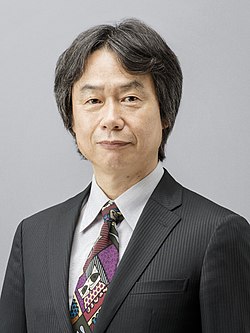
Japanese video game designer Shigeru Miyamoto was influenced by The Black Onyx (1984) and Ultima (1981), two games that centre around fantasy dungeon crawling, while developing his ideas for what would become The Legend of Zelda.
Image source: Shigeru Miyamoto
Feb 1, 1985
% complete
The first specifications for Hyrule were drawn up on a whiteboard by Shigeru Miyamoto and then copied onto a document on February 1, 1985, laying the groundwork for the original game's world design.
Image source: Universe of The Legend of Zelda
Dec 1987
% complete
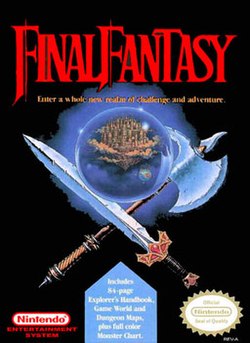
Miyamoto said that concerns about Zelda could have been due to a name being too similar to Final Fantasy, which was released in December 1987, highlighting the crowded fantasy gaming market of the era.
Image source: Final Fantasy (video game)
1990 - 2017
% complete
The fantasy characters of Hyrule, and the universe of The Legend of Zelda as a whole, were partially inspired by the American television series Twin Peaks (1990–2017).
1998
% complete
Due to concerns about the limitations of the Nintendo 64, Miyamoto initially conceived the game taking place within a central hub in the confines of Ganon's Castle, similar to Peach's Castle in Super Mario 64 (1996).
Image source: The Legend of Zelda: Ocarina of Time
2003
% complete
In an interview for Superplay magazine, Miyamoto stated: 'I remember that we were very nervous, because The Legend Of Zelda was our first game that forced the players to think about what they should do next.'
2011
% complete
Breath of the Wild director Hidemaro Fujibayashi named Minecraft and Terraria (2011) as his inspirations for 'the sense of adventure, exploration and how it inspired curiosity'.
Image source: The Legend of Zelda: Breath of the Wild
2017
% complete
Eiji Aonuma mentioned several other games that he had played, including The Witcher (2007–), Far Cry (2004–) and The Elder Scrolls V: Skyrim (2011), as influences during development.
Mar 3, 2017
% complete
Producer Eiji Aonuma approached Breath of the Wild (2017) by breaking the conventions of previous games in the series, rethinking long-standing Zelda traditions.
1986
% complete
Shigeru Miyamoto conceived the land of Hyrule as the setting for the original The Legend of Zelda (1986), describing it as 'a miniature garden that you can put into a drawer and revisit anytime you like'.
1998
% complete
Like the Amazons, the Gerudo race consists entirely of women, apart from a single Gerudo male who is born every century and is lawfully crowned king of the tribe, worshipped like a God king.
Image source: Gerudo
1986
% complete
Hyrule was created as the original setting for 1986's The Legend of Zelda and has remained the main environment for successive games in the series ever since.
Image source: The Legend of Zelda (video game)
1991
% complete
A Link to the Past (1991) introduced a dark version of Hyrule Kingdom: a corrupted land, often caused by Ganon, known in its first iteration as the Dark World.
Image source: The Legend of Zelda: A Link to the Past
1993
% complete
Zelda producer Eiji Aonuma and SRD president Toshihiko Nakago considered Link's Awakening (1993), with Yoshiaki Koizumi in charge of the story, to be the first time the series had a proper plot.
Image source: The Legend of Zelda: Link's Awakening
1998
% complete
Hyrule transitioned to a 3D environment with the development of Ocarina of Time, released on the Nintendo 64 in 1998, giving players the opportunity to experience a more realistic game environment.
2002
% complete
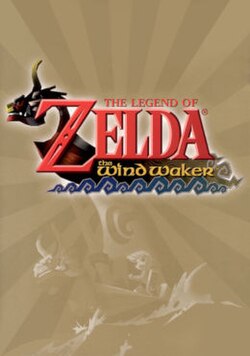
The concept of an 'open air' environment, later central to Breath of the Wild, began during work on The Wind Waker (2002).
Image source: The Legend of Zelda: The Wind Waker
2006
% complete
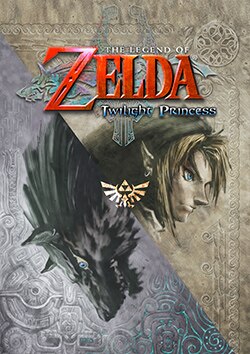
Distance measurement techniques allowed Hyrule to later be scaled up to an enormous world that appears twelve times the size of its predecessor in Twilight Princess (2006).
Image source: The Legend of Zelda: Twilight Princess
2011
% complete
Aonuma cited Skyward Sword (2011) as the basis for many of Breath of the Wild's world mechanics, such as the ability to climb and explore between areas.
Image source: The Legend of Zelda: Skyward Sword
2017
% complete
Upon its release, Breath of the Wild achieved critical acclaim, selling 29 million copies on Switch as of December 2022 and over 1.6 million copies on Wii U as of July 2022.
2017
% complete
For Breath of the Wild, released on the Wii U and Nintendo Switch in 2017, Nintendo developed Hyrule into a seamless open world that players could freely explore.
2023
% complete
For Tears of the Kingdom (2023), Aonuma and Fujibayashi used the same map of Hyrule as the one players experienced in Breath of the Wild to create a continuation of the same world.
Image source: The Legend of Zelda: Tears of the Kingdom
2024
% complete
While Link is usually the main player character in these settings, players primarily play as Zelda in 2024's Echoes of Wisdom, marking a notable first for the series.
Image source: The Legend of Zelda: Echoes of Wisdom
2001 - 2018
% complete
The sense of wonder as a first-time player enters Hyrule Field has been cited as an influence on similar moments in Grand Theft Auto III (2001), Red Dead Redemption 2, Crackdown (2007), and Fallout 3 (2008).
2017 - 2022
% complete
In the months following the release of Breath of the Wild in 2017, many video game developers were influenced by its open world design.
Jan 2010
% complete
In its January 2010 issue, Nintendo Power listed the 'wonderful worlds' of Hyrule, alongside the Mushroom Kingdom, Planet Zebes, Animal Crossing towns, and Metro City, as five of their 50 'reasons to love Nintendo'.
2014
% complete
Yannick LeJacq for Kotaku commented in 2014 that 'Hyrule is one of the most iconic settings in the history of video games.'
2020
% complete
In 2020, senior editor Caty McCarthy of USgamer ranked the in-game map of A Link to the Past as the best video game map.
2021
% complete
In 2021, Evan Narcisse of Kotaku listed Hyrule as one of the richest sci-fi and fantasy worlds in video games.
2021
% complete
Noelle Warner of Destructoid praised the cozy appeal of Zelda's towns while recovering from the post-quarantine period, feeling she would be happy living in seven out of the nine towns she ranked.
2011
% complete
Link was recognised as the second greatest video game character of all time behind Mario in the Guinness World Records Gamer's Edition 2011.
Image source: Link (The Legend of Zelda)
2011
% complete
Along with Link, Princess Zelda was counted as one of the greatest video game characters of all time by the 2011 Guinness World Records Gamer's Edition.
Image source: Princess Zelda
2013
% complete
Ganon was recognized as one of the greatest video game villains of all time in a 2013 poll for Guinness World Records 2013 Gamer's Edition.
Image source: Ganon
2022
% complete
In 2022, GamesRadar named Ganon as one of the most iconic gaming villains of all time, cementing his status among gaming's most memorable antagonists.
Or browse the full history timeline directory, with more than 2,000 topics.
This History of Legend of Zelda timeline was generated with the help of AI, using information found on the internet.
We work hard to keep these timelines accurate, but mistakes do get through. If you spot one, email us at [email protected] and we'll fix it for future visitors.
Generate yours with AI or build it from scratch, for free.
Export your timeline, add your own events, edit or remove AI-generated events, and much more
No credit card required.
Cancel anytime.
Cancel anytime.
You can create an unlimited number of timelines with up to 10 events on each one, customize how they look, export them to PDF, PNG, PowerPoint, CSV, and Excel, and share them with a link. Paid plans raise the event limit and add features like spreadsheet imports and collaborators.
Yes. You can cancel your subscription from your account page at any time, and you will not be charged again. Your subscription stays active for the rest of the period you already paid for.
Yes. We will email you a reminder before the annual renewal, and we will also email you a receipt.
Yes. You can email us within 15 days of any payment, and we will issue you a full refund.
Check out our pricing docs or send us an email anytime: [email protected].