-
Use Cases
-
Resources
-
Pricing
J. R. R. Tolkien (1892–1973) was an English writer, philologist, and Oxford professor best known as the author of The Hobbit and The Lord of the Rings. A scholar of Old and Middle English and a veteran of World War I, he created Middle-earth, one of the most detailed and influential fictional worlds in literature, laying the foundation for modern fantasy fiction. More Less
Jan 3, 1892
% complete
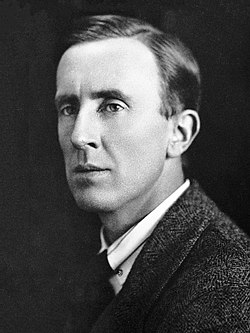
John Ronald Reuel Tolkien was born in Bloemfontein, Orange Free State (present-day South Africa), to Arthur Tolkien, a bank manager, and Mabel Suffield. The family moved to England when he was three years old.
Image source: J. R. R. Tolkien
Feb 15, 1896
% complete
Tolkien's father died of rheumatic fever while still in Bloemfontein, leaving Mabel and her two sons in England with little income. This loss shaped the family's precarious financial circumstances during Tolkien's childhood.
Nov 14, 1904
% complete
Tolkien's mother died of acute diabetes at the age of 34 after converting to Roman Catholicism, which estranged much of her family. Father Francis Morgan became guardian of the twelve-year-old Ronald and his brother Hilary.
Image source: Mabel Suffield Tolkien
Jan 1, 1908
% complete
At sixteen, Tolkien met and fell in love with Edith Bratt, nineteen, at the Birmingham boarding house where they both lived. Their guardian forbade contact until Tolkien turned twenty-one, delaying their courtship for years.
Image source: Edith Tolkien
Mar 22, 1916
% complete
Tolkien married Edith Bratt at St Mary Immaculate Catholic Church in Warwick shortly before being sent to fight in France during World War I. Their marriage lasted until Edith's death in 1971.
Nov 29, 1971
% complete
Edith Tolkien died at the age of 82 in Bournemouth. Grief-stricken, Tolkien had the name Lúthien engraved on her headstone, linking their love story to his greatest romance, Beren and Lúthien.
Dec 1, 1910
% complete
Tolkien won an open classical scholarship to Exeter College, Oxford, where he began studying classics in 1911 before switching to English language and literature.
Image source: Exeter College, Oxford
Jan 1, 1912
% complete
While at Oxford, Tolkien created one of his first constructed languages, Naffarin, part of his lifelong passion for philology that would later underpin Middle-earth's Elvish tongues such as Quenya and Sindarin.
Image source: Languages constructed by Tolkien
Jan 1, 1919 - 1920
% complete
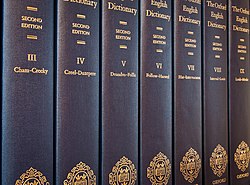
After demobilization, Tolkien worked as an assistant lexicographer on the Oxford English Dictionary, focusing on words beginning with W, honing the philological skills central to his later fiction.
Image source: Oxford English Dictionary
Oct 1, 1920
% complete
Tolkien took up the post of Reader in English Language at the University of Leeds, becoming the youngest professor there, where he collaborated with E. V. Gordon on a landmark edition of Sir Gawain and the Green Knight.
Image source: University of Leeds
Jan 1, 1925
% complete
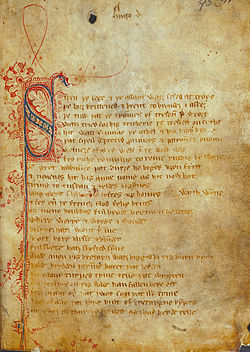
Tolkien and E. V. Gordon published a scholarly edition of the Middle English poem Sir Gawain and the Green Knight, which became a standard academic text for decades.
Image source: Sir Gawain and the Green Knight
Jan 1, 1926
% complete
Tolkien returned to Oxford as Professor of Anglo-Saxon, a chair he held until 1945, establishing himself as one of the leading scholars of Old and Middle English of his generation.
Jan 1, 1926
% complete
Tolkien joined and helped shape an informal group of writers including C. S. Lewis, meeting regularly to read aloud drafts of their works; The Inklings provided crucial encouragement for The Lord of the Rings.
Image source: Inklings
Nov 25, 1936
% complete
Tolkien's groundbreaking British Academy lecture revolutionized Beowulf studies by treating the poem as a work of art rather than merely a historical document; it was published the following year.
Image source: Beowulf: The Monsters and the Critics
Jan 1, 1945
% complete
Tolkien moved from the Anglo-Saxon chair to the Merton Professorship at Oxford, which he held until his retirement in 1959, continuing his work on Middle-earth alongside scholarly duties.
Jun 5, 1959
% complete
Tolkien retired from his professorship at Oxford, having taught there for over thirty years, allowing him more time to refine his legendarium and respond to his rapidly expanding readership.
Jul 1, 1916 - Oct 27, 1916
% complete
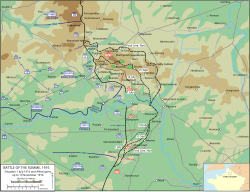
As a second lieutenant in the Lancashire Fusiliers, Tolkien fought on the Western Front during the Somme offensive, experiencing the horrors of trench warfare that deeply influenced his depictions of war in Middle-earth.
Image source: Battle of the Somme
Oct 27, 1916
% complete
Stricken by trench fever, Tolkien was evacuated back to England and spent long periods recovering in hospitals. During this convalescence he began composing the mythology later published as The Book of Lost Tales.
Feb 1, 1917
% complete
During recovery from illness, Tolkien wrote his first story of his legendarium, inspired partly by watching Edith dance in a woodland glade — an episode later echoed in the tale of Beren and Lúthien.
Image source: The Book of Lost Tales
Jan 1, 1930
% complete
While grading exam papers, Tolkien scribbled 'In a hole in the ground there lived a hobbit' on a blank sheet, an impulse that grew into The Hobbit and eventually the whole Middle-earth saga.
Image source: The Hobbit
Sep 21, 1937
% complete
Allen & Unwin published The Hobbit to immediate critical and commercial success, prompting the publisher to ask Tolkien for more stories set in the same world, leading directly to The Lord of the Rings.
Dec 16, 1937
% complete
Encouraged by the success of The Hobbit, Tolkien began drafting a sequel, a project that took over a decade to complete and expanded into a far darker and grander epic.
Image source: The Lord of the Rings
Jul 29, 1954
% complete
After years of delays caused by wartime paper shortages and Tolkien's perfectionism, Allen & Unwin released the first volume of The Lord of the Rings, launching one of the most influential novels ever written.
Image source: The Fellowship of the Ring
Nov 11, 1954
% complete
The second volume of The Lord of the Rings appeared just months after the first, continuing the story of the War of the Ring and cementing the trilogy's growing popularity.
Image source: The Two Towers
Oct 20, 1955
% complete
The final volume of The Lord of the Rings concluded the epic, though its extensive appendices delayed its release. The completed work gradually grew into a cultural phenomenon through the late 1960s.
Image source: The Return of the King
Sep 15, 1977
% complete
Four years after Tolkien's death, his son Christopher edited and published The Silmarillion, the sweeping mythological history of Middle-earth's First Age that Tolkien had worked on throughout his life.
Image source: The Silmarillion
Jan 1, 1980
% complete
Christopher Tolkien continued publishing his father's manuscripts with Unfinished Tales, a collection of stories and essays filling gaps in the histories of Middle-earth, beginning decades of posthumous releases.
Image source: Unfinished Tales
Jan 1, 1956
% complete
Following the publication of The Lord of the Rings, Tolkien received numerous honors, including election as a Fellow of the Royal Society of Literature in recognition of his contributions to letters.
Image source: Royal Society of Literature
Jan 1, 1965
% complete
An unauthorized American paperback edition and the subsequent authorized Ballantine release turned The Lord of the Rings into a massive bestseller among young readers, making Tolkien a reluctant celebrity.
Jan 1, 1972
% complete
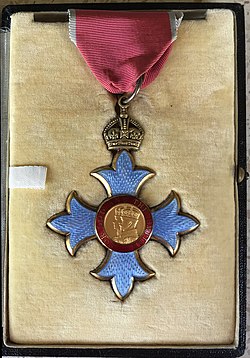
Queen Elizabeth II appointed Tolkien a CBE in recognition of his services to literature, one of several honors bestowed upon him late in life as his fame reached worldwide proportions.
Image source: Order of the British Empire
Sep 2, 1973
% complete
Tolkien died at age 81 in Bournemouth after suffering an acute ulcer bleed. He was buried beside Edith at Wolvercote Cemetery in Oxford, his headstone bearing the names Beren and Lúthien.
Or browse the full history timeline directory, with more than 2,000 topics.
This J. R. R. Tolkien timeline was generated with the help of AI, using information found on the internet.
We work hard to keep these timelines accurate, but mistakes do get through. If you spot one, email us at [email protected] and we'll fix it for future visitors.
Generate yours with AI or build it from scratch, for free.
Export your timeline, add your own events, edit or remove AI-generated events, and much more
No credit card required.
Cancel anytime.
Cancel anytime.
You can create an unlimited number of timelines with up to 10 events on each one, customize how they look, export them to PDF, PNG, PowerPoint, CSV, and Excel, and share them with a link. Paid plans raise the event limit and add features like spreadsheet imports and collaborators.
Yes. You can cancel your subscription from your account page at any time, and you will not be charged again. Your subscription stays active for the rest of the period you already paid for.
Yes. We will email you a reminder before the annual renewal, and we will also email you a receipt.
Yes. You can email us within 15 days of any payment, and we will issue you a full refund.
Check out our pricing docs or send us an email anytime: [email protected].