-
Use Cases
-
Resources
-
Pricing
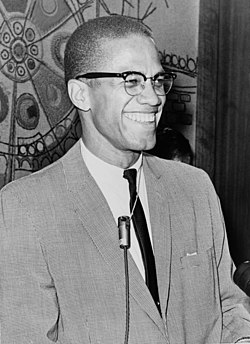
Malcolm X (1925–1965) was a prominent African American civil rights leader, minister, and spokesman for the Nation of Islam. Known for his advocacy of Black empowerment and his critique of racial injustice, he underwent a profound ideological transformation after his pilgrimage to Mecca in 1964, embracing a broader vision of human rights before his assassination in 1965. More Less
May 19, 1925
% complete
Malcolm Little was born on May 19, 1925, in Omaha, Nebraska, the fourth of seven children of Earl and Louise Little. His father was a Baptist minister and an outspoken supporter of Black nationalist leader Marcus Garvey, a connection that would expose the family to harassment from white supremacist groups.
1926
% complete
While Malcolm was still an infant, his family moved to Milwaukee and then to Lansing, Michigan. In Lansing, their home was burned down by the Black Legion, a white supremacist organization, in an attack the family believed was racially motivated.
Sep 28, 1931
% complete
Malcolm's father, Earl Little, died after being run over by a streetcar in Lansing, Michigan. The family believed he had been murdered by white supremacists, though officials ruled it an accident. His death devastated the family financially and emotionally.
Jan 1939
% complete
After years of financial hardship and emotional strain following her husband's death, Malcolm's mother, Louise Little, suffered a nervous breakdown and was committed to Kalamazoo State Hospital. The children were separated and placed into foster homes.
Image source: Malcolm X
1939
% complete
As a top student at Mason Junior High School, Malcolm told his English teacher he wanted to become a lawyer. The teacher replied that being a lawyer was 'no realistic goal for a nigger,' advising him to consider carpentry instead. This incident deeply affected Malcolm, who soon dropped out of school.
Feb 1941
% complete
At age 15, Malcolm moved to Boston to live with his older half-sister, Ella Little-Collins. He worked various jobs in Boston and New York City, including as a shoeshine boy, dishwasher, and railroad porter, experiencing urban life that would shape his worldview.
Jan 12, 1946
% complete
Malcolm was arrested in Boston for a series of burglaries committed with accomplices, including his friend Malcolm 'Shorty' Jarvis. He was sentenced to eight to ten years in state prison, beginning a period of incarceration that would transform his life.
1948
% complete
While serving time in Charlestown State Prison, Malcolm was introduced to the teachings of the Nation of Islam through letters from his siblings. He embraced the movement's doctrines, which combined elements of Islam with Black nationalism, and began corresponding with its leader, Elijah Muhammad.
1950
% complete
Rejecting what he called his 'slave name,' Malcolm Little adopted 'X' to represent his unknown African ancestral surname. The practice was common among Nation of Islam members, symbolizing the loss of African identity through slavery.
Aug 7, 1952
% complete
After six years of incarceration, during which he read voraciously and expanded his education, Malcolm was released on parole. He immediately traveled to Chicago to meet Elijah Muhammad and devote himself fully to the Nation of Islam.
Jun 1954
% complete
Elijah Muhammad appointed Malcolm as minister of Temple No. 7 in Harlem, one of the Nation of Islam's most important mosques. Under his leadership, membership grew dramatically, and he helped establish temples in other cities across the country.
1956
% complete
Malcolm met Betty Sanders, a nurse and Nation of Islam member, after she attended one of his lectures in Harlem. They married on January 14, 1958, and eventually had six daughters together.
Image source: Betty Shabazz
Jul 13, 1959
% complete
The television documentary 'The Hate That Hate Produced,' hosted by Mike Wallace, brought national attention to the Nation of Islam and made Malcolm X a prominent public figure. The program portrayed the movement as a radical threat, dramatically increasing both its notoriety and its membership.
Image source: The Hate That Hate Produced
Dec 1, 1963
% complete
After President John F. Kennedy's assassination, Malcolm described it as a case of 'chickens coming home to roost.' Elijah Muhammad publicly silenced him for 90 days, a punishment that deepened tensions between the two men and contributed to Malcolm's eventual break with the Nation.
Mar 8, 1964
% complete
Disillusioned by revelations of Elijah Muhammad's personal conduct and strained relations within the organization, Malcolm announced his departure from the Nation of Islam. He declared plans to form his own religious and political organizations.
Sep 1960
% complete
During Cuban leader Fidel Castro's visit to the United Nations, Castro stayed at Harlem's Hotel Theresa, where he received Malcolm X for a meeting. The encounter signaled Malcolm's growing interest in international politics and pan-African solidarity.
Image source: Hotel Theresa
Apr 3, 1964
% complete
In one of his most famous speeches, delivered at Cory Methodist Church in Detroit, Malcolm urged Black Americans to exercise their voting rights strategically and warned that if the government failed to protect them, violence might become necessary. The speech marked his evolution toward broader political engagement.
Image source: The Ballot or the Bullet
Jun 28, 1964
% complete
Modeled partly on the Organization of African Unity, the OAAU was founded by Malcolm X to promote human rights for Black Americans and foster unity between Africans and people of African descent worldwide. He served as its chairman until his death.
Image source: Organization of Afro-American Unity
Dec 3, 1964
% complete
Malcolm participated in a debate at the Oxford Union in England, arguing against the proposition that extremism in defense of liberty is no vice. His eloquent performance before a prestigious audience demonstrated his evolution as a statesman-like figure on the world stage.
Mar 12, 1964
% complete
Shortly after leaving the Nation of Islam, Malcolm founded Muslim Mosque, Inc., a religious organization intended to promote orthodox Islam among Black Americans. He also began planning the Organization of Afro-American Unity, a secular political group.
Apr 13, 1964 - Apr 21, 1964
% complete
Malcolm traveled to Saudi Arabia to perform the Hajj, the Islamic pilgrimage to Mecca. There, he experienced orthodox Islam and witnessed racial harmony among pilgrims of all colors, profoundly transforming his views on race and leading him to adopt the name el-Hajj Malik el-Shabazz.
May 21, 1964 - Nov 24, 1964
% complete
Following his pilgrimage, Malcolm toured several African nations, including Egypt, Ghana, Nigeria, and Tanzania, meeting leaders such as Kwame Nkrumah and Julius Nyerere. He sought to internationalize the struggle of Black Americans and connect it to anti-colonial movements worldwide.
Feb 14, 1965
% complete
One week before his death, Malcolm's home in East Elmhurst, Queens, was firebombed while he and his family were inside. They escaped unharmed, but the attack heightened tensions and foreshadowed the violence to come. Malcolm blamed the Nation of Islam.
Feb 21, 1965
% complete
While preparing to address a gathering of the Organization of Afro-American Unity at the Audubon Ballroom in Washington Heights, Malcolm X was shot multiple times by three members of the Nation of Islam. He was pronounced dead shortly after arriving at Columbia Presbyterian Hospital at age 39.
Feb 27, 1965
% complete
Thousands attended Malcolm X's funeral service at Harlem's Faith Temple Church of God in Christ. Actor Ossie Davis delivered a moving eulogy, describing him as 'our shining black prince' who did not hesitate to die because he loved us so.
Oct 29, 1965
% complete
Collaboratively written with journalist Alex Haley and completed just months after Malcolm's death, 'The Autobiography of Malcolm X' became one of the most influential books of the 20th century, inspiring generations of readers with its account of transformation and self-discovery.
Image source: The Autobiography of Malcolm X
Mar 3, 1966
% complete
Muhammad Abdul Aziz (then Norman Butler), Khalil Islam (Thomas Johnson), and Mujahid Halim (Talmadge Hayer) were convicted of Malcolm X's murder. Aziz and Islam maintained their innocence; decades later, they were exonerated when new evidence emerged implicating others.
Nov 18, 1992
% complete
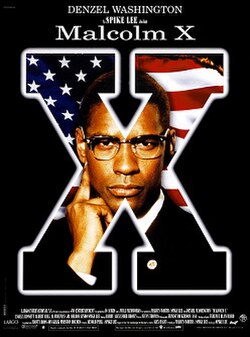
Director Spike Lee's biographical epic 'Malcolm X,' starring Denzel Washington, brought Malcolm's life story to a global audience. The critically acclaimed film renewed popular interest in his ideas and cemented his place in American cultural memory.
Image source: Malcolm X (1992 film)
May 19, 2005
% complete
Located in the former Audubon Ballroom where Malcolm X was assassinated, the memorial and educational center opened on what would have been his 80th birthday. It honors the legacies of Malcolm X and his wife Betty Shabazz and promotes social justice education.
Image source: Malcolm X and Dr. Betty Shabazz Memorial and Educational Center
Nov 18, 2021
% complete
More than five decades after the assassination, Manhattan District Attorney Cy Vance formally exonerated Muhammad Abdul Aziz and Khalil Islam, acknowledging that evidence withheld at trial had likely led to their wrongful convictions. The exoneration prompted renewed calls for a full investigation into the killing.
Image source: Assassination of Malcolm X
Or browse the full history timeline directory, with more than 2,000 topics.
This Malcolm X timeline was generated with the help of AI, using information found on the internet.
We work hard to keep these timelines accurate, but mistakes do get through. If you spot one, email us at [email protected] and we'll fix it for future visitors.
Generate yours with AI or build it from scratch, for free.
Export your timeline, add your own events, edit or remove AI-generated events, and much more
No credit card required.
Cancel anytime.
Cancel anytime.
You can create an unlimited number of timelines with up to 10 events on each one, customize how they look, export them to PDF, PNG, PowerPoint, CSV, and Excel, and share them with a link. Paid plans raise the event limit and add features like spreadsheet imports and collaborators.
Yes. You can cancel your subscription from your account page at any time, and you will not be charged again. Your subscription stays active for the rest of the period you already paid for.
Yes. We will email you a reminder before the annual renewal, and we will also email you a receipt.
Yes. You can email us within 15 days of any payment, and we will issue you a full refund.
Check out our pricing docs or send us an email anytime: [email protected].