-
Use Cases
-
Resources
-
Pricing
Prince Rogers Nelson (1958-2016) was an American singer, songwriter, multi-instrumentalist, and record producer known for his eclectic work, flamboyant stage presence, and wide vocal range. A pioneer of funk, rock, R&B, and pop fusion, he created landmark albums like 'Purple Rain' and 'Sign o' the Times' and became one of the most influential and celebrated musicians in modern music history. More Less
300 BC
% complete
Some centuries before Rome's transition to empire, prīnceps became the usual title of the informal leader of the Roman senate, known as the princeps senatus.
Image source: Princeps senatus
1200 AD
% complete
A lord of even a quite small territory might come to be referred to as a prince before the 13th century, either from translations of a native title into the Latin prīnceps or when the lord's territory was allodial.
Image source: Prince
1200 AD
% complete
The title of the hereditary ruler of Wales was rendered into Latin as prīnceps, an early example of a native title being translated into the princely style before the 13th century.
Image source: Prince of Wales
1200 AD
% complete
Lords whose territory was allodial—held absolutely rather than from a superior lord—might be referred to as princes even when ruling quite small domains, contributing to the spread of the princely title.
1600 AD
% complete
From the 17th century it became the fashion for the heirs apparent of the leading ducal families to assume a princely title, associated with a seigneurie in the family's possession.
1600 AD - 1700 AD
% complete
The last branch of the house used the style of Prince of Courtenay from the 17th century, exemplifying the era's fashion for princely styles among noble houses.
Image source: Tom Courtenay
1690 AD - 1700 AD
% complete
By the end of the 17th century, the heir apparent to the House of La Tour d'Auvergne's sovereign duchy bore the title Prince de Bouillon, as accepted by Père Anselme in his genealogical writings.
Image source: Duchy of Bouillon
1700 AD - 1728 AD
% complete
In writing Histoire Genealogique et Chonologique, Père Anselme documented that the heir apparent of the House of La Tour d'Auvergne bore the title Prince de Bouillon by the end of the 17th century.
1728 AD
% complete
Père Anselme recorded in 1728 that the heir's La Tour cousin, the Count of Oliergues, is 'known as the Prince Frederick' ('dit le prince Frédéric'), illustrating how princely styles spread among cousins of ducal houses.
1500 AD
% complete
From the 16th century onwards, the kings of France started to bestow the style of prince as a title among the nobility, extending the use of princely rank beyond dynastic rulers.
Image source: Prince of Wales
1795 AD
% complete
For negotiating the 1795 peace treaties of Basilea, the Spanish king created Manuel Godoy Principe de la Paz ('Prince of Peace'), a striking example of a princely victory-style title bestowed on a minister.
Image source: Manuel Godoy
1795 AD
% complete
The second half of the 1795 double peace treaty of Basilea saw revolutionary France make peace with Spain, negotiated by Manuel Godoy on behalf of the Spanish crown.
1795 AD
% complete
Spanish minister Manuel Godoy negotiated the 1795 double peace treaty of Basilea, by which revolutionary France made peace with Prussia, earning him royal favor and a princely reward.
1815 AD
% complete
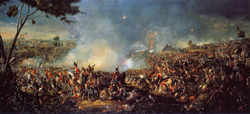
King William I of the Netherlands bestowed the victory title of Prince of Waterloo upon the 1st Duke of Wellington after his defeat of Napoleon I Bonaparte at Waterloo in 1815.
Image source: Prince of Waterloo
Jun 18, 1815
% complete
The 1st Duke of Wellington defeated Napoleon I Bonaparte at Waterloo in 1815, a decisive victory that earned him a unique princely honor from the King of the Netherlands.
Image source: Battle of Waterloo
1858 AD - 1947 AD
% complete
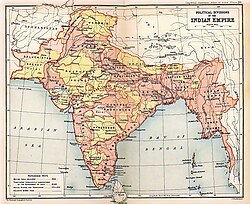
Indian princely rulers acknowledged the Emperor as their imperial sovereign until the empire's dissolution in 1947, maintaining their princely status under British paramountcy.
Image source: Princely state
1947 AD
% complete
The empire's dissolution in 1947 ended the allegiance of Indian princes to the Emperor, opening the way for their accession to newly formed successor states.
Image source: British Empire
1947 AD - 1949 AD
% complete
Between 1947 and 1949, the former princely states acceded to the newly formed Union of India and the Dominion of Pakistan, bringing the age of princely sovereignty on the subcontinent to a close.
Image source: Political integration of India
1648 AD
% complete
The habit of inter-marrying with fully sovereign dynasties completed the set of prerogatives through which Holy Roman Empire nobles rose to dynastic status after the Peace of Westphalia.
1648 AD
% complete
Local judicial authority and constabulary enforcement were among the sovereign prerogatives exercised by these nobles, further marking them out as rulers of effectively sovereign territories.
1648 AD
% complete
Preserving the right to wage war and contract treaties after 1648 allowed Holy Roman nobles to act as sovereign powers in their own right, reinforcing their claims to princely, dynastic status.
1648 AD
% complete
The right to muster military troops was one of the sovereign prerogatives retained de jure after the Peace of Westphalia, distinguishing these imperial nobles as quasi-sovereign dynasts.
1648 AD
% complete
Among the sovereign prerogatives preserved from the Imperial crown after Westphalia was the minting of money, one of the key rights that helped imperial nobles rise to dynastic status.
Image source: Mint (facility)
1648 AD
% complete
After the Peace of Westphalia in 1648, certain nobles of the Holy Roman Empire preserved from the Imperial crown, de jure, the exercise of sovereign prerogatives that elevated them toward dynastic status.
Image source: Peace of Westphalia
1700 AD - 1900 AD
% complete
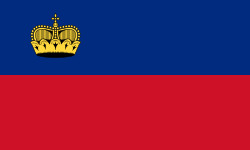
Liechtenstein long remained an exception to the emerging distinction within Fürst-led dynasties, with cadets and females continuing to use the styles Fürst/Fürstin into the 19th century.
Image source: Liechtenstein
1700 AD - 1800 AD
% complete
Before the 18th century, a distinction evolved for German dynasties headed by a Fürst to separate the reigning monarch from other members of his dynasty, although Liechtenstein long remained an exception.
Image source: Fürst
1700 AD - 1800 AD
% complete
As agnatic primogeniture gradually became the norm in the Holy Roman Empire over the 18th century, another means of distinguishing the monarch from other members of his dynasty became necessary.
1800 AD
% complete
By the end of the 18th century, with primogeniture the norm, dynasties adopted new means of distinguishing the reigning monarch from other members of his family within the Holy Roman Empire.
1800 AD - 1900 AD
% complete
By the 19th century, cadets of a Fürst would become known as Prinzen, formalizing the distinction between the reigning prince and other male members of the dynasty.
Or browse the full history timeline directory, with more than 2,000 topics.
This Prince timeline was generated with the help of AI, using information found on the internet.
We work hard to keep these timelines accurate, but mistakes do get through. If you spot one, email us at [email protected] and we'll fix it for future visitors.
Generate yours with AI or build it from scratch, for free.
Export your timeline, add your own events, edit or remove AI-generated events, and much more
No credit card required.
Cancel anytime.
Cancel anytime.
You can create an unlimited number of timelines with up to 10 events on each one, customize how they look, export them to PDF, PNG, PowerPoint, CSV, and Excel, and share them with a link. Paid plans raise the event limit and add features like spreadsheet imports and collaborators.
Yes. You can cancel your subscription from your account page at any time, and you will not be charged again. Your subscription stays active for the rest of the period you already paid for.
Yes. We will email you a reminder before the annual renewal, and we will also email you a receipt.
Yes. You can email us within 15 days of any payment, and we will issue you a full refund.
Check out our pricing docs or send us an email anytime: [email protected].