-
Use Cases
-
Resources
-
Pricing
The Beatles were an English rock band formed in Liverpool in 1960, comprising John Lennon, Paul McCartney, George Harrison, and Ringo Starr. Widely regarded as the most influential band of all time, they revolutionized popular music with groundbreaking albums like Sgt. Pepper's Lonely Hearts Club Band and Abbey Road before disbanding in 1970. More Less
Mar 1957
% complete
Sixteen-year-old John Lennon founded a skiffle group in Liverpool called the Quarrymen, named after Quarry Bank High School. The band would evolve through lineup changes into the Beatles, making it the seed of the most influential rock band in history.
Image source: The Quarrymen
Jul 6, 1957
% complete
Paul McCartney was introduced to John Lennon at the Woolton village fete, where the Quarrymen were performing. Impressed by McCartney's ability to tune a guitar and play 'Twenty Flight Rock', Lennon invited him to join the band within weeks.
Image source: Lennon–McCartney
Feb 1958
% complete
George Harrison, introduced to Lennon by his school friend McCartney, auditioned for the Quarrymen. Despite initial reservations about his young age, his impressive guitar playing won him a place, completing the core trio of future Beatles.
Image source: George Harrison
Jul 14, 1958
% complete
The Quarrymen recorded a shellac disc featuring Paul McCartney's 'In Spite of All the Danger' and Buddy Holly's 'That'll Be the Day' at a small Liverpool studio. It was the first time Lennon, McCartney, and Harrison appeared on record together.
Image source: In Spite of All the Danger
Jan 1960
% complete
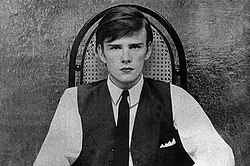
Art student Stuart Sutcliffe joined as bassist using money from selling a painting. Around this time the band went through several names before settling on 'The Beatles', inspired partly by Buddy Holly's Crickets and Lennon's love of wordplay.
Image source: Stuart Sutcliffe
Aug 17, 1960 - Oct 1962
% complete
The Beatles played grueling residencies in Hamburg's clubs, including the Indra and Star-Club, performing up to eight hours a night. These formative stints honed their musicianship, stagecraft, and stamina. Sutcliffe left the band there to pursue painting, and Ringo Starr later played with them during a 1962 visit.
Image source: The Beatles in Hamburg
Jan 24, 1962
% complete
Brian Epstein, manager of the NEMS record store who had noticed the Beatles' popularity from customer orders, became their manager. He polished their image, secured them auditions, and drove their rise to national fame until his death in 1967.
Image source: Brian Epstein
Aug 16, 1962
% complete
On the eve of their first EMI recording session, drummer Pete Best was dismissed and replaced by Rory Storm and the Hurricanes' Ringo Starr. Though controversial among some fans, Starr's drumming and personality completed the classic Beatles lineup.
Image source: Pete Best
Sep 11, 1962
% complete
The Beatles recorded 'Love Me Do', their debut single written primarily by Paul McCartney, with producer George Martin at EMI Studios. Released in October 1962, it reached number 17 on the UK charts, marking the start of their chart career.
Image source: Love Me Do
Feb 22, 1963
% complete
'Please Please Me' topped most UK singles charts after its January release. Its success prompted George Martin to rush-record the album of the same name in a marathon one-day session at Abbey Road on February 11, 1963, capturing the band's raw live energy.
Image source: Please Please Me (song)
Mar 22, 1963
% complete
Recorded largely in under ten hours, the Beatles' debut album Please Please Me spent thirty weeks at number one in the UK. It showcased the Lennon–McCartney songwriting partnership alongside energetic covers, announcing a new era of British pop.
Image source: Please Please Me
Nov 4, 1963
% complete
The Beatles performed before the Queen Mother and royalty at London's Prince of Wales Theatre. Lennon famously asked the audience in the cheap seats to rattle their jewellery, a quip that cemented the band's wit in British popular culture.
Image source: Royal Variety Performance
Feb 1, 1964
% complete
'I Want to Hold Your Hand' reached number one on Billboard's Hot 100, fueled by heavy promotion and radio airplay. It triggered the American phenomenon of Beatlemania and opened the door for the British Invasion of pop music.
Image source: I Want to Hold Your Hand
Feb 9, 1964 - Feb 16, 1964
% complete
An estimated 73 million Americans watched the Beatles' first live performance on The Ed Sullivan Show, a record television audience at the time. Two further appearances followed, confirming the band's conquest of America.
Image source: The Beatles on The Ed Sullivan Show
Mar 2, 1964 - Apr 24, 1964
% complete
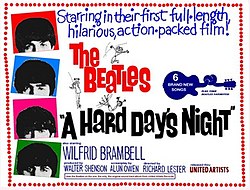
The Beatles shot their first feature film with director Richard Lester. Released that summer, the comedic mock-documentary captured Beatlemania at its height, earned critical acclaim, and pioneered techniques that influenced modern music videos.
Image source: A Hard Day's Night (film)
Aug 15, 1965
% complete
Playing to about 55,600 fans at New York's Shea Stadium, the Beatles staged the first major outdoor stadium concert in rock history. Overwhelmed by screaming, they could barely hear themselves, highlighting the limits of touring amid mass hysteria.
Image source: The Beatles at Shea Stadium
Aug 29, 1966
% complete
The Beatles played their final paid public concert at San Francisco's Candlestick Park. Exhausted by touring, unable to perform over fan screams, and frustrated by the studio-versus-stage divide, the band retired from live performance thereafter.
Image source: The Beatles' rooftop concert
Dec 3, 1965
% complete
Rubber Soul marked a creative leap, blending folk-rock influences, sitar textures on 'Norwegian Wood', and sophisticated lyrics. Often cited among the greatest albums ever, it signaled the band's shift from pop idols to serious studio artists.
Image source: Rubber Soul
Aug 5, 1966
% complete
Revolver embraced tape loops, backwards recording, double-tracked vocals, and Indian instrumentation, showcasing producer George Martin and engineer Geoff Emerick's innovations. Widely regarded as one of the most inventive albums in rock history.
Image source: Revolver (Beatles album)
Jun 1, 1967
% complete
Recorded over 700 hours across four months, Sgt. Pepper revolutionized the album format with its concept structure, orchestration, and iconic cover art. It topped charts worldwide, won four Grammy Awards including Album of the Year, and defined the Summer of Love.
Image source: Sgt. Pepper's Lonely Hearts Club Band
Dec 26, 1967
% complete
The Beatles' self-directed television film Magical Mystery Tour aired on BBC1 in black and white, confusing audiences with its surreal plot. Critically panned at the time, it was the band's first significant artistic misstep after years of success.
Image source: Magical Mystery Tour (film)
Feb 16, 1968 - Apr 1968
% complete
The Beatles studied Transcendental Meditation with Maharishi Mahesh Yogi in India. The productive retreat yielded dozens of songs that filled The White Album and deepened the band's interest in Eastern spirituality.
Image source: The Beatles in India
Nov 22, 1968
% complete
The sprawling double album The Beatles, known as the White Album, showcased wildly diverse styles but also growing tensions, with sessions marked by arguments and guest appearances. It nonetheless became a landmark of eclecticism and a massive commercial success.
Image source: The Beatles (album)
Jul 1, 1969 - Sep 26, 1969
% complete
Recorded as a swan song despite being released before Let It Be, Abbey Road featured the celebrated medley, George Harrison's 'Something' and 'Here Comes the Sun', and the legendary zebra-crossing cover photograph taken outside Abbey Road Studios.
Image source: Abbey Road
Aug 27, 1967
% complete
Brian Epstein died from an accidental drug overdose at age 32. His death destabilized the band's business affairs and emotional cohesion, prompting them to take greater control of their career while sowing seeds of future conflict.
Image source: Brian Epstein
Jan 1968
% complete
The Beatles formed Apple Corps, a multimedia company encompassing Apple Records, films, and retail ventures. Intended as a utopian creative outlet, it became mired in financial chaos, leading them to hire Allen Klein to restore order.
Image source: Apple Corps
Jan 2, 1969 - Jan 31, 1969
% complete
Filmed for what became the Let It Be documentary, the tense Get Back rehearsals captured interpersonal friction, culminating in the famous rooftop concert atop Apple Corps' Savile Row offices on January 30 — the Beatles' last public performance.
Image source: Let It Be (1970 film)
Sep 20, 1969
% complete
During a meeting at Apple, John Lennon told Paul McCartney, George Harrison, and Ringo Starr that he wanted a divorce from the band. The announcement remained private for months as legal and contractual entanglements delayed any formal split.
Image source: Break-up of the Beatles
Apr 10, 1970
% complete
Press interviews accompanying McCartney's solo album revealed his departure from the Beatles, effectively confirming the band's breakup to the world. Bitter disputes over management and songwriting credits soon followed between the former bandmates.
May 8, 1970
% complete
Released after the breakup, the Let It Be album and documentary offered an unvarnished look at the band's final days. Phil Spector's controversial orchestral overdubs added further tension, though the title track became an enduring classic.
Image source: Let It Be (album)
Nov 1995 - 1996
% complete
McCartney, Harrison, and Starr reunited for the Anthology documentary series, book releases, and new singles 'Free as a Bird' and 'Real Love', built around Lennon demo tapes. The project reframed the band's legacy for a new generation.
Nov 13, 2000
% complete
The hits compilation 1, collecting all 27 of the Beatles' chart-topping singles, sold millions worldwide and became the best-selling album of the 2000s decade in the US, demonstrating the band's undiminished global appeal decades after splitting.
Image source: 1 (Beatles album)
Jun 30, 2006
% complete
Cirque du Soleil's Love premiered at the Mirage in Las Vegas, set to remixes of Beatles recordings supervised by George Martin and his son Giles. Endorsed by the surviving Beatles and estates, it became a long-running tribute to the band's catalogue.
Image source: Love (Cirque du Soleil)
Sep 9, 2009
% complete
Harmonix's The Beatles: Rock Band launched alongside digitally remastered versions of the band's entire studio album catalogue, introducing their music to digital-era audiences and topping sales charts worldwide.
Image source: The Beatles: Rock Band
Nov 25, 2021
% complete
Peter Jackson's Get Back docuseries restored hundreds of hours of 1969 footage, revealing the band's creativity and humor during the sessions often remembered for discord. The critically acclaimed series reshaped perceptions of the Beatles' final chapter.
Or browse the full history timeline directory, with more than 2,000 topics.
This Beatles timeline was generated with the help of AI, using information found on the internet.
We work hard to keep these timelines accurate, but mistakes do get through. If you spot one, email us at [email protected] and we'll fix it for future visitors.
Generate yours with AI or build it from scratch, for free.
Export your timeline, add your own events, edit or remove AI-generated events, and much more
No credit card required.
Cancel anytime.
Cancel anytime.
You can create an unlimited number of timelines with up to 10 events on each one, customize how they look, export them to PDF, PNG, PowerPoint, CSV, and Excel, and share them with a link. Paid plans raise the event limit and add features like spreadsheet imports and collaborators.
Yes. You can cancel your subscription from your account page at any time, and you will not be charged again. Your subscription stays active for the rest of the period you already paid for.
Yes. We will email you a reminder before the annual renewal, and we will also email you a receipt.
Yes. You can email us within 15 days of any payment, and we will issue you a full refund.
Check out our pricing docs or send us an email anytime: [email protected].