-
Resources
-
Pricing
The Proclamation of 1763 was a British measure that regulated settlement and diplomacy in North America after the Seven Years’ War, restricting colonial expansion west of the Appalachian Mountains. More Less
Build a timeline like this one in minutes, for free. Start Yours →
1763
The Treaty of Paris formally ended the Seven Years’ War and its North American theater, the French and Indian War. France transferred extensive North American territory to Great Britain, creating the imperial circumstances that led to the Royal Proclamation.
Image source: Treaty of Paris (1763)
1763
Britain acquired former French territories in North America after its victory in the French and Indian War. The new possessions required an administrative framework and rules governing colonial settlement.
Image source: Royal Proclamation of 1763
Oct 7, 1763
King George III issued the Royal Proclamation of 1763. It addressed the administration of Britain’s newly acquired North American territories and regulated colonial expansion.
Oct 7, 1763
At the outset, the proclamation defined the jurisdictional limits of Britain’s North American territories, establishing a framework for imperial governance after the French and Indian War.
1763 - 1766
Pontiac’s Rebellion was a war involving Native American tribes, primarily from the Great Lakes, Illinois, and Ohio regions. The conflict reflected dissatisfaction with British postwar policies after the end of the Seven Years’ War.
Image source: Pontiac's War
1763
The proclamation reflected Britain’s need to manage relations with numerous Indigenous inhabitants. Its policy sought to secure British posts and trade through Indigenous diplomacy and land purchasing rather than unchecked occupation.
1763
A contemporary statement argued that Britain could not securely possess its posts and trade in an extensive wooded country without purchasing the favor of the numerous Indigenous inhabitants.
1768
The Treaty of Hard Labour adjusted the border with the Cherokee in the Carolinas. It was completed in 1768 as Britain pursued later agreements concerning lands beyond the proclamation line.
1768
The Treaty of Fort Stanwix, one of the first later treaties associated with the proclamation’s settlement framework, adjusted the border with the Iroquois Confederacy in the Ohio Country.
Image source: Treaty of Fort Stanwix (1768)
1770
The Treaty of Lochaber followed the Treaty of Hard Labour and adjusted the boundary between Virginia and the Cherokee.
Image source: Treaty of Lochaber
1763
The proclamation line was more or less similar to the Eastern Continental Divide, extending from Georgia northward toward Pennsylvania and continuing through New England.
1763
The southern portion of the proclamation line extended from Georgia, forming part of the boundary intended to limit colonial expansion beyond the Appalachian region.
1763
The line extended toward the northern terminus of the divide near the middle of Pennsylvania’s northern border, where it intersected the northeasterly St. Lawrence Divide.
1763
Beyond Pennsylvania, the proclamation line continued through New England as part of the geographic boundary governing colonial expansion.
Oct 7, 1763
The proclamation limited British colonial expansion on the continent by regulating settlers’ movement into former French territories and lands claimed by Indigenous peoples.
Oct 7, 1763
The 1763 proclamation line marked the boundary beyond which colonial settlement was restricted. It became the most recognizable geographic feature associated with the proclamation.
1767
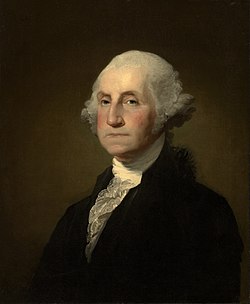
In a 1767 letter to surveyor William Crawford, George Washington described the proclamation as a temporary expedient intended to quiet Indigenous concerns, rather than necessarily as a permanent barrier.
Image source: George Washington
1768 - 1770
The treaties completed in 1768 and the later Treaty of Lochaber opened extensive lands for settlement. Many historians argue that these agreements reduced the proclamation’s importance as a continuing source of tension.
1769
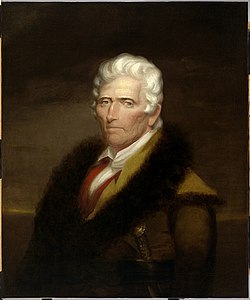
Daniel Boone crossed the Appalachian boundary line to hunt and explore deep into Kentucky, illustrating the pressure of frontier activity against the proclamation’s settlement restrictions.
Image source: Daniel Boone
1770
In 1770, Washington took the lead in securing land rights for himself and soldiers from the French War, advancing money for expenses and using his influence with officials.
1770
The lands surveyed by Washington were open to Virginians under the Treaty of Lochaber, except for lands located two miles south of Fort Pitt, now Pittsburgh.
Aug 1770
In August 1770, Washington personally traveled to the western region, where he located and surveyed tracts for himself and military comrades.
1774
James Harrod led an unauthorized group of 31 frontiersmen to found Harrodstown, now Harrodsburg. The settlement became the first permanent Anglo-American settlement west of the Alleghenies.
Image source: Harrodsburg, Kentucky
1783
In the United States, the Royal Proclamation’s operation ended with the American Revolutionary War when Great Britain ceded the land in question to the United States through the Treaty of Paris.
Image source: Treaty of Paris (1783)
1790
The first in a series of Indian Intercourse Acts was passed in 1790. It prohibited unregulated trade and travel in Native American lands, reintroducing related regulatory principles into United States law.
Image source: Nonintercourse Act
1823
In 1823, the U.S. Supreme Court held that only the U.S. government, rather than private individuals, could purchase land from Native Americans. The decision reintroduced the proclamation’s functional content into American law.
Image source: Johnson v. McIntosh
1823
Some later interpretations treat the Royal Proclamation as a fundamental document for First Nations land claims and self-government, connecting its principles to later Indigenous rights frameworks.
1980 - 1982
The Constitution Express movement of 1980–1982 involved direct action by Indigenous peoples of Canada and contributed to recognition of the Royal Proclamation in the Constitution Act, 1982.
Image source: Constitution of the United States
1982
The proclamation is recognized in the Constitution Act, 1982. The recognition was partly attributable to direct action by Indigenous peoples of Canada during the Constitution Express movement.
Image source: Constitution Act, 1982
Oct 2013
In October 2013, Ottawa marked the 250th anniversary of the Royal Proclamation with a meeting involving Indigenous leaders and Governor-General David Johnston.
Build a timeline like this one in minutes, for free. Start Yours →
Or browse the full history timeline directory, with more than 2,500 topics.
This Proclamation of 1763 timeline was generated with the help of AI, using information found on the internet.
We work hard to keep these timelines accurate, but mistakes do get through. If you spot one, email us at [email protected] and we'll fix it for future visitors.
Generate yours with AI or build it from scratch, for free.
Export your timeline, add your own events, edit or remove AI-generated events, and much more
No credit card required.
15-day money-back guarantee.
You can create an unlimited number of timelines with up to 10 events on each one, customize how they look, export them to PDF, PNG, PowerPoint, CSV, and Excel, and share them with a link. Timelines made with Timeline Maker AI keep every event the generator created, and you can add up to 5 events of your own. Paid plans remove the event limit, add spreadsheet imports and hide Preceden's branding, and the higher-priced plan also adds collaborators, a custom logo and a custom domain.
Yes. You can cancel your subscription from your account page at any time, and you will not be charged again. Your subscription stays active for the rest of the period you already paid for.
Yes. We email you a reminder 15 days before your annual renewal, and we email you a receipt after every payment.
Yes. You can email us within 15 days of any payment, and we will issue you a full refund.
Check out our pricing docs or send us an email anytime: [email protected].