-
Use Cases
-
Resources
-
Pricing
600 BC - 501 BC
Zoroastrianism found its roots in the teachings of prophet Zoroaster in the 6th century BCE, gathering a following over the centuries.
Image source: Zoroastrianism

500 BC - 401 BC
Buddhism, founded by Siddhartha Gautama in the 5th century BCE, has since garnered a significant following worldwide.
Image source: Buddhism
500 BC - 401 BC
Historians date the Mahavira, a key figure in Jainism, to about the 5th century BCE, placing Parshvanatha in the 8th or 7th century BCE.
Image source: Jainism
200 - 299
Vajrayana Buddhism first appeared in India in the 3rd century CE, and it has since become a distinct sect with its own practices.
Image source: Vajrayana
600 - 699
Islam, founded in the 7th century based on the Quran and the teachings of Muhammad, boasts approximately 1.8 billion followers.
Image source: Islam
1400 - 1499
Sikhism, founded on the teachings of Guru Nanak in 15th-century Punjab, has evolved into a prominent panentheistic religion.
Image source: Sikhism
1800 - 1899
Founded in 19th-century Iran, the Bahá'í Faith teaches the unity of all religious philosophies and accepts prophets from multiple religions.
Image source: Baháʼí Faith
1800 - 1899
Since the 19th century, Japan has witnessed the rise of various new religious movements, reflecting the dynamic religious landscape in the country.
Image source: Japanese new religions
1926
Cao Đài, a syncretistic, monotheistic religion, was established in Vietnam in 1926, blending multiple religious beliefs.
Image source: Caodaism

1940
Albert Einstein expressed in 1940 that while science can ascertain what is, value judgments remain necessary, acknowledging the importance of non-scientific considerations.
Image source: Relationship between religion and science
1954
First popularized in 1954 by Gerald Gardner, Wicca is a neo-pagan religion involving the worship of a God and Goddess.
Image source: Wicca
1980
The interdisciplinary study of law and religion began to gain prominence in the 1980s, involving scholars from various fields such as law, political science, religion, and history.
1998
Several studies have discovered positive correlations between religious belief and practice and mental and physical health, various dimensions of spirituality playing distinct roles.
2012
A global poll in 2012 reported that 59% of the world's population identified as religious, with 23% as not religious and 13% as convinced atheists.
2014
As of 2014, Christians comprised 92% of the US Congress, a higher percentage than the general public.
2015
A follow-up poll in 2015 found that 63% of the globe identified as religious, 22% as not religious, and 11% as convinced atheists.
2015
According to a 2015 study, Christians held the largest amount of global wealth, followed by Muslims and Hindus, reflecting religious influence on global economics.
Image source: Religion
300 BCE
The term Threskeia was sparsely used in classical Greece, signifying the early recognition of religious practices within the society.
1 CE - 99 CE
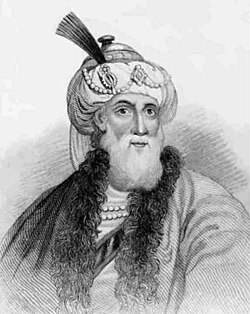
The usage of the term Threskeia became more frequent in the writings of Josephus in the 1st century CE, indicating its evolving significance in religious contexts.
Image source: Josephus
1 CE - 99 CE
In the 1st century CE, Josephus used the Greek term ioudaismos (Judaism) as an ethnic term. It was not initially linked to modern abstract concepts of religion.
Image source: Judaism
1500 - 1699
The concept of religion started to form in the 16th and 17th centuries, influenced by global events such as the Protestant Reformation and the Age of Exploration.
Image source: History of religion
1500 - 1599
The Protestant Reformation in the 16th century saw the separation of Protestantism from the Catholic Church, leading to the development of thousands of denominations.
Image source: Reformation
1600 - 1899
The terms religion and science emerged in the 17th and 19th centuries, reflecting historical shifts in the understanding of these concepts.
1700 - 1899
Terms such as Buddhism, Hinduism, Taoism, and Confucianism were first introduced in the English language during the 18th and 19th centuries.
Image source: Eastern religions
1800 - 1899
The concept of 'Judaism' was invented by the Christian Church, with Jews beginning to see their ancestral culture as a religion analogous to Christianity in the 19th century.
1775 - 1799
Late 18th-century intellectuals such as Friedrich Schleiermacher and Georg Wilhelm Friedrich Hegel debated the definition of religion, prompting diverse interpretations.
Image source: Definition of religion
1800 - 1899
Max Müller in the 19th century traced the root of the English word 'religion' to the Latin word 'religiō', initially meaning reverence for God or divine things.
1800 - 1999
In the 19th and 20th centuries, the academic practice of comparative religion categorized religious belief into philosophically defined categories known as world religions.
Image source: Comparative religion
1853
The arrival of American warships off the coast of Japan in 1853 forced the country to confront the idea of religion, previously non-existent in their culture.
Image source: Religion in Japan
Or browse the full history timeline directory, with more than 2,500 topics.
This Religion timeline was generated with the help of AI, using information found on the internet.
We work hard to keep these timelines accurate, but mistakes do get through. If you spot one, email us at [email protected] and we'll fix it for future visitors.
Generate yours with AI or build it from scratch, for free.
Export your timeline, add your own events, edit or remove AI-generated events, and much more
No credit card required.
Cancel anytime.
Cancel anytime.
You can create an unlimited number of timelines with up to 10 events on each one, customize how they look, export them to PDF, PNG, PowerPoint, CSV, and Excel, and share them with a link. Paid plans raise the event limit and add features like spreadsheet imports and collaborators.
Yes. You can cancel your subscription from your account page at any time, and you will not be charged again. Your subscription stays active for the rest of the period you already paid for.
Yes. We will email you a reminder before the annual renewal, and we will also email you a receipt.
Yes. You can email us within 15 days of any payment, and we will issue you a full refund.
Check out our pricing docs or send us an email anytime: [email protected].