-
Use Cases
-
Resources
-
Pricing
600 - 1999
% complete
The equivalent Muslim term millat Ibrahim was used as part of an Islamic historiography rather than as a way to join different religions together.
1000
% complete
Because of its historical emergence from Islam, the Druze faith is classified as Abrahamic by some sources, although this classification is not universal.
Image source: Druze
1800 - 1899
% complete
The late-nineteenth-century Baháʼí Faith has been characterized as Abrahamic because it is monotheistic and recognizes its own descent from Abraham.
Image source: Baháʼí Faith
1800 - 1899
% complete
Some scholars include Bábism among movements connected with the Abrahamic religious family because of its relationship to the Baháʼí Faith.
Image source: Bábism
1900 - 1999
% complete
Aaron W. Hughes observes that before the twentieth century, the adjective Abrahamic appeared exclusively in the context of Christian supersessionism.
Image source: Supersessionism
1950 - 1999
% complete
The term Abrahamic appears for the first time in the second half of the twentieth century.
Image source: Abrahamic religions
1950 - 1999
% complete
Introduced in the twentieth century, the term Abrahamic replaced Judeo-Christian in some usage to include Islam and acknowledge differences between Judaism and Christianity.
1950 - 1999
% complete
During the twentieth century, a significant minority of scholars recognized and classified the Baháʼí Faith, Druze faith, Rastafari, and Samaritanism as Abrahamic religions.
1950 - 1999
% complete
The twentieth-century expansion of the category did not produce universal agreement about which religions should be called Abrahamic.
2012
% complete
In 2012, Alan L. Berger wrote that Judaism birthed both Christianity and Islam, while the three monotheistic faiths subsequently went their separate ways.
2012
% complete
Alan L. Berger observed that each of the three monotheistic faiths views Abraham differently, as reflected in its theological claims about him.
2012
% complete
Aaron W. Hughes describes Abrahamic as an imprecise term and largely a theological neologism.
600 - 699
% complete
Islam was founded by Muhammad in the Arabian Peninsula during the seventh century AD.
Image source: Muhammad
632 - 699
% complete
Islam spread widely through the early Muslim conquests shortly after Muhammad's death.
Image source: Early Muslim conquests
1000 - 1054
% complete
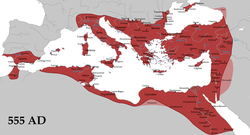
The Byzantine Empire attempted to unify Christendom, but the effort did not produce a lasting religious unity.
Image source: Byzantine Empire
1000 - 1099
% complete
The Druze faith emerged from Islam in the eleventh century and is therefore sometimes considered an Abrahamic religion.
1054
% complete
The Byzantine attempt to unify Christendom formally failed with the East–West Schism of 1054, dividing Eastern and Western Christianity.
Image source: East–West Schism
1500 - 1599
% complete
The birth and growth of Protestantism during the sixteenth-century Reformation further split Christianity into many denominations.
Image source: Reformation
1500 - 1599
% complete
The sixteenth-century growth of Protestantism created additional Christian traditions and contributed to the denominational diversity of Christianity.
Image source: Protestantism
1800 - 1899
% complete
Bábism emerged as a nineteenth-century movement and precursor to the Baháʼí Faith.
1800 - 1899
% complete
The Baháʼí Faith was established in the nineteenth century in an Islamic milieu and is included by a number of sources among the Abrahamic religions.
600 - 699
% complete
The emergence and expansion of Islam established the third major monotheistic tradition commonly included among the Abrahamic religions.
Image source: Islam
1800 - 1899
% complete
The Baháʼí Faith shares several beliefs with Abrahamic faiths, including monotheism and recognition of Jewish, Christian, and Islamic figures as prophets.
1439
% complete
The Council of Florence in the fifteenth century prohibited the practice referenced in the source tradition.
Image source: Council of Florence
1900 - 1999
% complete
The Baháʼí Faith is described as the fastest-growing religion across the twentieth century, usually growing at least twice as quickly as the population.
1992
% complete
Paragraph 2297 of the Catechism of the Catholic Church calls non-medical amputation or mutilation immoral.
Image source: Catechism of the Catholic Church
2000 - 2026
% complete
By the twenty-first century, the Catholic Church had adopted a neutral position on the practice, provided that it was not performed as an initiation ritual.
Image source: Catholic Church
2000 - 2026
% complete
The Baháʼí Faith has over eight million adherents, making it the fourth-largest Abrahamic religion according to the source material.
2003
% complete
In the United States, 28 percent of married Jews were married to non-Jews as of 2003.
Image source: Interfaith marriage in Judaism
Or browse the full history timeline directory, with more than 2,000 topics.
This Abrahamic Religions timeline was generated with the help of AI, using information found on the internet.
We work hard to keep these timelines accurate, but mistakes do get through. If you spot one, email us at [email protected] and we'll fix it for future visitors.
Generate yours with AI or build it from scratch, for free.
Export your timeline, add your own events, edit or remove AI-generated events, and much more
No credit card required.
Cancel anytime.
Cancel anytime.
You can create an unlimited number of timelines with up to 10 events on each one, customize how they look, export them to PDF, PNG, PowerPoint, CSV, and Excel, and share them with a link. Paid plans raise the event limit and add features like spreadsheet imports and collaborators.
Yes. You can cancel your subscription from your account page at any time, and you will not be charged again. Your subscription stays active for the rest of the period you already paid for.
Yes. We will email you a reminder before the annual renewal, and we will also email you a receipt.
Yes. You can email us within 15 days of any payment, and we will issue you a full refund.
Check out our pricing docs or send us an email anytime: [email protected].