-
Resources
-
Pricing
The Tennessee Valley Authority (TVA) is a federally owned corporation established during the New Deal to manage the Tennessee River, generate electricity, control floods, and promote economic development across the Tennessee Valley. More Less
Build a timeline like this one in minutes, for free. Start Yours →
1890
In the late 19th century, the Army Corps of Engineers recognized potential dam sites along the Tennessee River. The sites offered opportunities for electricity generation and navigation improvements.
Image source: Tennessee Valley Authority
1916
The National Defense Act of 1916, signed by President Woodrow Wilson, authorized a hydroelectric dam on the Tennessee River at Muscle Shoals, Alabama. The project was intended to produce nitrates for ammunition.
Image source: Muscle Shoals, Alabama
1920
U.S. Senator George W. Norris blocked industrialist Henry Ford's proposal to build a private dam and utility in the Tennessee Valley. Norris distrusted private utility companies and favored public development.
Image source: George W. Norris
1921
By 1921, utility holding companies controlled 94 percent of electrical generation. These private companies were essentially unregulated, contributing to demands for public oversight and alternatives.
Image source: Public Utility Holding Company Act of 1935
1924
The dam authorized under the National Defense Act was completed at Muscle Shoals, Alabama, in 1924.
1930
George W. Norris sponsored the Muscle Shoals Bill to build a federal dam and develop the Tennessee Valley. President Herbert Hoover vetoed the measure, viewing it as socialistic.
1933
In 1933, the Tennessee Valley was in dire economic condition. Rural average income was $639 per year, while some families survived on as little as $100 annually.
May 18, 1933
Congress enacted the Tennessee Valley Authority Act of 1933, creating the TVA as a government-owned corporation under U.S. Code Title 16, Chapter 12A. The act formed part of President Franklin D. Roosevelt's New Deal.
Image source: Tennessee Valley Authority
1934
The Knoxville TVA Employees Credit Union was established in 1934 to give TVA employees a place to store money while the Great Depression caused many traditional banks to close. It was an early economic effort associated with the authority but was not directly affiliated with TVA.
Image source: Knoxville TVA Employees Credit Union
Oct 1, 1933
TVA began constructing several hydroelectric dams soon after its creation. Norris Dam in upper East Tennessee was the first and broke ground on October 1, 1933.
Image source: Norris Dam
1934
By 1934, TVA employed more than 9,000 people as it expanded dam construction, public works, and regional development programs.
1936
TVA's headquarters were housed in Knoxville's Old Customs House beginning in 1936. The building remained the agency's headquarters until the current complex opened in 1976.
Aug 16, 1939
Tennessee Electric Power Company was forced to sell assets including Hales Bar Dam, Ocoee Dams 1 and 2, Blue Ridge Dam, and Great Falls Dam to TVA for $78 million.
1942
TVA's first coal-fired plant, the 267-megawatt Watts Bar Steam Plant, began operating in 1942.
Image source: Watts Bar Steam Plant
1942
By early 1942, TVA had 12 hydroelectric plants and one coal-fired steam plant under construction simultaneously. Design and construction employment reached 28,000.
1955
Coal became TVA's top generating source in 1955, surpassing hydroelectricity.
Aug 6, 1959
President Dwight D. Eisenhower signed an amendment to the TVA Act on August 6, 1959, making the agency self-financing.
1960 - 1970
TVA's generating capacity increased by 56 percent between 1960 and 1970, although growth slowed during part of the period.
May 15, 1965
TVA placed its first 500-kilovolt transmission line into service on May 15, 1965, preparing for projected growth in electricity consumption.
1976
TVA's current headquarters complex opened in 1976, ending the agency's use of Knoxville's Old Customs House as its headquarters.
2004
In 2004, TVA implemented recommendations from its Reservoir Operations Study concerning operation of the Tennessee River system.
2009
TVA signed 20-year power purchase agreements with CVP Renewable Energy and Invenergy Wind for electricity generated by wind farms, expanding access to sustainable energy.
2018
TVA opened a new cybersecurity center in its downtown Chattanooga office complex in 2018.
2020
In fiscal year 2020, nuclear generation supplied about 41 percent of TVA's energy production, followed by natural gas at 26 percent, coal at 14 percent, hydroelectricity at 13 percent, and wind and solar at 3 percent.
Dec 23, 2022
On December 23, 2022, TVA implemented several hours of rolling blackouts during the late-December North American winter storm.
Image source: December 2022 North American winter storm
1936
In Ashwander v. Tennessee Valley Authority, the United States Supreme Court ruled in 1936 that TVA was constitutional.
Image source: Ashwander v. Tennessee Valley Authority
1936
After political opposition regrouped, river lobbyists and conservative members of Congress expanded the Army Corps of Engineers' flood-control program in 1936, challenging the New Dealers' plans for additional federal utility corporations.
1939
The Supreme Court again upheld the TVA Act in Tennessee Electric Power Company v. TVA, reinforcing the authority's legal position against private utility challenges.
1940 - 1945
New Dealers hoped to establish numerous federal utility corporations across the United States, but lobbyists, 1940 Republican presidential nominee Wendell Willkie, and the conservative coalition in Congress defeated those broader plans.
1945
After 1945, Democrats promoted TVA as a model for countries in the developing world. Conservative critics responded that it was centralized, technocratic, and insensitive to local residents.
1953
President Dwight D. Eisenhower referred to TVA as an example of “creeping socialism” in 1953, reflecting continuing conservative opposition to the federal corporation.
1960
Elia Kazan's 1960 film Wild River depicts a family forced to relocate from ancestral land because TVA plans to construct a dam that will flood it.
Image source: Wild River (film)
1962
An official was fired in 1962 after publicly referring to TVA, a major customer for General Electric turbines, as one of the problems of big government.
1963
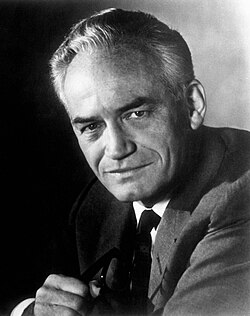
Senator and presidential candidate Barry Goldwater was quoted as saying that TVA should be sold. His comments about privatizing parts of the authority were later used in a 1964 campaign advertisement for Lyndon B. Johnson.
Image source: Barry Goldwater
1970 - 1972
James Dickey's 1970 novel Deliverance and its 1972 film adaptation follow four Atlanta businessmen canoeing on a river being impounded by an electric utility, echoing TVA's controversial hydroelectric projects.
Image source: Deliverance
1973 - 1975
The snail darter, a small ray-finned fish, was discovered in the Little Tennessee River in 1973 and listed as an endangered species two years later. Its protection delayed the Tellico Dam project.
Image source: Snail darter
1978
In Tennessee Valley Authority v. Hill, the Supreme Court ruled in favor of protecting the endangered snail darter under the Endangered Species Act, affecting the Tellico Dam project.
1980 - 1989
Comic book writer and artist Walt Simonson attributed the name of Marvel's fictional Time Variance Authority to TVA. The organization appeared in The Mighty Thor in the 1980s and later in the Marvel Cinematic Universe series Loki and the 2024 film Deadpool & Wolverine.
Image source: Time Variance Authority
1981
The TVA Board of Directors broke with previous practice in 1981 and took a hard line against white-collar unions during contract negotiations.
1984
The 1984 Mark Rydell film The River portrays an East Tennessee family facing the loss of its ancestral farm when a nearby river is inundated by an electric utility.
Image source: The River (1984 film)
1987
TVA reached an out-of-court settlement in 1987 in a Title VII sex-discrimination case arising from contract changes that disproportionately affected women in one pay grade. The agency paid $5 million and denied wrongdoing.
1994
Initially part of TVA, the TVA Police was authorized as a federal law-enforcement agency in 1994.
2000
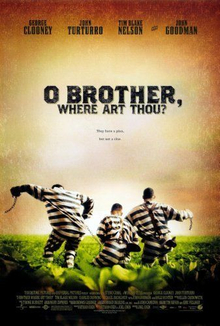
In the 2000 film O Brother, Where Art Thou?, the protagonist's family home is flooded by a reservoir constructed by TVA.
Image source: O Brother, Where Art Thou?
Dec 22, 2008 - 2015
An earthen dike at TVA's Kingston Fossil Plant failed on December 22, 2008, releasing 1.1 billion U.S. gallons of coal ash slurry across 300 acres and into two Tennessee River tributaries. Cleanup finished in 2015 at a cost exceeding $1 billion.
Image source: Kingston Fossil Plant coal fly ash slurry spill
2009
A 2009 AECOM report found that multiple inadequate design factors in the ash pond contributed to the Kingston spill, which was described as the largest industrial spill in United States history.
Apr 2011 - 2021
TVA reached an agreement with the Environmental Protection Agency, four states, and three environmental groups in April 2011 to reduce pollution and carbon emissions. The agreement required retiring at least 18 of 59 coal-fired units and installing or adopting cleaner technology at others.
2012
Jason Isbell released a solo cover of “TVA” in 2012, adding a musical reference to the authority's regional history.
Image source: Jason Isbell
2012 - 2020
Under the 2011 pollution agreement, TVA retired John Sevier in 2012, Shawnee Unit 10 in 2014, Widows Creek in 2015, Colbert in 2016, Johnsonville and Paradise Units 1 and 2 in 2017, Allen in 2018, and Paradise Unit 3 in 2020.
Aug 2012
The U.S. District Court for the Eastern District of Tennessee found TVA liable for the Kingston coal ash disaster in August 2012.
Nov 2018
In November 2018, a federal jury ruled that the Kingston spill contractor had failed to properly inform workers about coal ash exposure dangers and failed to provide necessary personal protective equipment.
Feb 2019
Despite President Donald Trump's opposition, the TVA board voted in February 2019 to close the aging Paradise Unit 3 and Bull Run coal plants because of continuing economic pressure on coal.
Aug 3, 2020
President Donald Trump fired the TVA chairman and another board member on August 3, 2020, citing their compensation and the outsourcing of 200 high-tech jobs.
Apr 2021 - 2035
TVA announced plans in April 2021 to completely phase out coal power by 2035.
2024
TVA CEO Jeff Lyash's compensation package of $10.5 million in 2024 generated substantial criticism.
1966
Expecting electricity demand in the Tennessee Valley to continue rising, TVA began constructing nuclear power plants in 1966.
1970 - 1974
Between 1970 and 1974, TVA set out to construct 17 nuclear reactors, based on projections of continued rapid growth in electricity demand.
1973 - 1979
Energy crises in 1973 and 1979, together with accelerating fuel costs, produced major changes in the Tennessee Valley and national economies during the 1970s.
Image source: 1970s energy crisis
Aug 1, 1974
Browns Ferry Unit 1, TVA's first nuclear reactor, began commercial operation on August 1, 1974.
Image source: Browns Ferry Nuclear Plant
1981
The TVA board voted in 1981 to defer the Phipps Bend plant and slow construction on other projects as demand projections and financial conditions changed.
Image source: Phipps Bend Nuclear Plant
1984 - 1988
TVA cancelled the Hartsville and Yellow Creek plants in 1984 and Bellefonte in 1988 as its nuclear construction program was scaled back.
1985
Citing safety concerns, TVA indefinitely shut down all five of its operating nuclear reactors in 1985.
1988
The two Sequoyah nuclear reactors returned to service three years after TVA shut down its five operating reactors for safety concerns.
Image source: Sequoyah Nuclear Plant
Jan 1988
Marvin Travis Runyon became TVA chairman in January 1988. The former automotive executive pledged to stabilize the agency financially through cost reductions and efficiency improvements.
1988 - 1992
Restructuring under Marvin Runyon produced cumulative savings and efficiency improvements of $1.8 billion, cut operating costs by nearly $800 million annually, and reduced the workforce by more than half while increasing generating capacity.
1991 - 2007
Browns Ferry's three reactors returned to service in 1991, 1995, and 2007 after being shut down in 1985.
1992 - May 1996
Work resumed on Watts Bar Unit 1 in 1992, and the reactor began operation in May 1996. It became the last commercial nuclear reactor completed in the United States during the 20th century.
Image source: Watts Bar Nuclear Plant
2002 - 2007
TVA began work in 2002 to restart Browns Ferry Unit 1, the last of its reactors mothballed in 1985. The unit returned to service in 2007.
2005 - 2016
TVA announced plans in 2005 to construct an Advanced Pressurized Water Reactor at Bellefonte, Alabama. It filed applications in November 2007, but the proposal was gradually reduced and effectively voided by 2016.
Image source: Bellefonte Nuclear Plant
Oct 2007 - Oct 2016
Construction resumed on Watts Bar Unit 2 in October 2007. The unit began commercial operation in October 2016 and became the first new nuclear reactor to enter service in the United States in the 21st century.
Feb 2020
In early February 2020, TVA awarded Framatome several multi-million-dollar contracts for work across its nuclear reactor fleet.
Image source: Framatome
Feb 2022
Seeking net-zero carbon emissions by 2050, the TVA Board approved an advanced nuclear technology approach in February 2022. The New Nuclear Program included an estimated $200 million investment.
Image source: Small modular reactor
Dec 2025
In December 2025, the United States Department of Energy allocated TVA a $400 million grant to assist deployment of advanced light-water small modular reactors. TVA planned to build a BWRX-300 SMR.
Build a timeline like this one in minutes, for free. Start Yours →
Or browse the full history timeline directory, with more than 2,500 topics.
This Tennessee Valley Authority timeline was generated with the help of AI, using information found on the internet.
We work hard to keep these timelines accurate, but mistakes do get through. If you spot one, email us at [email protected] and we'll fix it for future visitors.
Generate yours with AI or build it from scratch, for free.
Export your timeline, add your own events, edit or remove AI-generated events, and much more
No credit card required.
15-day money-back guarantee.
You can create an unlimited number of timelines with up to 10 events on each one, customize how they look, export them to PDF, PNG, PowerPoint, CSV, and Excel, and share them with a link. Timelines made with Timeline Maker AI keep every event the generator created, and you can add up to 5 events of your own. Paid plans remove the event limit, add spreadsheet imports and hide Preceden's branding, and the higher-priced plan also adds collaborators, a custom logo and a custom domain.
Yes. You can cancel your subscription from your account page at any time, and you will not be charged again. Your subscription stays active for the rest of the period you already paid for.
Yes. We email you a reminder 15 days before your annual renewal, and we email you a receipt after every payment.
Yes. You can email us within 15 days of any payment, and we will issue you a full refund.
Check out our pricing docs or send us an email anytime: [email protected].