-
Use Cases
-
Resources
-
Pricing
The Indus Valley Civilization was one of the world's first great urban cultures, flourishing in the river valleys of the Indus and Ghaggar-Hakra in present-day Pakistan and northwest India. Known for its meticulously planned cities like Harappa and Mohenjo-daro, advanced drainage systems, standardized weights, and undeciphered script, it represents a remarkable early achievement in urban planning and trade. More Less
7000 BCE - 2500 BCE
% complete
Mehrgarh is a Neolithic mountain site in the Balochistan province of Pakistan, occupied from 7000 BCE to c. 2500 BCE, which gave new insights on the emergence of the Indus Valley Civilisation.
Image source: Mehrgarh
6500 BCE
% complete
Around 6500 BCE, agriculture emerged in Balochistan, on the margins of the Indus alluvium, laying the groundwork for the later development of the Indus Valley Civilisation.
Image source: Indus Valley Civilisation
4300 BCE - 3200 BCE
% complete
During 4300–3200 BCE of the chalcolithic period (copper age), the Indus Valley Civilisation area shows ceramic similarities with southern Turkmenistan and northern Iran which suggest considerable mobility and trade.
3300 BCE - 2800 BCE
% complete
The Early Harappan Ravi Phase, named after the nearby Ravi River, lasted from c. 3300 BCE until 2800 BCE. It started when farmers from the mountains gradually moved between their mountain homes and the lowland river valleys.
3300 BCE - 1300 BCE
% complete
The Indus Valley Civilisation was a Bronze Age civilisation in the northwestern regions of South Asia, lasting from 3300 BCE to 1300 BCE, and in its mature form from 2600 BCE to 1900 BCE. With predecessor and successor cultures included, it may be taken to have lasted from the 33rd to the 14th centuries BCE.
2800 BCE - 2600 BCE
% complete
The Ravi Phase predates the Kot Diji Phase (2800–2600 BCE, Harappan 2), named after a site in northern Sindh, Pakistan, near Mohenjo-daro. According to Maisels, 'The Harappan oecumene formed from a Kot Dijian/Amri-Nal synthesis'.
3000 BCE - 2000 BCE
% complete
Archaeological remains from 2000 to 3000 BC have been found from the city of Lothal of pieces on a board that resemble chess. The weights and measures later used in Kautilya's Arthashastra (4th century BCE) are the same as those used in Lothal.
Image source: Lothal
2800 BCE - 2600 BCE
% complete
Terracotta female figurines were found (c. 2800–2600 BCE) which had red colour applied to the 'manga' (line of partition of the hair).
2600 BCE
% complete
By 2600 BCE, Early Harappan communities turned into large urban centres, marking the start of the mature Harappan phase, which lasted until around 1900 BCE.
2600 BCE - 1900 BCE
% complete
The cities of the ancient Indus had social hierarchies, a writing system, large planned cities and long-distance trade, marking them as a full-fledged civilisation. The mature phase lasted from c. 2600–1900 BCE.
2600 BCE - 1900 BCE
% complete
Although over a thousand Mature Harappan sites have been reported, there are only five major urban centres: Mohenjo-daro in the lower Indus Valley, Harappa in the western Punjab region, Ganeriwala in the Cholistan Desert, Dholavira in western Gujarat, and Rakhigarhi in Haryana.
2600 BCE
% complete
Research confirms that Indus populations were the earliest people to use complex multi-cropping strategies across both seasons, growing foods during summer (rice, millets and beans) and winter (wheat, barley and pulses), which required different watering regimes.
2600 BCE
% complete
Seven food-balls ('laddus') were found in intact form, along with two figurines of bulls and a hand-held copper adze, during excavations in 2017 from western Rajasthan. Dated to about 2600 BCE, they were likely composed of legumes, primarily mung, and cereals.
2001 BCE
% complete
Evidence points to an entirely separate domestication process of rice in ancient South Asia, based around the wild species Oryza nivara, leading to a mix of 'wetland' and 'dryland' agriculture before truly wetland rice Oryza sativa japonica arrived around 2000 BCE.
1801 BCE
% complete
An ideogram in the IVC contains the earliest known depiction of an arched harp, dated sometime before 1800 BCE.
1900 BCE - 1700 BCE
% complete
Around 1900 BCE signs of a gradual decline began to emerge, and by around 1700 BCE most of the cities had been abandoned. During approximately 1900 to 1700 BCE, multiple regional cultures emerged within the area of the Indus civilisation.
1899 BCE
% complete
According to Possehl, after 1900 BCE the number of sites in today's India increased from 218 to 853, reflecting the shift of population eastward as the civilisation declined.
1800 BCE
% complete
The Indus Valley climate grew significantly cooler and drier from about 1800 BCE, linked to a general weakening of the monsoon at that time. The IVC residents did not develop irrigation capabilities, relying mainly on seasonal monsoons leading to summer floods.
1800 BCE - 325 BCE
% complete
Harvard archaeologist Richard Meadow points to the late Harappan settlement of Pirak, which thrived continuously from 1800 BCE to the time of the invasion of Alexander the Great in 325 BCE.
Image source: Duke Pirak
1700 BCE
% complete
By around 1700 BCE most of the cities of the Indus Valley Civilisation had been abandoned, though many sites continued to be occupied for some centuries, although their urban features declined and disappeared.
1200 BCE
% complete
According to Andrew Lawler, excavations along the Gangetic plain show that cities began to arise there starting about 1200 BCE, just a few centuries after Harappa was deserted. At Bhagwanpura, an overlap exists between Late Harappan pottery and Painted Grey Ware pottery associated with Vedic culture.
1000 BCE - 900 BCE
% complete
As of 2016, archaeological data suggests that the material culture classified as Late Harappan may have persisted until at least c. 1000–900 BCE and was partially contemporaneous with the Painted Grey Ware culture.
1994
% complete
Subsequent examinations of the skeletons by Kenneth Kennedy in 1994 showed that marks on skulls once attributed to Aryan invasion violence were caused by erosion, not violence, undermining Wheeler's 1953 invasion hypothesis.
2016
% complete
As of 2016 many scholars believe that drought, and a decline in trade with Egypt and Mesopotamia, caused the collapse of the Indus civilisation, rather than conquest or migration.
1829
% complete
In 1829, Masson travelled through the princely state of Punjab, gathering useful intelligence for the Company in return for a promise of clemency, passing by the ruins of Harappa.
Image source: Charles Masson
1842
% complete
In 1842, Masson included his observations of Harappa in the book Narrative of Various Journeys in Baluchistan, Afghanistan, and the Punjab.
1848 - 1849
% complete
Despite early reports, Harappa was raided even more perilously for its bricks after the British annexation of the Punjab in 1848–49, stripping much of the site's upper layer.
Image source: Harappa
1861
% complete
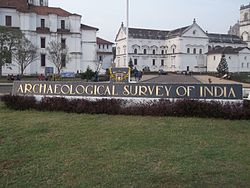
Three years after the dissolution of the East India Company and the establishment of Crown rule in India, archaeology on the subcontinent became more formally organised with the founding of the Archaeological Survey of India (ASI), culminating eventually in the discovery of Harappa and Mohenjo-daro.
Image source: Archaeological Survey of India
1875
% complete
Alexander Cunningham, the Survey's first director-general, who had visited Harappa in 1853, visited again to survey a site whose entire upper layer had been stripped. Though his goal of proving it a lost Buddhist city mentioned by Xuanzang proved elusive, he published his findings in 1875.
Image source: Alexander Cunningham
1904
% complete
Archaeological work at Harappa lagged until a new viceroy of India, Lord Curzon, pushed through the Ancient Monuments Preservation Act 1904, and appointed John Marshall to lead the ASI.
1923
% complete
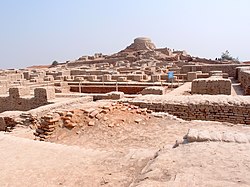
In 1923, on his second visit to Mohenjo-daro, Banerji wrote to Marshall postulating an origin in 'remote antiquity', noting congruence of artifacts with those of Harappa. Later that year, Vats noted the same specifically about seals and script found at both sites.
Image source: Mohenjo-daro
1924 - 1931
% complete
Systematic excavations began at Mohenjo-daro in 1924–25, followed by those of Hargreaves (1925–1926) and Ernest Mackay. By 1931, much of Mohenjo-daro had been excavated.
Sep 24, 1924
% complete
By 1924, Marshall had become convinced of the significance of the finds, and on 24 September 1924 made a tentative but conspicuous public intimation in the Illustrated London News, comparing the discovery to Schliemann at Tiryns and Mycenae.
Image source: John Marshall (archaeologist)
1931
% complete
John Marshall identified prominent features of the Indus religion: a Great Male God and a Mother Goddess; deification or veneration of animals and plants; symbolic representation of the phallus (linga) and vulva (yoni); and use of baths and water in religious practice.
Image source: Religion of the Indus Valley Civilisation
1944
% complete
Occasional excavations continued at Mohenjo-daro, such as one led by Mortimer Wheeler, a new director-general of the ASI appointed in 1944, and including Ahmad Hasan Dani.
Image source: Mortimer Wheeler
1947
% complete
After the partition, Mortimer Wheeler oversaw the establishment of archaeological institutions in Pakistan, later joining a UNESCO effort tasked to conserve the site at Mohenjo-daro.
1947
% complete
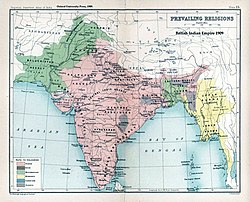
After the partition of India in 1947, when most excavated sites lay in territory awarded to Pakistan, the ASI carried out large numbers of surveys and excavations along the Ghaggar-Hakra system in India. In Pakistan, archaeological work on early sites was left largely to foreign archaeologists.
Image source: Partition of India
1980
% complete
Mohenjo-daro in the lower Indus Valley was declared a UNESCO World Heritage Site in 1980 as 'Archaeological Ruins at Moenjodaro', recognising its importance as one of the five major urban centres of the Mature Harappan period.
1982 - 1983
% complete
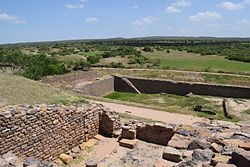
Excavation at Dholavira started under an archaeological team from Gujarat State Department of Archaeology and the Museum of the University of Pennsylvania in 1982–83.
Image source: Dholavira
1987 - 2010
% complete
Photos of many of the thousands of extant inscriptions are published in the Corpus of Indus Seals and Inscriptions (1987, 1991, 2010), edited by Asko Parpola and his colleagues; the most recent volume republished photos taken in the 1920s and 1930s of hundreds of lost or stolen inscriptions.
Image source: Indus script
2002
% complete
By 2002, over 1,000 Mature Harappan cities and settlements had been reported, of which just under a hundred had been excavated, mainly in the general region of the Indus and Ghaggar-Hakra rivers and their tributaries.
2004
% complete
While the Indus Valley Civilisation is generally characterised as a literate society, Farmer, Sproat, and Witzel (2004) argued that the Indus system did not encode language but was similar to non-linguistic sign systems symbolising families, clans, gods, and religious concepts. A 2009 study by P.N. Rao et al. countered this view.
2008
% complete
As of 2008, about 616 sites have been reported in India, whereas 406 sites have been reported in Pakistan. As of 1977, about 90% of Indus script seals and inscribed objects discovered were found at sites in Pakistan along the Indus river.
2019
% complete
In his 2019 study of the Harappan and Indus copper industry, Brett Hoffman analysed extensive copper/bronze assemblages from Harappa covering 3300 to 1700 BCE, challenging some older broad interpretations of bronze production.
Image source: Indus Valley Civilisation
2019
% complete
In 2019, a study published by Shinde et al. examined genetic evidence relating to the people of the Indus Valley Civilisation, contributing to debates about ancestry and migration in ancient South Asia.
2021
% complete
Dholavira in western Gujarat was declared a UNESCO World Heritage Site in 2021 as 'Dholavira: A Harappan City', joining Mohenjo-daro among the recognised major urban centres of the Indus Valley Civilisation.
Or browse the full history timeline directory, with more than 2,000 topics.
This Indus Valley Civilization timeline was generated with the help of AI, using information found on the internet.
We work hard to keep these timelines accurate, but mistakes do get through. If you spot one, email us at [email protected] and we'll fix it for future visitors.
Generate yours with AI or build it from scratch, for free.
Export your timeline, add your own events, edit or remove AI-generated events, and much more
No credit card required.
Cancel anytime.
Cancel anytime.
You can create an unlimited number of timelines with up to 10 events on each one, customize how they look, export them to PDF, PNG, PowerPoint, CSV, and Excel, and share them with a link. Paid plans raise the event limit and add features like spreadsheet imports and collaborators.
Yes. You can cancel your subscription from your account page at any time, and you will not be charged again. Your subscription stays active for the rest of the period you already paid for.
Yes. We will email you a reminder before the annual renewal, and we will also email you a receipt.
Yes. You can email us within 15 days of any payment, and we will issue you a full refund.
Check out our pricing docs or send us an email anytime: [email protected].