-
Use Cases
-
Resources
-
Pricing
Virginia Woolf (1882–1941) was an English writer and one of the most important modernist authors of the 20th century. A central figure of the Bloomsbury Group, she pioneered stream-of-consciousness narrative techniques in works such as Mrs Dalloway, To the Lighthouse, and Orlando. She was also an influential essayist, best known for A Room of One's Own, a foundational text of feminist literary criticism. Woolf struggled with mental illness throughout her life and died by suicide in 1941, leaving behind a lasting legacy in modern literature and feminist thought. More Less
Jan 25, 1882
% complete
Adeline Virginia Stephen was born in Kensington, London, to Julia Prinsep Duckworth Stephen and Sir Leslie Stephen, a prominent editor and author. She grew up in a literary and intellectual household that profoundly shaped her development as a writer.
Image source: Virginia Woolf
May 5, 1895
% complete
The death of Virginia's mother from influenza triggered her first serious mental breakdown. This loss deeply affected Woolf and would later inform her novel To the Lighthouse, which centers on a family modeled on her own.
Image source: Julia Stephen
1897 - 1901
% complete
Woolf studied classics and German at the Ladies' Department of King's College London. Access to formal education, denied to many women of her era, exposed her to pioneering feminists like Clara Pater and George Charles Winter Warr, influencing her later feminist thought.
Image source: King's College London
Jul 19, 1897
% complete
Stella Duckworth, Virginia's half-sister who had assumed the maternal role after Julia's death, died at age 28 following surgery. This second major family loss deepened Woolf's grief and contributed to another period of psychological distress.
Feb 22, 1904
% complete
Sir Leslie Stephen died after a long illness, prompting Virginia's most severe mental breakdown yet, including a period in which she attempted to jump out of a window. After his death, the Stephen siblings moved to Bloomsbury, beginning a new chapter of independence.
Image source: Leslie Stephen
Nov 20, 1906
% complete
Virginia's beloved brother Thoby died at age 26 after contracting typhoid during a trip to Greece. His death devastated the family and transformed the character of the Bloomsbury gatherings he had hosted.
Image source: Thoby Stephen
Jul 1, 1919
% complete
The Woolfs bought Monk's House in Rodmell, Sussex, an eighteenth-century cottage that became their country retreat. Woolf wrote much of her major work there and found respite from London life until her death.
Image source: Monk's House
1904
% complete
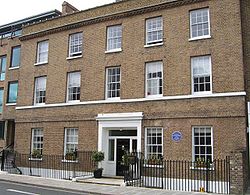
After their father's death, Virginia, Vanessa, Thoby, and Adrian Stephen moved to 46 Gordon Square in Bloomsbury. The house became the setting for Thursday evening gatherings that evolved into the famous Bloomsbury Group.
Image source: Bloomsbury Group
1907
% complete
Following Thoby's death, the informal gatherings continued under Adrian and then Virginia's leadership, cementing the Bloomsbury Group of writers, artists, and intellectuals including Lytton Strachey, Clive Bell, Maynard Keynes, and E.M. Forster.
Aug 10, 1912
% complete
Virginia married Leonard Sidney Woolf, a writer and former colonial administrator, after his return from Ceylon. Leonard became her devoted companion, caretaker during her illnesses, and literary partner for nearly thirty years.
Image source: Leonard Woolf
Dec 14, 1922
% complete
Woolf met the aristocratic writer Vita Sackville-West at a dinner party, beginning a passionate romantic relationship and lifelong friendship. Their correspondence became legendary, and Vita inspired Woolf's Orlando.
Image source: Vita Sackville-West
1904
% complete
Woolf published her first article, a review of William Dean Howells' 'Their Silver Wedding Journey,' in the Guardian (a clerical journal) in December 1904, launching her career as a professional writer and critic.
Mar 26, 1915
% complete
Published by Gerald Duckworth and Company, Woolf's first novel follows Rachel Vinrace on a sea voyage to South America. The book explored themes of self-discovery, gender roles, and death, announcing a significant new literary voice.
Image source: The Voyage Out
Mar 23, 1917
% complete
Virginia and Leonard Woolf founded the Hogarth Press at their home in Richmond with a small hand printing press. It published works by T.S. Eliot, E.M. Forster, Katharine Mansfield, and translations of Freud, giving Woolf editorial freedom over her own works.
Image source: Hogarth Press
May 12, 1919
% complete
Hogarth Press published this experimental short story, which shifts perspectives between passersby and flowers in the Kew Gardens botanical setting. Its success helped establish both the press and Woolf's reputation for lyrical modernist prose.
Oct 20, 1919
% complete
Woolf's more conventional second novel examines love, marriage, and women's suffrage through characters Katherine Hilbery and Mary Datchet. Woolf herself later considered it too traditional, but it demonstrated her command of realist technique.
Image source: Night and Day (Woolf novel)
1921
% complete
This collection of eight experimental short stories, including 'An Unwritten Novel' and 'The Mark on the Wall,' showcased Woolf's stream-of-consciousness technique and marked her decisive break from traditional narrative forms.
Image source: Monday or Tuesday
Oct 26, 1922
% complete
Woolf's third novel told the story of Jacob Flanders largely through the impressions of others, employing radical fragmentation. It reflected on the loss of a generation in World War I and established the fully modernist style she would refine in her masterworks.
Image source: Jacob's Room
May 14, 1925
% complete
This landmark novel chronicles a single June day in the life of Clarissa Dalloway as she prepares for a party, interweaving her consciousness with that of shell-shocked veteran Septimus Warren Smith. Its fluid treatment of time and interiority made it a defining work of high modernism.
Image source: Mrs Dalloway
May 5, 1927
% complete
Based on childhood memories of the Stephens' summer home at St Ives, this novel follows the Ramsay family across two visits to the Hebrides. Its middle section, 'Time Passes,' compressed a decade into pages, and the book confirmed Woolf as one of England's greatest novelists.
Image source: To the Lighthouse
Oct 11, 1928
% complete
This fantastical mock biography traces its protagonist through centuries and a sex change, inspired by and dedicated to Vita Sackville-West. A playful meditation on gender, time, and identity, it became Woolf's most popular novel during her lifetime.
Image source: Orlando: A Biography
Oct 8, 1931
% complete
Often considered her most experimental work, The Waves follows six friends from childhood to old age entirely through soliloquies framed by poetic descriptions of waves breaking on a shore. Woolf called it her 'playpoem' and considered it her greatest achievement.
Image source: The Waves
Oct 5, 1933
% complete
A playful fictional biography of Elizabeth Barrett Browning's cocker spaniel, Flush blended biography, poetry, and satire. Written partly as a lighter project after the demanding Waves, it was popular with readers and critics alike.
1940
% complete
Woolf's biography of her Bloomsbury friend, art critic Roger Fry, who had died in 1934, combined memoir with critical assessment of his role in introducing Post-Impressionism to Britain. It won the James Tait Black Memorial Prize in 1941.
Image source: Roger Fry
Jul 17, 1941
% complete
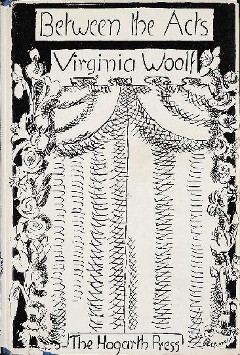
Woolf completed but did not revise her final novel before her death; Leonard published it months later. Set on a single day in June 1939 at a village pageant, it meditated on English history, art, and the approach of war.
Image source: Between the Acts
Oct 24, 1929
% complete
Expanding lectures delivered at Newnham and Girton Colleges, Cambridge, this essay argued that 'a woman must have money and a room of her own if she is to write fiction.' It became a foundational text of feminist criticism.
Image source: A Room of One's Own
Jun 2, 1938
% complete
In this feminist essay responding to the rise of fascism, Woolf argued that women's exclusion from education and professions left them outside the patriarchal structures driving war. It extended the arguments of A Room of One's Own into a pacifist critique of society.
Image source: Three Guineas
Sep 1940
% complete
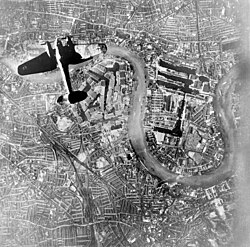
During the German bombing campaign, the Woolfs' London home at 37 Mecklenburgh Square was destroyed, along with their former home in Richmond. The loss of her beloved London intensified Woolf's depression amid wartime anxiety.
Image source: The Blitz
Mar 28, 1941
% complete
Struggling with severe depression and fearing another mental collapse, Woolf filled her coat pockets with stones and drowned herself in the River Ouse near Monk's House. Her suicide note to Leonard expressed gratitude and despair at her illness.
Image source: Virginia Woolf
1953
% complete
Leonard Woolf edited selections from Virginia's extensive diaries focused on her writing life, offering intimate insight into her creative process and cementing her reputation for new generations of readers and scholars.
Image source: A Writer's Diary
1975 - 1984
% complete
Scholars published Woolf's five-volume diary (1977–1984) and six volumes of letters (1975–1980), revealing her wit, struggles, and brilliance, fueling a major revival of interest and establishing her as a central figure in feminist literary studies.
Or browse the full history timeline directory, with more than 2,000 topics.
This Virginia Woolf timeline was generated with the help of AI, using information found on the internet.
We work hard to keep these timelines accurate, but mistakes do get through. If you spot one, email us at [email protected] and we'll fix it for future visitors.
Generate yours with AI or build it from scratch, for free.
Export your timeline, add your own events, edit or remove AI-generated events, and much more
No credit card required.
Cancel anytime.
Cancel anytime.
You can create an unlimited number of timelines with up to 10 events on each one, customize how they look, export them to PDF, PNG, PowerPoint, CSV, and Excel, and share them with a link. Paid plans raise the event limit and add features like spreadsheet imports and collaborators.
Yes. You can cancel your subscription from your account page at any time, and you will not be charged again. Your subscription stays active for the rest of the period you already paid for.
Yes. We will email you a reminder before the annual renewal, and we will also email you a receipt.
Yes. You can email us within 15 days of any payment, and we will issue you a full refund.
Check out our pricing docs or send us an email anytime: [email protected].