-
Use Cases
-
Resources
-
Pricing
Woodrow Wilson (1856–1924) was the 28th President of the United States, serving from 1913 to 1921. A former Princeton University president and governor of New Jersey, Wilson led the nation through World War I, championed the Fourteen Points, advocated for the League of Nations, and signed major domestic reforms including the Federal Reserve Act. He was awarded the Nobel Peace Prize in 1919. More Less
Dec 28, 1856
% complete
Thomas Woodrow Wilson was born on December 28, 1856, in Staunton, Virginia, the third of four children of Joseph Ruggles Wilson and Jessie Janet Woodrow. His father was a Presbyterian minister, and religion would profoundly shape Wilson's worldview throughout his life.
Image source: Woodrow Wilson
1858
% complete
The Wilson family relocated to Augusta, Georgia, where young Tommy Wilson spent his formative childhood years during the Civil War era. The experience of the war and Reconstruction in the South left a lasting impression on him.
1866
% complete
Wilson did not learn to read until around age ten, possibly due to dyslexia. Despite this early difficulty, he developed a love of literature and oratory through his father's tutelage, which helped him become one of America's most eloquent presidents.
1873 - 1874
% complete
Wilson briefly attended Davidson College in North Carolina but withdrew after less than a year due to poor health. He then studied at home before transferring to Princeton.
Image source: Davidson College
1879 - 1881
% complete
Wilson attended the University of Virginia School of Law but left without completing his degree due to ill health. He continued studying law independently while living in Wilmington, Delaware, and was admitted to the Georgia bar in 1882.
Image source: University of Virginia School of Law
Jun 1879
% complete
Wilson graduated from the College of New Jersey (now Princeton University) in 1879, where he was an active debater and published essays. He developed a deep interest in political science and government that would define his career.
Image source: Princeton University
Jun 24, 1885
% complete
Wilson married Ellen Louise Axson, the daughter of a Presbyterian minister, in Savannah, Georgia. The couple had three daughters: Margaret, Jessie, and Eleanor. Ellen was an accomplished artist who supported Wilson throughout his academic career.
Image source: Ellen Axson Wilson
1886
% complete
Wilson received his doctorate in political science and history from Johns Hopkins University in 1886, making him the only U.S. president to earn a PhD. His dissertation, 'Congressional Government,' became an influential work analyzing American legislative politics.
Image source: Johns Hopkins University
1885
% complete
Wilson's first major book, 'Congressional Government: A Study in American Politics,' critiqued the committee system in Congress and argued for stronger executive leadership. It established him as a leading political scientist of his generation.
Image source: Presidential system
1885 - 1888
% complete
Wilson taught history and political economy at the newly founded women's college Bryn Mawr. Though he found teaching women challenging, he honed his skills as a lecturer and scholar during this period.
Image source: Bryn Mawr College
1888 - 1890
% complete
Wilson moved to Wesleyan University in Connecticut, where he coached football and founded one of the earliest debate teams. His growing reputation as a dynamic teacher attracted national attention.
Image source: Wesleyan University
1890 - 1902
% complete
Wilson returned to Princeton as a professor of jurisprudence and political economy, becoming one of the university's most popular lecturers. He wrote several major works during this period, including 'Division and Reunion' and 'The State.'
1902
% complete
Wilson published his five-volume 'A History of the American People,' a sweeping narrative that reflected his views on American development. The work was later controversially quoted in D.W. Griffith's film 'The Birth of a Nation.'
Image source: A History of the American People
Oct 1902 - 1910
% complete
Wilson was named president of Princeton, where he pursued ambitious reforms including the preceptorial system and efforts to restructure undergraduate social life. His battles with alumni and faculty over the quadrangle plan foreshadowed his combative political style.
Image source: History of Princeton University
Nov 8, 1910
% complete
Wilson won the New Jersey governorship in a landslide, transforming from academic to politician almost overnight. As governor, he pushed through a progressive agenda including direct primaries, workers' compensation, and regulation of public utilities.
Image source: 1910 New Jersey gubernatorial election
Aug 6, 1914
% complete
First Lady Ellen Wilson died of Bright's disease in the White House, devastating the president. Her death plunged Wilson into grief for months until he met Edith Bolling Galt, whom he married in December 1915.
Dec 18, 1915
% complete
Wilson married Edith Bolling Galt, a Washington widow, less than a year and a half after his first wife's death. Edith became an influential confidante and later played a significant role in managing presidential affairs during Wilson's illness.
Image source: Edith Wilson
Oct 2, 1919
% complete
Wilson suffered a massive stroke that left him partially paralyzed and incapacitated. First Lady Edith Wilson carefully controlled access to the president, effectively managing many governmental affairs during his recovery in what some called a 'regency.'
Nov 19, 1919 - Mar 19, 1920
% complete
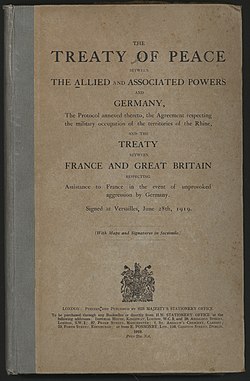
The U.S. Senate, led by Henry Cabot Lodge, refused to ratify the treaty, objecting particularly to Article X of the League covenant. Wilson's refusal to accept reservations doomed the treaty, and the United States never joined the League of Nations.
Image source: Treaty of Versailles
Nov 2, 1920
% complete
Warren G. Harding won the 1920 election in a landslide over Democrat James Cox, repudiating Wilson's internationalism. Voters sought a 'return to normalcy,' marking the end of the Progressive Era's peak influence.
Image source: 1920 United States presidential election
Feb 3, 1924
% complete
Wilson died at his home on S Street in Washington, D.C., at age 67. He was buried at Washington National Cathedral, the only president interred there. His legacy includes the Federal Reserve, antitrust reform, women's suffrage, and the idealistic internationalism that shaped twentieth-century American foreign policy.
May 7, 1915
% complete
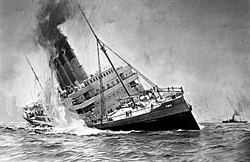
A German U-boat sank the British ocean liner Lusitania, killing nearly 1,200 people including 128 Americans. Wilson demanded accountability from Germany while maintaining American neutrality, issuing a series of diplomatic notes that strained German-American relations.
Image source: Sinking of the RMS Lusitania
Feb 1, 1917
% complete
Germany announced it would sink all ships, including neutral vessels, in the war zone without warning. This decision, along with the Zimmermann Telegram, pushed the United States decisively toward entering World War I.
Image source: Unrestricted submarine warfare
Feb 28, 1917
% complete
British intelligence revealed a secret German proposal offering Mexico territory in exchange for joining a war against the United States. Publication of the telegram inflamed American public opinion against Germany.
Image source: Zimmermann Telegram
Apr 6, 1917
% complete
After asking Congress to make the world 'safe for democracy,' Wilson signed the declaration of war on Germany, bringing the United States into World War I. Over two million American soldiers would eventually serve in Europe under General John J. Pershing.
Image source: United States declaration of war on Germany (1917)
Jan 8, 1918
% complete
Wilson outlined his vision for postwar peace in a speech to Congress, proposing open diplomacy, freedom of the seas, self-determination, and a league of nations. The Fourteen Points became the moral foundation of Allied peace aims.
Image source: Fourteen Points
Nov 11, 1918
% complete
Germany signed the armistice ending hostilities on the Western Front at the eleventh hour of the eleventh day of the eleventh month. Wilson's leadership had helped bring the war to a close with the Central Powers defeated.
Image source: Armistice of 11 November 1918
Dec 4, 1918
% complete
Wilson sailed to France aboard the USS George Washington, becoming the first sitting U.S. president to travel to Europe while in office. He was greeted by enormous crowds who saw him as the herald of a new world order.
Image source: Paris Peace Conference (1919–1920)
Jan 18, 1919 - Jan 21, 1920
% complete
Wilson negotiated with Allied leaders David Lloyd George, Georges Clemenceau, and Vittorio Orlando over the terms of peace. He secured inclusion of the League of Nations covenant but had to compromise on many of his Fourteen Points regarding reparations and territorial settlements.
Jun 28, 1919
% complete
The Treaty of Versailles formally ended World War I, imposing heavy penalties on Germany and establishing the League of Nations. Wilson believed the treaty would secure lasting peace, though critics considered its terms too harsh.
Dec 10, 1920
% complete
Wilson was awarded the Nobel Peace Prize for 1919 in recognition of his role in founding the League of Nations and his efforts toward world peace. He accepted the award after leaving office, despite his disappointment over the Senate's rejection of the treaty.
Image source: Nobel Peace Prize
Or browse the full history timeline directory, with more than 2,000 topics.
This Woodrow Wilson timeline was generated with the help of AI, using information found on the internet.
We work hard to keep these timelines accurate, but mistakes do get through. If you spot one, email us at [email protected] and we'll fix it for future visitors.
Generate yours with AI or build it from scratch, for free.
Export your timeline, add your own events, edit or remove AI-generated events, and much more
No credit card required.
Cancel anytime.
Cancel anytime.
You can create an unlimited number of timelines with up to 10 events on each one, customize how they look, export them to PDF, PNG, PowerPoint, CSV, and Excel, and share them with a link. Paid plans raise the event limit and add features like spreadsheet imports and collaborators.
Yes. You can cancel your subscription from your account page at any time, and you will not be charged again. Your subscription stays active for the rest of the period you already paid for.
Yes. We will email you a reminder before the annual renewal, and we will also email you a receipt.
Yes. You can email us within 15 days of any payment, and we will issue you a full refund.
Check out our pricing docs or send us an email anytime: [email protected].