-
Use Cases
-
Resources
-
Pricing
800 BC - 701 BC
The 8th and 7th centuries BC remain largely protohistorical, but the earliest Greek alphabetic inscriptions appeared during the first half of the 8th century BC.
800 BC - 499
Classical antiquity is conventionally defined as the period of cultural European history between the 8th century BC and the 5th century AD. It followed the Greek Dark Ages and preceded late antiquity.
Image source: Classical antiquity

800 BC - 699 BC
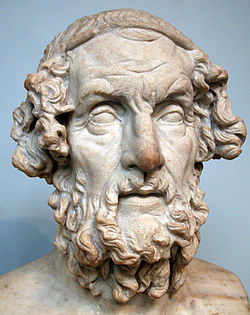
The earliest recorded epic Greek poetry associated with the legendary poet Homer is traditionally placed in the 8th or 7th century BC. Homer's lifetime is often treated as the beginning of classical antiquity.
Image source: Homer
800 BC - 701 BC
The Phoenicians, who originally expanded from ports in Canaan, dominated trade across the Mediterranean by the 8th century BC.
Image source: Phoenicia

700 BC - 601 BC
Black-figure pottery originated in Corinth during the 7th century BC and became a major pottery style associated with the later part of the Greek Archaic age.
Image source: Black-figure pottery

530 BC
The red-figure pottery style developed around 530 BC, associated with the Andokides Painter, and succeeded the earlier black-figure technique.
Image source: Red-figure pottery

510 BC
The end of the Athenian tyranny in 510 BC is used as the conventional starting point for the classical period of ancient Greece.
510 BC - 323 BC
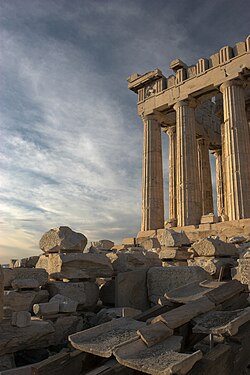
The classical period of ancient Greece is conventionally dated from the end of the Athenian tyranny in 510 BC to the death of Alexander the Great in 323 BC.
Image source: Classical Greece
400 BC - 395 BC
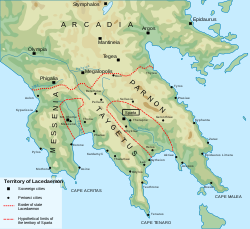
Greece began the 4th century BC under Spartan hegemony, during a period in which Sparta held a leading position among the Greek states.
Image source: Sparta
395 BC
In 395 BC, Spartan rulers dismissed Lysander from office, and Sparta lost its naval supremacy.
This Ancient Greece and Rome timeline was generated with the help of AI, using information found on the internet.
We work hard to keep these timelines accurate, but mistakes do get through. If you spot one, email us at [email protected] and we'll fix it for future visitors.
Generate yours with AI or build it from scratch, for free.