-
Use Cases
-
Resources
-
Pricing
2560 BC
The Great Pyramid of Giza was built as a tomb for the Egyptian pharaoh Khufu during the Fourth Dynasty. Constructed from roughly 2.3 million stone blocks, it became the tallest man-made structure in the world for over 3,800 years and is the only surviving wonder of the ancient world.
Image source: Great Pyramid of Giza

2540 BC
Upon completion, the Great Pyramid rose to approximately 146 meters (481 feet), making it the tallest human-made structure on Earth. It retained this record until the construction of Lincoln Cathedral's spire in England around 1311 AD.
2500 BC
The Great Sphinx, a colossal limestone statue with a lion's body and a human head, was likely carved during the reign of Pharaoh Khafre. It stood guard near the pyramids of Giza, forming part of the monumental funerary complex that would later inspire wonder in travelers.
Image source: Great Sphinx of Giza

700 BC
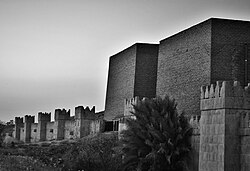
Some scholars argue that the famous 'Hanging Gardens' were actually built by the Assyrian king Sennacherib at Nineveh around 700 BC, using advanced aqueducts and screw-based irrigation. Assyrian reliefs depict lush terraced gardens that may match Greek descriptions of the Babylonian wonder.
Image source: Nineveh
605 BC - 562 BC
Nebuchadnezzar II ruled the Neo-Babylonian Empire at its height, transforming Babylon into a magnificent city with grand walls, the Ishtar Gate, and vast ziggurats. Ancient writers credited him with building the legendary Hanging Gardens for his Median wife Amytis.
Image source: Nebuchadnezzar II

600 BC
According to ancient accounts, the Hanging Gardens of Babylon featured terraced gardens with exotic plants and trees irrigated by an ingenious system. Though celebrated by Greek writers, no definitive archaeological evidence has been found, leading some scholars to suggest they may have been located in Nineveh or were entirely legendary.
Image source: Hanging Gardens of Babylon

560 BC
The fabulously wealthy Lydian king Croesus contributed generously to the reconstruction of the Temple of Artemis, donating many of its columns. His patronage helped make the temple one of the most splendid religious structures in the Greek world.
Image source: Croesus

550 BC
The new Temple of Artemis at Ephesus, funded in part by King Croesus of Lydia, took decades to complete. With 127 marble columns standing 18 meters tall, it was considered the largest and most magnificent Greek temple of its age.
Image source: Temple of Artemis

550 BC
An earlier temple to Artemis at Ephesus was destroyed by a flood in the 7th century BC, prompting the Ephesians to commission an even grander replacement on marshy ground designed to withstand earthquakes.
435 BC
The renowned sculptor Phidias created a colossal seated statue of Zeus for the Temple of Zeus at Olympia. Made of ivory plates and gold panels over a wooden framework, the statue stood about 12.4 meters tall and depicted the king of the gods majestically enthroned.
Image source: Statue of Zeus at Olympia

This Seven Wonders of the Ancient World timeline was generated with the help of AI, using information found on the internet.
We work hard to keep these timelines accurate, but mistakes do get through. If you spot one, email us at [email protected] and we'll fix it for future visitors.
Generate yours with AI or build it from scratch, for free.