-
Resources
-
Pricing
The Anti-Federalists were Americans who opposed ratification of the 1787 Constitution, fearing excessive central power and insufficient protections for individual liberties. More Less
Build a timeline like this one in minutes, for free. Start Yours →
Mar 1, 1781
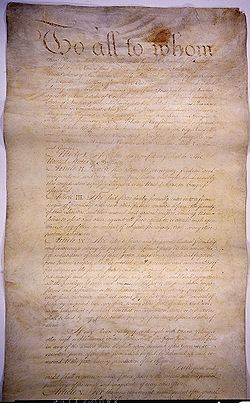
The Articles of Confederation became the governing framework of the United States. Their weak central government, limited taxing power, and reliance on state cooperation later shaped Anti-Federalist fears about replacing the Confederation with a stronger national system.
Image source: Articles of Confederation
Aug 29, 1786 - Jun 1787
Farmers in western Massachusetts, led in part by Daniel Shays, protested debt collection, taxation, and foreclosures. Federalists cited the uprising as evidence that the Confederation was too weak, while Anti-Federalists warned against using unrest to justify centralized power.
Image source: Shays' Rebellion
Sep 11, 1786 - Sep 14, 1786
Delegates meeting at Annapolis, Maryland, called for a broader convention to revise the Articles of Confederation. The recommendation led directly to the Philadelphia Convention, where Anti-Federalists later argued that delegates had exceeded their authorized mandate.
May 25, 1787 - Sep 17, 1787
The Philadelphia Convention assembled to address the weaknesses of the Articles of Confederation. Although the delegates produced an entirely new Constitution, critics such as Patrick Henry and George Mason objected that the convention had created an excessively powerful national government.
Image source: Constitutional Convention (United States)
Jun 5, 1787
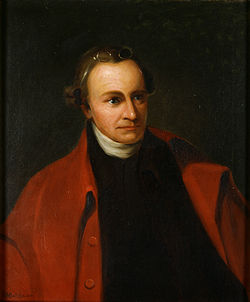
During the Virginia ratifying debate and in earlier discussions surrounding the convention, Patrick Henry became one of the most prominent opponents of the proposed Constitution. He argued that the plan endangered state authority, individual liberty, and the political independence won through the Revolution.
Image source: Patrick Henry
Sep 17, 1787
Virginia delegate George Mason refused to sign the Constitution because it lacked a bill of rights and did not sufficiently protect state sovereignty. His objections became central Anti-Federalist arguments during the ratification campaign.
Image source: George Mason
Sep 27, 1787 - Apr 1788
Essays signed Cato appeared in New York newspapers and criticized the proposed Constitution's executive power, military provisions, and lack of explicit protections for liberty. The author is often identified with Governor George Clinton, though the attribution remains debated.
Oct 1787 - May 1788
Samuel Bryan, writing as Centinel, attacked the Constitution in Philadelphia newspapers and pamphlets. He favored a more directly accountable government and objected to the proposed Senate, executive structure, and distance between citizens and national officials.
Oct 8, 1787 - Nov 7, 1787
The Federal Farmer, traditionally attributed to Melancton Smith, published influential letters addressing the proposed Constitution. The author argued that a large republic would be difficult to represent and urged a clearer division of powers and stronger protections for individual rights.
Image source: Federal Farmer
Oct 18, 1787 - Apr 1788
The pseudonymous writer Brutus published a major series of essays opposing the Constitution. The essays warned that the Necessary and Proper Clause, federal judicial power, and federal supremacy would allow the national government to absorb authority from the states.
1788
George Clinton's writings and political leadership expressed opposition to centralized authority and support for state sovereignty. His arguments helped organize New York Anti-Federalists and influenced the broader debate over executive power and federal consolidation.
Image source: George Clinton (vice president)
Sep 28, 1787
The Confederation Congress transmitted the proposed Constitution to the states for special ratifying conventions. The decision initiated a nationwide political struggle between Federalists, who supported adoption, and Anti-Federalists, who sought rejection or substantial amendments.
Image source: Constitution of the United States
Dec 7, 1787
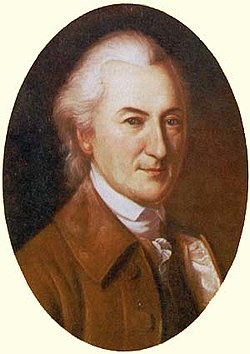
Delaware became the first state to ratify the Constitution, approving it unanimously. The early ratification strengthened Federalist momentum, although Anti-Federalists continued organizing resistance in larger and more politically divided states.
Image source: John Dickinson
Dec 12, 1787
Pennsylvania ratified the Constitution by a vote of 46 to 23 after a contentious convention. Anti-Federalist delegates protested the speed and procedures of the convention and circulated dissents warning that the new government threatened liberty.
Feb 6, 1788
Massachusetts ratified the Constitution narrowly, 187 to 168, after Federalists accepted recommendations for amendments. The compromise helped establish the strategy of ratifying first while promising later amendments, a course that eased Anti-Federalist opposition in several states.
Image source: Constitution of Massachusetts
May 28, 1788
The final Federalist essay was published in 1788. Written by Alexander Hamilton, James Madison, and John Jay under the name Publius, the collection answered Anti-Federalist criticisms and became the most influential defense of the proposed Constitution.
Image source: The Federalist Papers
Jun 2, 1788 - Jun 25, 1788
Virginia's convention featured major debates among Patrick Henry, George Mason, James Madison, Edmund Randolph, and other leaders. Anti-Federalists challenged federal supremacy, the presidency, taxation, and the absence of a bill of rights.
Image source: Virginia Ratifying Convention
Jun 17, 1788 - Jul 26, 1788
New York's convention in Poughkeepsie became a major battleground. Anti-Federalist delegates, led politically by Governor George Clinton, opposed the Constitution, while Federalists including Alexander Hamilton, John Jay, and James Madison defended it in the Federalist essays.
Image source: Virginia Ratifying Convention
Jun 21, 1788
New Hampshire became the ninth state to ratify, supplying the Constitution's required threshold for establishment among the ratifying states. Anti-Federalists still fought for amendments and sought to influence the remaining conventions.
Jun 25, 1788
Virginia ratified the Constitution by 89 votes to 79, but attached a declaration of rights and proposed amendments. The narrow result demonstrated the strength of Anti-Federalist sentiment in one of the nation's most populous and influential states.
Jul 26, 1788
New York ratified the Constitution by a close vote of 30 to 27. The convention also proposed extensive amendments reflecting Anti-Federalist concerns, including protections for speech, jury trials, and limits on federal power.
Aug 2, 1788
North Carolina's convention declined to ratify the Constitution, voting 184 to 84. Anti-Federalists demanded a bill of rights and amendments before accepting the new framework, leaving the state outside the Union's constitutional government temporarily.
Image source: Constitution of North Carolina
May 29, 1790
Rhode Island became the thirteenth and final state to ratify the Constitution. Its Anti-Federalist majority had resisted joining the Union, but economic pressure and the promise of amendments ultimately produced a narrow vote of 34 to 32.
Image source: History of Rhode Island
Mar 4, 1789
The new federal government began operating under the Constitution, with George Washington as president and Congress responsible for addressing demands for amendments. Anti-Federalists shifted from attempting to block the Constitution toward securing explicit restraints on federal power.
Image source: First inauguration of George Washington
Jun 8, 1789
Representative James Madison introduced a package of constitutional amendments in the House of Representatives. Madison drew substantially on state declarations of rights and ratification proposals, responding to the Anti-Federalist campaign for explicit protections.
Sep 25, 1789
Congress submitted twelve proposed amendments to the states. They reflected many Anti-Federalist demands, including protections for religion, speech, press, assembly, jury trials, due process, and reserved powers.
Nov 21, 1789
North Carolina ratified the Constitution after Congress moved toward adopting a bill of rights. The decision came with continued concern about federal authority and reflected the persuasive force of promised amendments.
Mar 4, 1791
Vermont joined the United States as the fourteenth state. Its admission expanded the Union after the original ratification struggle and added a state whose earlier political development had included strong suspicion of distant centralized authority.
Image source: Vermont
Dec 15, 1791
Ten of the twelve amendments proposed in 1789 were ratified and became the Bill of Rights. The amendments institutionalized several central Anti-Federalist demands by protecting civil liberties and affirming limits on federal power.
Image source: United States Bill of Rights
Feb 7, 1795
The Eleventh Amendment limited federal judicial power over lawsuits against states. Its adoption followed widespread concern that federal courts could expose states to suits by citizens of other states, reinforcing the Anti-Federalist emphasis on state sovereignty.
Nov 16, 1798 - Dec 24, 1798
The Virginia and Kentucky Resolutions opposed the Alien and Sedition Acts and argued that states could judge the constitutionality of federal actions. Although written by Democratic-Republicans rather than the original Anti-Federalists, they revived Anti-Federalist principles of strict construction and resistance to consolidation.
Image source: Kentucky and Virginia Resolutions
Build a timeline like this one in minutes, for free. Start Yours →
Or browse the full history timeline directory, with more than 2,500 topics.
This Anti-Federalists timeline was generated with the help of AI, using information found on the internet.
We work hard to keep these timelines accurate, but mistakes do get through. If you spot one, email us at [email protected] and we'll fix it for future visitors.
Generate yours with AI or build it from scratch, for free.
Export your timeline, add your own events, edit or remove AI-generated events, and much more
No credit card required.
15-day money-back guarantee.
You can create an unlimited number of timelines with up to 10 events on each one, customize how they look, export them to PDF, PNG, PowerPoint, CSV, and Excel, and share them with a link. Timelines made with Timeline Maker AI keep every event the generator created, and you can add up to 5 events of your own. Paid plans remove the event limit, add spreadsheet imports and hide Preceden's branding, and the higher-priced plan also adds collaborators, a custom logo and a custom domain.
Yes. You can cancel your subscription from your account page at any time, and you will not be charged again. Your subscription stays active for the rest of the period you already paid for.
Yes. We email you a reminder 15 days before your annual renewal, and we email you a receipt after every payment.
Yes. You can email us within 15 days of any payment, and we will issue you a full refund.
Check out our pricing docs or send us an email anytime: [email protected].