-
Use Cases
-
Resources
-
Pricing
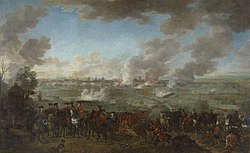
The Battle of Blenheim was fought on 13 August 1704 during the War of the Spanish Succession near Blenheim (Blindheim), Bavaria. Allied forces under the Duke of Marlborough and Prince Eugene of Savoy decisively defeated the French-Bavarian army led by Marshal Tallard, halting France's advance toward Vienna and marking a turning point in European history. More Less
Nov 1, 1700
% complete
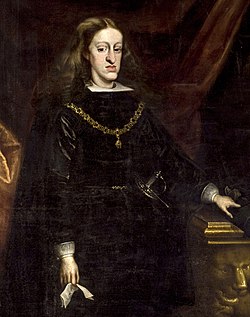
The childless Habsburg king Charles II of Spain died, leaving his entire empire to Philippe, Duke of Anjou, grandson of Louis XIV. His death set off a European crisis over who would control the vast Spanish dominions.
Image source: Charles II of Spain
Nov 16, 1700
% complete
Louis XIV's grandson was proclaimed King of Spain as Philip V, raising fears that France and Spain would unite under Bourbon rule and dominate Europe, alarming Britain, the Dutch Republic, and the Holy Roman Empire.
Image source: Philip V of Spain
May 15, 1702
% complete
Britain, the Dutch Republic, and the Holy Roman Empire declared war on France and Spain, beginning a continent-spanning conflict fought across Flanders, Italy, Germany, and Spain.
Image source: War of the Spanish Succession
1703
% complete
Elector Maximilian II Emanuel of Bavaria allied with Louis XIV against the Emperor, opening a new front in southern Germany that threatened Vienna directly and alarmed the Allies.
Image source: Maximilian II Emanuel
1703 - 1711
% complete
Ferenc Rákóczi's uprising in Hungary tied down Imperial forces, compounding the danger to Vienna as Franco-Bavarian armies threatened from the west during 1703–04.
Image source: Rákóczi's War of Independence
Nov 15, 1703
% complete
French forces defeated an Imperial army at Speyerbach while capturing Landau, and Franco-Bavarian troops took Augsburg and Passau, leaving Vienna exposed and the Allied cause in crisis.
Image source: Battle of Speyerbach
Sep 7, 1701
% complete
Britain, the Dutch Republic, and Emperor Leopold I formed the Grand Alliance at The Hague to resist French expansion and secure the balance of power in Europe, laying the groundwork for war.
Image source: Grand Alliance (League of Augsburg)
Oct 1702 - Oct 23, 1702
% complete
In his first campaign as commander, Marlborough seized key Meuse towns including Liège, demonstrating his skill as a general and securing early gains for the Grand Alliance.
Image source: Capture of Liège (1702)
Dec 14, 1702
% complete
Queen Anne elevated John Churchill to Duke of Marlborough in recognition of his military talents and political influence, making him captain-general of Allied forces on the continent.
Image source: John Churchill, 1st Duke of Marlborough
1703
% complete
Prince Eugene of Savoy, the Emperor's brilliant field marshal, emerged as a key Allied leader. His partnership with Marlborough would become one of the most famous military duos in history.
Image source: Prince Eugene of Savoy
1704
% complete
Defeated at Blenheim, Maximilian II Emanuel fled Bavaria and joined French forces in the Spanish Netherlands, leaving Bavaria occupied by Imperial troops.
1705
% complete
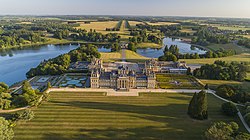
A grateful Queen Anne granted Marlborough the royal manor of Woodstock in reward for his victory, on which Blenheim Palace—designed by John Vanbrugh—would later be built.
Image source: Blenheim Palace
1705 - 1722
% complete
Blenheim Palace rose at Woodstock, Oxfordshire, as a monumental monument to the victory and to its victor, becoming one of England's greatest country houses and a UNESCO World Heritage Site.
May 23, 1706 - Jul 11, 1708
% complete
Building on the momentum from Blenheim, Marlborough won decisive victories over the French at Ramillies (1706) and Oudenarde (1708), driving them from most of the Spanish Netherlands.
Image source: Battle of Ramillies
Dec 9, 1708
% complete
Following Oudenarde, Marlborough and Eugene besieged and captured the formidable fortress of Lille, one of France's strongest strongholds, deepening the crisis for Louis XIV.
Image source: Siege of Lille (1708)
Sep 11, 1709
% complete
Marlborough and Eugene won another battlefield victory over Villars' French army at Malplaquet, but at enormous cost—the bloodiest battle of the century—dampening enthusiasm for the war in Britain.
Image source: Battle of Malplaquet
Dec 31, 1711
% complete
Amid shifting politics under the Tory ministry, accusations of financial misconduct, and war weariness, Queen Anne dismissed Marlborough from all his offices despite his string of victories.
Apr 11, 1713
% complete
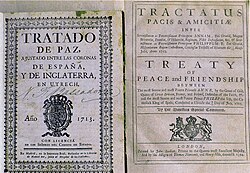
The Treaty of Utrecht ended the War of the Spanish Succession: Philip V kept Spain but renounced claims to the French throne, while Britain gained Gibraltar, Minorca, and trading concessions.
Image source: Peace of Utrecht
May 1704
% complete
Marlborough devised a bold plan to march an army from Flanders to the Danube to relieve pressure on Vienna, deceiving the French about his true objective while coordinating with Prince Eugene.
Image source: Blenheim Palace
May 19, 1704
% complete
Marlborough led roughly 40,000 men out of Bedburg toward Germany, executing one of the great strategic marches of the era along the Rhine toward the Danube valley.
Image source: Battle of Blenheim
Jun 2, 1704 - Jul 2, 1704
% complete
The Allied army reached the Danube, forcing the crossing and seizing Donauwörth after storming the fortified heights of the Schellenberg, opening Bavaria to Allied invasion.
Image source: Battle of Schellenberg
Jul 1704
% complete
To force the Bavarian elector to abandon the French alliance, Marlborough ordered the systematic devastation of the Bavarian countryside, burning hundreds of villages and farms.
Jul 2, 1704
% complete
Marlborough stormed the Schellenberg heights above Donauwörth in a costly assault, defeating Franco-Bavarian defenders and establishing a foothold for operations against Bavaria.
Aug 1704
% complete
Marshal Tallard marched from the Rhine with reinforcements to join Marsin and the Elector of Bavaria, giving the Franco-Bavarians roughly 56,000 men facing the combined Allied army.
Image source: Camille d'Hostun, duc de Tallard
Aug 1704
% complete
The shattered remnants of the Franco-Bavarian army withdrew, ending the immediate threat to Vienna and transforming the strategic situation of the entire war.
Image source: Battle of Blenheim
Aug 5, 1704
% complete
Prince Eugene executed a masterful march out of Italy with thousands of cavalry, eluding French Marshal Vendôme to link up with Marlborough, uniting the Allied armies before Blenheim.
Aug 12, 1704
% complete
Tallard, Marsin, and the Elector encamped along the Nebel stream behind Blenheim village, believing themselves safe from attack, while Allied commanders scouted their dispositions.
Aug 13, 1704
% complete
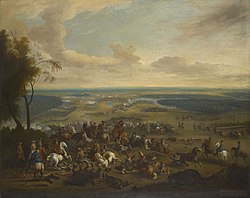
Marlborough and Eugene attacked the Franco-Bavarian army near Höchstädt. Marlborough broke through the center after hours of fighting while Eugene pinned the enemy left; over 30,000 Franco-Bavarian troops were killed or captured, including Marshal Tallard himself.
Aug 13, 1704
% complete
Trapped against the Danube in Blenheim village, thousands of French infantry surrendered or drowned attempting escape, marking one of the most dramatic collapses in the battle.
Or browse the full history timeline directory, with more than 2,000 topics.
This Battle of Blenheim timeline was generated with the help of AI, using information found on the internet.
We work hard to keep these timelines accurate, but mistakes do get through. If you spot one, email us at [email protected] and we'll fix it for future visitors.
Generate yours with AI or build it from scratch, for free.
Export your timeline, add your own events, edit or remove AI-generated events, and much more
No credit card required.
Cancel anytime.
Cancel anytime.
You can create an unlimited number of timelines with up to 10 events on each one, customize how they look, export them to PDF, PNG, PowerPoint, CSV, and Excel, and share them with a link. Paid plans raise the event limit and add features like spreadsheet imports and collaborators.
Yes. You can cancel your subscription from your account page at any time, and you will not be charged again. Your subscription stays active for the rest of the period you already paid for.
Yes. We will email you a reminder before the annual renewal, and we will also email you a receipt.
Yes. You can email us within 15 days of any payment, and we will issue you a full refund.
Check out our pricing docs or send us an email anytime: [email protected].