-
Use Cases
-
Resources
-
Pricing
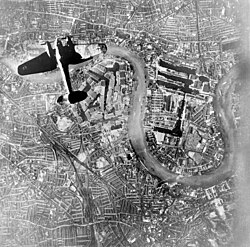
The Battle of Britain was the first major military campaign fought entirely by air forces, taking place over the skies of southern England in 1940. The Royal Air Force defended the United Kingdom against sustained attacks by Nazi Germany's Luftwaffe, ultimately preventing Hitler's planned invasion of Britain (Operation Sea Lion) and marking Germany's first major defeat of World War II. More Less
Jan 30, 1933
% complete
Adolf Hitler was appointed Chancellor of Germany, beginning the Nazi regime that would rearm Germany and pursue aggressive expansion in Europe, setting the stage for the confrontation with Britain.
Image source: Adolf Hitler's rise to power
Sep 1, 1939
% complete
German forces invaded Poland using blitzkrieg tactics, prompting Britain and France to declare war on Germany on September 3, 1939, beginning World War II in Europe.
Image source: Invasion of Poland
May 26, 1940 - Jun 4, 1940
% complete
Over 330,000 British and Allied troops were rescued from the beaches of Dunkirk by a flotilla of naval vessels and civilian boats. Though a military defeat, the evacuation preserved the army that would defend Britain, while the RAF fought costly air battles over the beaches.
Image source: Dunkirk evacuation
Jun 22, 1940
% complete
France capitulated to Nazi Germany, leaving Britain alone to face the Axis powers in Western Europe and making the German conquest of Britain Hitler's next objective.
Image source: Armistice of 22 June 1940
Jul 16, 1940
% complete
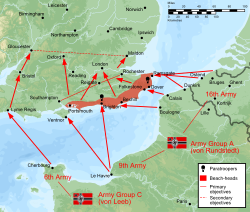
Hitler issued Führer Directive No. 16 ordering preparations for a landing operation against England, contingent upon the Luftwaffe achieving air superiority over the English Channel and southern England.
Image source: Operation Sea Lion
Jul 1936 - Nov 25, 1940
% complete
Air Chief Marshal Hugh Dowding built and directed Fighter Command's integrated air defense system. His refusal to commit reserves prematurely and his management of pilot rotation were vital to victory, though he was sidelined shortly after the battle.
Image source: Hugh Dowding
Apr 20, 1940
% complete
Air Vice-Marshal Keith Park commanded the group bearing the brunt of Luftwaffe assaults. His tactical judgment in deploying squadrons against incoming raids was crucial to defeating the German offensive over London and the southeast.
Image source: Keith Park
May 10, 1940
% complete
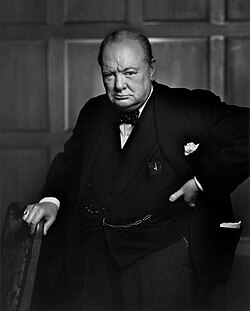
Winston Churchill replaced Neville Chamberlain as Prime Minister of the United Kingdom on the same day Germany launched its invasion of France and the Low Countries. His defiant leadership would define Britain's resistance during the Battle of Britain.
Image source: Winston Churchill
Jun 18, 1940
% complete
Following the fall of France, Churchill told the House of Commons that the 'Battle of Britain' was about to begin and declared that if Britain endured, 'the New World... would step forth to the rescue and the liberation of the Old.'
Aug 2, 1940
% complete
Exiled Polish airmen, including the celebrated No. 303 Squadron, joined the fight and became some of the most successful pilots of the battle, scoring a disproportionate share of kills despite initial language barriers.
Image source: No. 303 Squadron RAF
Aug 20, 1940
% complete
At the height of the air fighting, Churchill honored RAF pilots in the House of Commons with the immortal phrase 'Never in the field of human conflict was so much owed by so many to so few,' cementing the airmen's place in national memory.
Image source: Never was so much owed by so many to so few
Jul 10, 1940 - Aug 12, 1940
% complete
The opening phase of the battle saw the Luftwaffe attack convoys in the English Channel and southern ports, probing RAF defenses and drawing Fighter Command into combat as Germany sought control of the skies.
Jul 10, 1940 - Oct 31, 1940
% complete
The Hawker Hurricane formed the backbone of Fighter Command, accounting for the majority of kills, while the Supermarine Spitfire engaged German fighters. Together they outmatched the Messerschmitt Bf 109's endurance over Britain.
Image source: Supermarine Spitfire
Jul 10, 1940 - Oct 31, 1940
% complete
Britain's Chain Home radar stations, combined with the Dowding System's filter rooms and observer corps, gave Fighter Command early warning of raids, allowing scarce fighters to be positioned efficiently instead of standing constant patrol.
Image source: Chain Home
Aug 13, 1940
% complete
Luftwaffe commander Hermann Göring unleashed 'Eagle Attack' (Adlerangriff), a major offensive targeting RAF airfields, radar stations, and aircraft factories across southern England, aiming to destroy Fighter Command before an invasion.
Image source: Kanalkampf
Aug 18, 1940
% complete
One of the largest aerial engagements of the battle saw intense fighting over airfields including Kenley and Biggin Hill, with heavy losses on both sides. The day demonstrated the strain on both the RAF and the Luftwaffe.
Image source: The Hardest Day
Aug 24, 1940 - Sep 6, 1940
% complete
Göring concentrated attacks on Fighter Command's sector airfields such as Manston, Hornchurch, and Biggin Hill, bringing the RAF close to exhaustion as pilots, aircraft, and infrastructure suffered severe attrition.
Aug 25, 1940
% complete
In retaliation for bombs dropped on London, RAF bombers attacked Berlin, infuriating Hitler and prompting German reprisals against British cities that would alter the course of the battle.
Image source: Bombing of Berlin in World War II
Aug 30, 1940 - Sep 1, 1940
% complete
The vital sector station of Biggin Hill was repeatedly bombed, destroying hangars, workshops, and operations rooms and killing dozens of personnel, exemplifying the punishment inflicted on Fighter Command's airfields.
Image source: London Biggin Hill Airport
Sep 4, 1940
% complete
German raids struck the Vickers-Armstrongs Supermarine works at Woolston and other factories producing Hurricanes and Spitfires. Dispersed production allowed output to recover quickly, sustaining Fighter Command through the battle.
Image source: Supermarine
Sep 7, 1940
% complete
Around 350 German bombers escorted by fighters struck London's docks and East End, killing hundreds of civilians. The switch from airfield attacks to city bombing gave Fighter Command's battered squadrons critical respite.
Image source: The Blitz
Sep 15, 1940
% complete
The Luftwaffe mounted its largest daylight attack on London, but RAF fighters intercepted in force, inflicting heavy losses and shattering German belief in imminent air superiority. September 15 is commemorated as Battle of Britain Day.
Image source: Battle of Britain Day
Sep 17, 1940
% complete
Having failed to achieve air superiority, Hitler postponed the invasion of Britain until further notice, effectively conceding that the aerial campaign could not deliver the precondition for a cross-Channel assault.
Oct 25, 1940
% complete
Italy dispatched the Corpo Aereo Italiano to assist Germany, participating in raids over England. The force contributed little militarily and suffered losses, underscoring the Luftwaffe's diminishing prospects late in the campaign.
Image source: Corpo Aereo Italiano
Sep 7, 1940 - May 11, 1941
% complete
With daytime raids too costly, the Luftwaffe turned to night bombing of London and other cities. The Blitz killed over 40,000 civilians but failed to break British morale or industry, and ended as German resources shifted eastward.
Oct 31, 1940
% complete
Daylight raids dwindled as weather worsened and German attention shifted toward the planned invasion of the Soviet Union. October 31, 1940 is conventionally cited as the end of the Battle of Britain, a decisive British victory.
Nov 1940
% complete
The roughly 3,000 RAF aircrew who flew in the battle became known as 'The Few.' Of them, around 544 lost their lives during the campaign, and their sacrifice became central to Britain's wartime identity.
Image source: The Few
Jul 9, 1993
% complete
The Battle of Britain Memorial Trust opened a national memorial at Capel-le-Ferne near Folkestone, overlooking the Channel where much of the fighting occurred, honoring those who defended Britain's skies.
Image source: Battle of Britain Memorial, Capel-le-Ferne
Sep 18, 2005
% complete
A monument on Victoria Embankment in London was dedicated, listing the names of nearly 3,000 Allied aircrew who took part in the battle, commemorating their role in preventing a German invasion.
Image source: Battle of Britain Monument, London
Or browse the full history timeline directory, with more than 2,000 topics.
This Battle of Britain timeline was generated with the help of AI, using information found on the internet.
We work hard to keep these timelines accurate, but mistakes do get through. If you spot one, email us at [email protected] and we'll fix it for future visitors.
Generate yours with AI or build it from scratch, for free.
Export your timeline, add your own events, edit or remove AI-generated events, and much more
No credit card required.
Cancel anytime.
Cancel anytime.
You can create an unlimited number of timelines with up to 10 events on each one, customize how they look, export them to PDF, PNG, PowerPoint, CSV, and Excel, and share them with a link. Paid plans raise the event limit and add features like spreadsheet imports and collaborators.
Yes. You can cancel your subscription from your account page at any time, and you will not be charged again. Your subscription stays active for the rest of the period you already paid for.
Yes. We will email you a reminder before the annual renewal, and we will also email you a receipt.
Yes. You can email us within 15 days of any payment, and we will issue you a full refund.
Check out our pricing docs or send us an email anytime: [email protected].