-
Use Cases
-
Resources
-
Pricing
The Battle of Gallipoli, part of the broader Gallipoli Campaign during World War I, was an unsuccessful Allied attempt to seize the Dardanelles Strait and capture Constantinople (modern-day Istanbul) from the Ottoman Empire. The campaign, marked by heavy casualties on both sides, became a defining moment in the national histories of Australia, New Zealand, and Turkey. More Less
Jan 1, 1914
% complete
Before the Dardanelles operation was conceived, the British had planned to conduct an amphibious invasion near Alexandretta on the Mediterranean, an idea originally presented by Boghos Nubar in 1914.
Image source: Gallipoli campaign
Oct 29, 1914
% complete
On 29 October 1914, two former German warships, the Ottoman Yavûz Sultân Selîm and Midilli, conducted the Black Sea raid, bombarding the Russian port of Odessa and sinking several ships, drawing the Ottoman Empire deeper into the First World War.
Dec 13, 1914
% complete
Vice Admiral Sir Richard Peirse, Commander-in-Chief, East Indies, ordered Captain Frank Larkin of HMS Doris to Alexandretta on 13 December 1914 as part of the Alexandretta landing plans.
Jan 2, 1915
% complete
On 2 January 1915, Grand Duke Nicholas of Russia appealed to Britain for assistance against the Ottomans, who were campaigning in the Caucasus, helping prompt the Dardanelles expedition.
Mar 1, 1915
% complete
Kitchener was working on the plan in March 1915, marking the beginning of the British attempt to incite an Arab Revolt against the Ottoman Empire.
Mar 1, 1915
% complete
The Alexandretta landing was abandoned because militarily it would have required more resources than France could allocate, and politically France did not want the British operating in their sphere of influence, a position Britain had agreed to in 1912.
May 1, 1915
% complete
The influence of Kitchener waned after the coalition government was formed in May 1915, partly because of the growing sense of failure in the Dardanelles, culminating in his being overruled on support for the French at Salonika in early December 1915.
Oct 1, 1915
% complete
In early October 1915, the British and French opened a second Mediterranean front at Salonika, moving two divisions from Gallipoli and reducing the flow of reinforcements to the peninsula.
Image source: Macedonian front
Oct 1, 1915
% complete
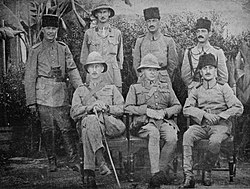
Following the failure of the Dardanelles expedition, Sir Ian Hamilton, commander of the Mediterranean Expeditionary Force, was recalled to London in October 1915, ending his military career.
Image source: Ian Hamilton (British Army officer)
Nov 1, 1915
% complete
The Serbian defeat in the Serbian campaign in autumn 1915 prompted France and Britain to transfer troops from the Gallipoli campaign to Greek Macedonia, where the Macedonian front was established to support remnants of the Serbian army.
Image source: Serbian campaign
Feb 1, 1915 - Feb 28, 1915
% complete
In February 1915, the Allied fleet failed to force a passage through the Dardanelles, an early setback that foreshadowed the difficulties of the entire campaign.
Feb 17, 1915
% complete
On 17 February 1915, a British seaplane from the seaplane carrier HMS Ark Royal flew a reconnaissance sortie over the Straits in preparation for naval operations.
Mar 18, 1915
% complete
On the morning of 18 March 1915, the Entente fleet, comprising 18 battleships with an array of cruisers and destroyers, began the main attack against the narrowest point of the Dardanelles, where the straits are only one mile wide. The Royal Navy was repulsed with heavy losses.
Apr 1, 1915 - Dec 31, 1915
% complete
Between April and December 1915, nine British and four French submarines carried out 15 patrols, sinking one battleship, one destroyer, five gunboats, 11 troop transports, 44 supply ships and 148 sailing vessels, at a cost of eight Entente submarines sunk.
Oct 1, 1915 - Oct 31, 1915
% complete
During the campaign there was always one British submarine in the Sea of Marmara, sometimes two; in October 1915 there were four Entente submarines in the region.
Jan 2, 1916
% complete
E2 left the Sea of Marmara on 2 January 1916, the last British submarine in the sea, ending the submarine campaign off Gallipoli.
Feb 19, 1915 - Sep 30, 1915
% complete
Allegations were made that Entente forces had attacked or bombarded Ottoman hospitals and hospital ships on several occasions between the start of the campaign and September 1915.
Feb 19, 1915 - Jan 9, 1916
% complete
The Gallipoli campaign was a military campaign in the First World War on the Gallipoli Peninsula from 19 February 1915 to 9 January 1916. After eight months' fighting, with approximately 250,000 casualties on each side, the land campaign was abandoned and the invasion force withdrawn.
Apr 25, 1915 - Jan 9, 1916
% complete
An amphibious landing on the Gallipoli peninsula began in April 1915, opening the land phase of the Gallipoli campaign against Ottoman defenders.
Image source: Landing at Anzac Cove
May 24, 1915
% complete
Ottoman losses were so severe that a truce was organised by Aubrey Herbert and others on 24 May to bury the dead lying in no man's land, which led to a camaraderie between the armies much like the Christmas truce of 1914.
Jul 1, 1915
% complete
By July 1915, 25 Ottoman hospitals had been built with 10,700 beds, and three hospital ships were in the area to treat the mounting casualties of the campaign.
Aug 8, 1915
% complete
The Commissioners of the Dardanelles Commission later found that Hamilton had been over-optimistic from the beginning and had added to Stopford's difficulties on 8 August 1915 during the Suvla operations.
Sep 1, 1915
% complete
In September 1915, Godley complained that too few recovered sick or wounded casualties from Gallipoli were being returned from Egypt; General John Maxwell replied that 'the appetite of the Dardanelles for men has been phenomenal and wicked'.
Sep 20, 1915
% complete
On 20 September 1915, the Newfoundland Regiment was deployed at Suvla Bay with the 29th Division as part of the British forces on Gallipoli.
Image source: Royal Newfoundland Regiment
Oct 11, 1915
% complete
Stopford and other dissident officers contributed to the air of gloom, and the possibility of evacuation was raised on 11 October 1915.
Nov 26, 1915
% complete
The untenable nature of the Entente position was made apparent by a rainstorm on 26 November 1915, which caused great hardship among the troops on the peninsula.
Jan 7, 1916
% complete
Having used the interval to bring up reinforcements and supplies, Sanders mounted an attack on the British at Gully Spur on 7 January 1916 with infantry and artillery, but the attack was a costly failure.
Jan 8, 1916
% complete
The last British troops departed from Lancashire Landing around 04:00 on 8 January 1916 during the final stages of the evacuation.
Jan 9, 1916
% complete
The Newfoundland Regiment was part of the rearguard and withdrew on 9 January 1916, marking the end of the land campaign.
Nov 1, 1915
% complete
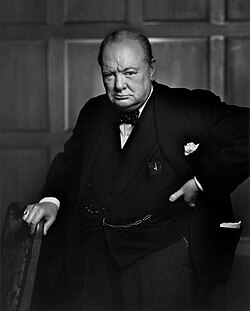
Churchill, the First Lord of the Admiralty and sponsor of the expedition, resigned in November 1915 and left London for the Western Front, where he commanded an infantry battalion of the Royal Scots Fusiliers early in 1916.
Image source: Winston Churchill
Dec 1, 1915 - Apr 29, 1916
% complete
In Mesopotamia, the Ottomans surrounded a British expedition at Kut Al Amara, forcing their surrender in April 1916, another blow to British fortunes in the Middle East.
Image source: Siege of Kut
Mar 1, 1916
% complete
In March 1916, Murray took command of the forces in Egypt, forming them into the new Egyptian Expeditionary Force (EEF) and reorganising the units for service in Europe, Egypt and elsewhere in the Middle East.
Apr 25, 1916
% complete
The first iteration of Anzac Day was celebrated unofficially in 1916 at churches in Melbourne, Brisbane and London, before being officially recognised as a public holiday in all Australian states in 1923.
Jun 1, 1916 - Aug 31, 1916
% complete
The units withdrawn from Gallipoli moved to the Western Front in mid-1916, where they continued fighting against Germany.
Image source: Western Front (World War I)
Dec 1, 1916
% complete
Asquith was partly blamed for Gallipoli and other disasters and was ousted in December 1916, when David Lloyd George proposed a war council under his authority, with the Conservatives in the coalition threatening to resign unless the plan was implemented. Lloyd George formed a new government from which Churchill was excluded because of Conservative opposition.
Image source: David Lloyd George
Jan 1, 1917
% complete
The Dardanelles Commission was set up to investigate the failure of the expedition, the first report being issued in 1917.
Image source: Dardanelles Commission
Jun 1, 1917
% complete
In the summer of 1917, Churchill was eventually appointed to the cabinet-level post of Minister of Munitions but not to the War Cabinet, beginning his political rehabilitation after Gallipoli.
Image source: Minister of Munitions
Oct 31, 1918
% complete
Palestine and the northern Levant were captured from the Ottoman Empire during 1917 and 1918, before the Armistice of Mudros ended hostilities in the Middle Eastern theatre on 31 October 1918.
Image source: Armistice of Mudros
Jan 1, 1919
% complete
The final report of the Commission was issued in 1919, concluding that with the forces available, success was dependent on the government giving priority to the expedition and leaving the British Expeditionary Force in France to make do.
Jul 24, 1923
% complete
The occupation ended in 1923 following the Turkish War of Independence, the Armistice of Mudanya and the Treaty of Lausanne, reshaping the region after the collapse of the Ottoman Empire.
Image source: Treaty of Lausanne
Oct 29, 1923
% complete
Mustafa Kemal Atatürk, who rose to prominence as a commander at Gallipoli, became the founder and first president of the Republic of Turkey in 1923. In Turkey the battle is thought of as a significant event in the state's emergence, remembered especially for the fighting around Çanakkale where the Royal Navy was repulsed in March 1915.
Image source: Mustafa Kemal Atatürk
Apr 25, 1925
% complete
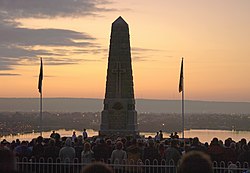
Organised marches by veterans began in 1925, in the same year a service was held on the beach at Gallipoli; two years later the first official dawn service took place at the Sydney Cenotaph.
Image source: Anzac Day
Sep 1, 1943 - Dec 31, 1943
% complete
The memory of Gallipoli weighed upon the Australians during the planning of the Huon Peninsula campaign in late 1943, shaping their approach to amphibious operations in the Second World War.
Image source: Huon Peninsula campaign
Jun 6, 1944
% complete
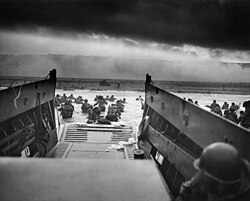
The lessons of the Gallipoli campaign were studied by military planners prior to amphibious operations such as the Normandy Landings in 1944 and during the Falklands War in 1982. Russell Weigley wrote that pre-war analysis led to a widespread belief that opposed landings could not succeed until Normandy proved otherwise.
Image source: Normandy landings
Jan 1, 1971
% complete
In 1971, Scottish-born Australian folk singer-songwriter Eric Bogle wrote 'And the Band Played Waltzing Matilda', an account from a young Australian soldier maimed during the Gallipoli campaign.
Or browse the full history timeline directory, with more than 2,000 topics.
This Battle of Gallipoli timeline was generated with the help of AI, using information found on the internet.
We work hard to keep these timelines accurate, but mistakes do get through. If you spot one, email us at [email protected] and we'll fix it for future visitors.
Generate yours with AI or build it from scratch, for free.
Export your timeline, add your own events, edit or remove AI-generated events, and much more
No credit card required.
Cancel anytime.
Cancel anytime.
You can create an unlimited number of timelines with up to 10 events on each one, customize how they look, export them to PDF, PNG, PowerPoint, CSV, and Excel, and share them with a link. Paid plans raise the event limit and add features like spreadsheet imports and collaborators.
Yes. You can cancel your subscription from your account page at any time, and you will not be charged again. Your subscription stays active for the rest of the period you already paid for.
Yes. We will email you a reminder before the annual renewal, and we will also email you a receipt.
Yes. You can email us within 15 days of any payment, and we will issue you a full refund.
Check out our pricing docs or send us an email anytime: [email protected].