-
Use Cases
-
Resources
-
Pricing
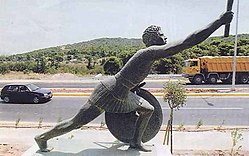
The Battle of Marathon was a pivotal conflict fought in 490 BC between the Athenians, aided by a small Plataean contingent, and the invading Persian army of Darius I. Despite being heavily outnumbered, the Greek hoplites achieved a stunning victory on the plain of Marathon, halting the first Persian invasion of Greece. The battle is famous for the legend of the runner Pheidippides, whose reported run to Athens inspired the modern marathon event. More Less
550 BC
Cyrus the Great founded the Achaemenid Persian Empire by overthrowing the Medes, creating a vast imperial power that would expand rapidly across the Near East. This empire would eventually clash with the Greek city-states, setting the stage for the Greco-Persian Wars.
Image source: Cyrus the Great

546 BC
Following his victory over Croesus of Lydia, Cyrus the Great absorbed the Greek city-states of Ionia along the coast of Asia Minor into the Persian Empire. The Ionian Greeks were placed under tyrants loyal to Persia, creating resentment that would later fuel revolt.
Image source: Ionian Revolt

522 BC
Darius I seized the Persian throne and consolidated one of the largest empires in ancient history. Ambitious and capable, he reorganized the empire's administration and harbored plans to extend Persian control into Europe, including Greece itself.
Image source: Darius the Great

492 BC
Darius sent his son-in-law Mardonius to re-subdue Thrace and Macedonia and punish Athens and Eretria. The campaign achieved some success but was crippled when much of its fleet was wrecked in a storm off Mount Athos, forcing a retreat.
Image source: Mardonius (nephew of Darius I)

499 BC
The tyrant Aristagoras of Miletus launched a rebellion against Persian rule across the Ionian cities. He traveled to mainland Greece seeking aid, persuading Athens and Eretria to send ships to support the uprising against Darius I's empire.
498 BC
An Athenian and Eretrian contingent joined Ionian rebels in marching on Sardis, the regional Persian capital in Asia Minor. Though the attack failed to capture the citadel, the burning of the city enraged Darius I and became a pretext for his later invasion of Greece.
Image source: Sardis

494 BC
The decisive naval Battle of Lade ended the Ionian Revolt when the Persian fleet defeated the Ionian Greeks near Miletus. The sack of Miletus followed, shocking mainland Greeks and intensifying their fear of Persian power.
Image source: Battle of Lade

491 BC
Persian envoys demanded symbolic submission — earth and water — from the Greek city-states. Many islands and northern cities complied, but Athens threw its envoy into a pit and Sparta cast another into a well, signaling open defiance.
Image source: Greco-Persian Wars
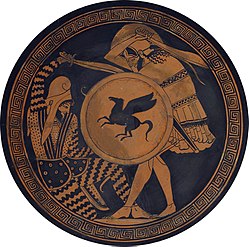
Sep 1, 490 BC
Darius dispatched a large amphibious force under the commanders Datis and Artaphernes across the Aegean. The fleet island-hopped through the Cyclades, subduing Naxos and other islands en route to punishing Athens and Eretria.
Image source: First Persian invasion of Greece

Sep 5, 490 BC - Sep 7, 490 BC
The Persian army besieged Eretria on Euboea, which fell after several days due to treachery from within. The city was burned and its inhabitants enslaved, fulfilling part of Darius's revenge before the fleet crossed to Attica.
Image source: Siege of Eretria

This Battle of Marathon timeline was generated with the help of AI, using information found on the internet.
We work hard to keep these timelines accurate, but mistakes do get through. If you spot one, email us at [email protected] and we'll fix it for future visitors.
Generate yours with AI or build it from scratch, for free.