
-
Use Cases
-
Resources
-
Pricing
The Battle of Saratoga was a pivotal turning point in the American Revolutionary War, fought in September and October 1777 near Saratoga, New York. Comprising two major engagements at Freeman's Farm and Bemis Heights, American forces under General Horatio Gates defeated British General John Burgoyne's invading army, leading to Burgoyne's surrender on October 17, 1777. The victory persuaded France to formally ally with the United States, dramatically changing the course of the war. More Less
Jan 1, 1777
In 1777, the British command devised a plan to divide the colonies by launching a three-way pincer movement aimed at isolating New England, the heart of the American rebellion, from the other colonies.
Image source: Saratoga campaign

Apr 1777
A secret shipment of French artillery arrived in April 1777, including the de Vallière cannon, which played a crucial role in the American victory at Saratoga by strengthening the Continental Army's field artillery and enabling them to combat British forces effectively.
Image source: Canon de 12 de Vallière

Jun 1777
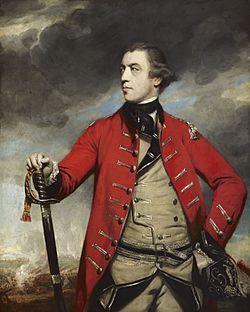
In June 1777, British Lieutenant General John Burgoyne moved south from the province of Quebec with his army, seeking to gain control of the upper Hudson River valley as part of Britain's strategy to split the colonies.
Image source: John Burgoyne
Sep 19, 1777
The Battles of Saratoga were fought September 19 and October 7, 1777 over the same ground by the American Continental Army and the British Army near Saratoga, New York during the American Revolutionary War.
Oct 7, 1777
The second battle of Saratoga was fought on October 7, 1777 over the same ground as the September engagement. General Simon Fraser was mortally wounded in this phase of the battle; according to historian Luzader, a frequently told story claiming it was the work of Timothy Murphy, one of Morgan's men, could be a 19th-century fabrication.
Oct 17, 1777
The de Vallière guns were effectively used to help force the British surrender on October 17, 1777, when General Burgoyne capitulated with his army, marking a decisive American victory in the Revolutionary War.
Image source: Surrender of General Burgoyne

Dec 18, 1777
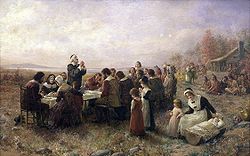
In response to Burgoyne's surrender, Congress declared December 18, 1777, as a national day 'for solemn Thanksgiving and praise'; it was the nation's first official observance of a holiday with that name.
Image source: Thanksgiving (United States)
Feb 1778
In recognition of his contribution to the battles at Saratoga, General Benedict Arnold had his seniority restored, which he had lost after being passed over for promotion earlier in 1777.
Image source: Benedict Arnold

1780
Lord Stanley continued serving John Burgoyne as aide-de-camp after Burgoyne's 1782 appointment as Commander-in-Chief in Ireland, reflecting the enduring professional relationship between the two men following the Saratoga campaign.
Aug 16, 1780
Horatio Gates, the victor of Saratoga, led American forces to a disastrous defeat at the 1780 Battle of Camden, where he was at the forefront of a panicked retreat that damaged his reputation.
Image source: Battle of Camden

This Battle of Saratoga timeline was generated with the help of AI, using information found on the internet.
We work hard to keep these timelines accurate, but mistakes do get through. If you spot one, email us at [email protected] and we'll fix it for future visitors.
Generate yours with AI or build it from scratch, for free.


