-
Use Cases
-
Resources
-
Pricing
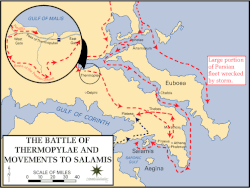
The Battle of Thermopylae was fought in August 480 BC between an alliance of Greek city-states, led by King Leonidas I of Sparta, and the invading Persian Empire under King Xerxes I. Lasting three days, the battle is famous for the heroic last stand of the Greek forces, particularly the 300 Spartans, who held the narrow coastal pass at Thermopylae against vastly superior numbers before being outflanked and defeated. More Less
550 BC
Cyrus the Great overthrew the Median Empire and established the Achaemenid Persian Empire, creating a vast imperial power that would expand across the Near East and eventually come into conflict with the Greek city-states.
Image source: Cyrus the Great

522 BC
Darius I seized the Persian throne and consolidated the empire's power, reorganizing its provinces and armies, setting the stage for his campaigns against Greece and the eventual Greco-Persian Wars.
Image source: Darius the Great

492 BC
Darius I launched an expedition under Mardonius to subdue Thrace and Macedonia as a prelude to punishing Athens and Eretria for supporting the Ionian Revolt, though the fleet was wrecked near Mount Athos.
Image source: First Persian invasion of Greece

486 BC
Upon Darius I's death, his son Xerxes I inherited the empire and the unfinished project of avenging Marathon, spending years assembling one of the largest invasion forces ever gathered to conquer Greece.
Image source: Xerxes I

Apr 480 BC
Xerxes' army crossed into Europe over engineered pontoon bridges spanning the Hellespont, beginning the massive march through Thrace and Macedonia toward northern Greece with hundreds of thousands of troops.
Image source: Xerxes's pontoon bridges

Sep 480 BC
With the pass breached, Xerxes' army advanced unopposed into Attica. Most Athenians evacuated to nearby islands and the Peloponnese, and the Persians captured and burned the largely abandoned city, including the Acropolis temples.
Image source: Greco-Persian Wars

499 BC
Greek city-states in Ionia, aided by Athens and Eretria, revolted against Persian rule. The revolt's burning of Sardis provoked Darius I to seek revenge against mainland Greece, leading directly to the Persian invasions.
Image source: Ionian Revolt

Sep 490 BC
A heavily outnumbered Athenian army under Miltiades decisively defeated a Persian landing force on the plain of Marathon, halting the first full-scale Persian invasion of Greece and boosting Greek confidence.
Image source: Battle of Marathon

483 BC
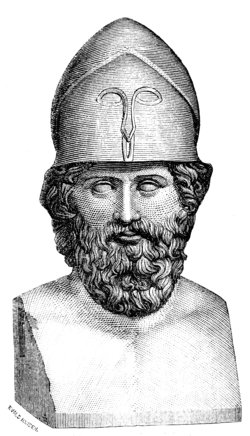
Athenian statesman Themistocles convinced his fellow citizens to use revenue from newly discovered silver mines at Laurion to construct two hundred warships, creating the navy that would prove decisive at Salamis.
Image source: Themistocles
481 BC
Facing word of Xerxes' massive invasion preparations, representatives of around thirty Greek states met and formed a defensive alliance led by Sparta, coordinating land and naval strategies against Persia.
Image source: Second Persian invasion of Greece

This Battle of Thermopylae timeline was generated with the help of AI, using information found on the internet.
We work hard to keep these timelines accurate, but mistakes do get through. If you spot one, email us at [email protected] and we'll fix it for future visitors.
Generate yours with AI or build it from scratch, for free.