-
Use Cases
-
Resources
-
Pricing
The Book of Isaiah is a major prophetic work of the Hebrew Bible, combining messages of judgment, hope, restoration, justice, and salvation. It is traditionally associated with Isaiah of Jerusalem, who prophesied in the eighth century BCE, though many scholars identify contributions from later periods. More Less
792 BCE - 740 BCE
% complete
Uzziah’s long reign over Judah provides the earliest political setting associated with Isaiah’s prophetic ministry. The period was marked by territorial expansion, economic growth, and increasing military strength, but also by social inequality and tensions that Isaiah later condemned.
Image source: Uzziah
745 BCE - 727 BCE
% complete
Tiglath-Pileser III transformed Assyria into the dominant imperial power of the ancient Near East. His campaigns and system of deportation created the geopolitical crisis that shaped Isaiah’s warnings to Judah and its neighboring kingdoms.
Image source: Tiglath-Pileser III
740 BCE
% complete
Isaiah 6 places the prophet’s call in the year King Uzziah died. In his temple vision, Isaiah sees the enthroned Lord, hears the seraphim proclaim divine holiness, confesses his uncleanness, and is commissioned to speak to a resistant Judah.
Image source: Isaiah
740 BCE - 732 BCE
% complete
Jotham’s reign followed Uzziah’s death and preceded the most intense phase of the Assyrian crisis. Isaiah’s early preaching addressed Judah’s religious practices, leadership, and vulnerability amid the rise of imperial powers.
Image source: Jotham
734 BCE - 732 BCE
% complete
Aram-Damascus and the northern kingdom of Israel attacked Judah after King Ahaz refused to join their anti-Assyrian coalition. Isaiah 7–8 presents Isaiah’s counsel to Ahaz during this crisis and emphasizes trust in God rather than political alliances.
734 BCE
% complete
King Ahaz sought Assyrian military assistance against Aram and Israel, sending tribute to Tiglath-Pileser III. Isaiah criticized this dependence, portraying it as a failure to trust Judah’s God and warning that the requested imperial intervention would become a threat to Judah.
Image source: Ahaz
732 BCE
% complete
Assyrian forces captured Damascus and ended the independence of the Aramean kingdom. The event fulfilled the immediate political background of Isaiah’s sign to Ahaz and demonstrated the overwhelming power of Assyria in the region.
Image source: Damascus
722 BCE - 721 BCE
% complete
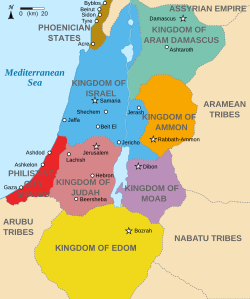
The Assyrian conquest of Samaria brought the northern kingdom of Israel to an end. Its fall forms an important background to Isaiah’s judgments against Israel and Judah, as well as to later hopes for the restoration of a reunited people.
Image source: Kingdom of Israel (Samaria)
716 BCE - 687 BCE
% complete
Hezekiah’s reign became central to Isaiah’s historical narrative. The king pursued religious reform, resisted Assyrian domination, and later faced the catastrophic invasion described in Isaiah 36–39.
Image source: Hezekiah

715 BCE - 700 BCE
% complete
Hezekiah removed or challenged several cultic practices in Judah and promoted worship centered on the Jerusalem temple. Isaiah shares the book’s concern with exclusive devotion to the Lord, although the prophetic text also criticizes confidence in ritual without justice.
701 BCE
% complete
Hezekiah displayed his treasures and resources to envoys from Babylon. Isaiah interpreted the visit as a sign that Judah’s wealth would eventually be carried to Babylon, anticipating the exile that dominates later portions of the book.
701 BCE
% complete
Isaiah 38 narrates Hezekiah’s serious illness, his prayer, and the extension of his life. The episode combines royal vulnerability, prophetic mediation, and a hymn of thanksgiving attributed to the king.
701 BCE
% complete
Assyrian forces threatened Jerusalem, and the Rabshakeh demanded surrender while mocking Judah’s faith. According to Isaiah 37, Hezekiah prayed, Isaiah delivered an oracle of reassurance, and Jerusalem survived without being captured.
Image source: Siege of Jerusalem (70 CE)
701 BCE
% complete
Sennacherib invaded Judah during Hezekiah’s revolt and captured many fortified cities. Isaiah 36–37 recounts the crisis as a confrontation between Assyrian imperial claims and the power of Jerusalem’s God.
Image source: Sennacherib's campaign in the Levant
700 BCE - 680 BCE
% complete
Traditional accounts place the end of Isaiah’s prophetic activity during the late eighth or early seventh century BCE. Later Jewish and Christian traditions connect his death with Manasseh, though the biblical book does not narrate the prophet’s death.
697 BCE - 642 BCE
% complete
Manasseh’s long reign followed Hezekiah and became associated in biblical tradition with serious religious and moral decline. His era helps explain the book’s continuing emphasis on judgment, purification, and the consequences of Judah’s unfaithfulness.
Image source: Manasseh of Judah
587 BCE - 586 BCE
% complete
Babylonian forces captured Jerusalem, destroyed the temple, and deported much of Judah’s population. This catastrophe provides the historical horizon for Isaiah’s promises of comfort, return, renewed Zion, and a new exodus.
Image source: Siege of Jerusalem (597 BC)
539 BCE
% complete
Cyrus II of Persia captured Babylon and established the Achaemenid Empire. Isaiah 44–45 names Cyrus as the Lord’s anointed agent, making the Persian conquest a theological sign that God directs international history to redeem Israel.
Image source: Fall of Babylon
538 BCE
% complete
Persian policy under Cyrus allowed displaced peoples, including Judeans, to return and restore sanctuaries. The policy corresponds closely to Isaiah’s hopes that exiles would leave Babylon and that Jerusalem would be rebuilt.
700 BCE - 600 BCE
% complete
The opening collection brings together accusations against Judah, visions of Zion, accounts of Assyrian danger, and promises concerning a future Davidic ruler. Its materials reflect Isaiah’s eighth-century setting while also receiving later editorial shaping.
Image source: Book of Isaiah
650 BCE - 500 BCE
% complete
Chapters 13–27 gather judgments against nations and expansive visions of universal restoration. The collection moves beyond immediate Assyrian politics toward Babylon’s fall, the defeat of cosmic chaos, and a future banquet on Mount Zion.
550 BCE - 539 BCE
% complete
The section commonly called Second Isaiah speaks to exiles awaiting liberation. It announces comfort, presents the Lord as creator and incomparable God, names Cyrus as an instrument of deliverance, and depicts restoration as a new exodus.
520 BCE - 450 BCE
% complete
The final major section addresses tensions in the restored community and expands the book’s vision of inclusive worship, ethical obedience, renewed creation, and the glorification of Zion. These chapters are often associated with Third Isaiah and postexilic prophetic circles.
500 BCE - 200 BCE
% complete
Collections associated with Isaiah circulated, were copied, and were interpreted during the Second Temple period. The book’s present form reflects the preservation and combination of earlier prophetic material, historical narratives, poems, and later editorial traditions.
150 BCE - 100 BCE
% complete
The Great Isaiah Scroll from the Dead Sea Scrolls preserves nearly the entire text of Isaiah in Hebrew. Its early date demonstrates the book’s importance before the Common Era and provides evidence for the transmission of the Masoretic textual tradition.
600 CE - 1000 CE
% complete
Jewish scribes known as the Masoretes transmitted and annotated the Hebrew Bible, including Isaiah. Their consonantal text, vocalization, accents, and marginal notes became the basis of the standard medieval Hebrew form used in later Jewish and scholarly editions.
Image source: Masoretic Text
1947 CE - 1956 CE
% complete
The discovery and publication of the Dead Sea Scrolls, including the Great Isaiah Scroll, provided early witnesses to Isaiah’s Hebrew text. The manuscripts enabled detailed comparison with medieval copies and illuminated the diversity of Jewish textual and interpretive traditions.
Image source: Dead Sea Scrolls
250 BCE - 100 BCE
% complete
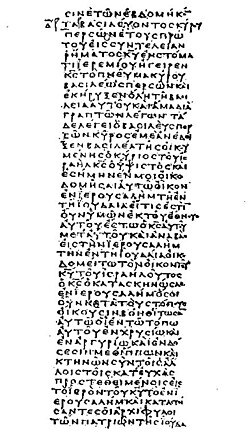
Isaiah was translated into Greek as part of the Septuagint tradition. The Greek version sometimes differs substantially in wording and interpretation from the Hebrew text and became especially influential among Greek-speaking Jews and early Christians.
Image source: Septuagint
200 BCE - 100 BCE
% complete
Second Temple Jewish interpreters drew on Isaiah’s royal, servant, Zion, and restoration imagery in developing expectations about redemption. The book’s language contributed to diverse hopes involving a Davidic ruler, restored Israel, and the transformation of creation.
Image source: Messiah
30 CE
% complete
Luke’s Gospel depicts Jesus reading Isaiah 61 in a synagogue at Nazareth and applying its proclamation of good news, release, and restoration to his own mission. The episode became a foundational Christian interpretation of Isaiah’s prophetic vocation.
Image source: Jesus
30 CE - 100 CE
% complete
Early Christian authors repeatedly interpreted the suffering servant of Isaiah 52:13–53:12 in relation to Jesus’ suffering, death, and vindication. The Ethiopian eunuch episode in Acts explicitly presents the passage as requiring interpretation.
80 CE - 90 CE
% complete
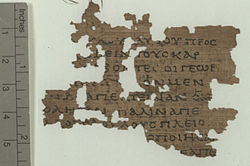
Matthew cites Isaiah 7:14 in interpreting Jesus’ birth. The citation reflects the influence of the Greek translation and became one of the most prominent Christian readings of Isaiah’s Immanuel prophecy.
Image source: Gospel of Matthew
90 CE - 100 CE
% complete
The Book of Revelation draws extensively on Isaiah’s imagery of a renewed Jerusalem, divine judgment, cosmic transformation, and the defeat of evil. Isaiah’s vision of new heavens and a new earth is especially important for Revelation’s conclusion.
Image source: Book of Revelation
90 CE - 100 CE
% complete
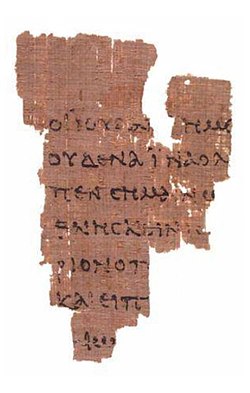
The Gospel of John quotes or alludes to Isaiah in explaining Jesus’ glory, unbelief, and mission. Isaiah 6, 53, and related themes help shape John’s account of revelation and the response of Israel’s leadership.
Image source: Gospel of John
200 CE - 600 CE
% complete
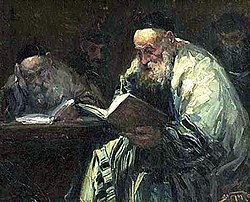
Rabbinic commentators interpreted Isaiah in legal, ethical, messianic, and eschatological contexts. Their readings preserved debates over prophecy, consolation, Israel’s restoration, the identity of the servant, and the meaning of Zion.
Image source: Rabbinic literature
390 CE - 405 CE
% complete
Jerome translated Isaiah into Latin for the Vulgate while engaging closely with the Hebrew text and earlier Greek versions. His work strongly influenced Western Christian theology, biblical interpretation, liturgy, and art for centuries.
Image source: Jerome
400 CE - 1500 CE
% complete
Isaiah supplied readings, hymns, and theological language for Christian worship, especially during Advent, Christmas, Holy Week, and Easter. Its promises of comfort, light, a coming ruler, and a suffering servant became central to the liturgical calendar.
1000 CE - 1300 CE
% complete
Medieval Jewish scholars including Abraham Ibn Ezra, David Kimhi, and later Isaac Abravanel produced influential commentaries on Isaiah. They addressed grammar, historical setting, messianic interpretation, textual difficulties, and the relationship between prophecy and redemption.
Image source: Isaac Abarbanel
1611 CE
% complete
The King James Version made Isaiah’s language widely familiar to English-speaking readers. Its renderings of passages such as the Immanuel prophecy, the suffering servant, and the new heavens and earth had lasting effects on English literature and Christian culture.
Image source: King James Version
1780 CE - 1900 CE
% complete
Modern scholars increasingly examined Isaiah’s historical layers, literary unity, authorship, and relationship to Assyrian, Babylonian, and Persian contexts. The distinction among First, Second, and Third Isaiah became influential in academic study, though debates over the book’s unity continued.
Image source: Biblical criticism
Or browse the full history timeline directory, with more than 2,000 topics.
This Book of Isaiah timeline was generated with the help of AI, using information found on the internet.
We work hard to keep these timelines accurate, but mistakes do get through. If you spot one, email us at [email protected] and we'll fix it for future visitors.
Generate yours with AI or build it from scratch, for free.
Export your timeline, add your own events, edit or remove AI-generated events, and much more
No credit card required.
Cancel anytime.
Cancel anytime.
You can create an unlimited number of timelines with up to 10 events on each one, customize how they look, export them to PDF, PNG, PowerPoint, CSV, and Excel, and share them with a link. Paid plans raise the event limit and add features like spreadsheet imports and collaborators.
Yes. You can cancel your subscription from your account page at any time, and you will not be charged again. Your subscription stays active for the rest of the period you already paid for.
Yes. We will email you a reminder before the annual renewal, and we will also email you a receipt.
Yes. You can email us within 15 days of any payment, and we will issue you a full refund.
Check out our pricing docs or send us an email anytime: [email protected].