-
Use Cases
-
Resources
-
Pricing
The history of books traces humanity's efforts to record and share knowledge, beginning with clay tablets and papyrus scrolls in ancient civilizations, advancing through medieval illuminated manuscripts, revolutionized by Gutenberg's movable-type printing press in the 15th century, expanding with industrial-era mass production and paperbacks, and evolving into today's digital e-books and audiobooks. More Less
300 BC
The scroll, or volumen, became the dominant book form of antiquity. Its production began around the 3rd century BCE, and several Greek vases from the 6th and 5th centuries BCE already bear images of volumina in use.
Image source: Scroll

250 BC
The Library at Antioch was a public library directed near the end of the 3rd century BCE by Euphorion of Chalcis, reflecting the growing importance of libraries in the Hellenistic world.
Image source: Library of Antioch

200 BC
Before the introduction of books, writing on bone, shells, wood and silk was prevalent in China long before the 2nd century BCE, until paper was invented in China around the 1st century CE.
Image source: History of books

100 BC
Book production developed in Rome in the 1st century BC with Latin literature that had been influenced by the Greek, establishing a commercial book trade in the ancient world.
200 - 400
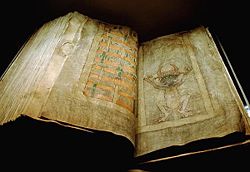
By the end of antiquity, between the 2nd and 4th centuries, the scroll was replaced by the codex. This remains the standard book form, over 1500 years after its appearance.
Image source: Codex
300 - 800
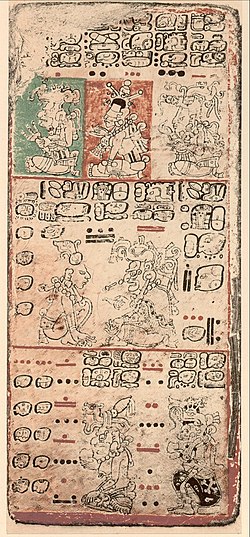
Maya screenfold books are thought to have existed since the time of the Classical Period between the 3rd and 8th centuries CE, recording astronomical, ritual, and historical knowledge.
Image source: Maya codices
100
Paper was invented in China around the 1st century CE. While paper used for wrapping and padding had been used since the 2nd century BC, paper used as a writing medium only became widespread by the 3rd century.
600
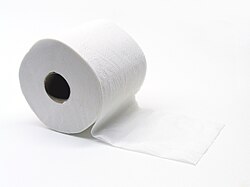
By the 6th century in China, sheets of paper were beginning to be used for toilet paper as well, showing how widely paper had spread as an everyday material.
Image source: Toilet paper
800
Paper as a substrate was introduced from China and practiced in Central Asia by the 8th century CE, beginning its diffusion across the Islamic world.
Image source: Islamic manuscripts

950
By the latter half of the 10th century CE paper had replaced papyrus as the dominant substrate for books in the regions under Islamic rule. Leftover papyrus in Egypt was often used by bookbinders for making book covers.
Image source: Papyrus

This History of Books timeline was generated with the help of AI, using information found on the internet.
We work hard to keep these timelines accurate, but mistakes do get through. If you spot one, email us at [email protected] and we'll fix it for future visitors.
Generate yours with AI or build it from scratch, for free.