-
Use Cases
-
Resources
-
Pricing
The history of agriculture technology traces humanity's evolution from hand tools and animal power in ancient civilizations to mechanized tractors, chemical fertilizers, genetically modified crops, and today's precision farming with drones, sensors, and AI. Each technological leap dramatically increased food production, reshaped rural economies, and transformed how humans feed a growing global population. More Less
3500 BC
% complete
Mesopotamian farmers developed ox-drawn plows, dramatically increasing the amount of land that could be tilled. This innovation allowed deeper soil cultivation, higher yields, and supported growing urban civilizations in Mesopotamia and Egypt.
3000 BC
% complete
Ancient civilizations built extensive canal networks, shadufs, and basin irrigation systems to control river water from the Tigris, Euphrates, and Nile. Irrigation enabled reliable crop production in arid regions and supported surplus food supplies for large populations.
Image source: Irrigation
300 BC
% complete
Chinese farmers adopted cast-iron moldboard plows that turned soil more efficiently than earlier designs. This technology reduced labor requirements and improved soil aeration, centuries before similar designs reached Europe.
Image source: Plough
1701
% complete
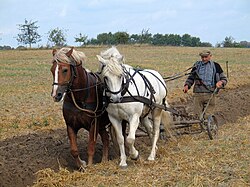
English agronomist Jethro Tull patented a horse-drawn seed drill that sowed seeds in neat rows at consistent depths. Replacing broadcast scattering, it greatly improved germination rates and became a cornerstone technology of the British Agricultural Revolution.
Image source: Seed drill
1730
% complete
The Norfolk rotation system alternated wheat, turnips, barley, and clover, eliminating fallow periods while restoring soil nitrogen through legumes. It boosted livestock feed availability and grain yields, becoming central to British agricultural improvement.
Image source: Crop rotation
1750
% complete
Robert Bakewell applied systematic selective breeding to sheep and cattle at his Leicestershire farm, developing improved breeds like the New Leicester sheep. His methods spread widely and transformed livestock quality across Britain and beyond.
Image source: Robert Bakewell (agriculturalist)
Jul 1834
% complete
Cyrus McCormick's horse-drawn mechanical reaper allowed one worker to harvest as much grain as several dozen laborers with scythes. Mass production of the reaper revolutionized American wheat farming and opened vast prairies to commercial cultivation.
Image source: Cyrus McCormick
1835
% complete
Hiram Moore's combine harvester merged reaping and threshing into a single machine. Later powered by steam and then internal combustion engines, combines drastically reduced harvest labor and time on grain farms worldwide.
Image source: Combine harvester
1837
% complete
Blacksmith John Deere developed a polished steel plow that cut through sticky Midwestern prairie soil without clogging. The steel plow made large-scale farming of the American Great Plains practical and launched the John Deere company.
Image source: John Deere (inventor)
1840
% complete
Liebig's 'Chemistry in Its Application to Agriculture' established that plants absorb mineral nutrients from soil, founding agricultural chemistry. His law of the minimum and advocacy of fertilizers laid scientific foundations for modern crop nutrition.
Image source: Justus von Liebig
1842
% complete
John Bennet Lawes patented a process for making superphosphate from phosphate rock treated with sulfuric acid and opened the world's first artificial fertilizer factory. Synthetic fertilizers began supplementing manure-based soil enrichment.
Image source: Fertilizer
1892
% complete
John Froelich built the first practical gasoline-powered tractor in Iowa, capable of driving a thresher in the field. Tractors soon replaced draft animals, transforming farm power and enabling much larger cultivated acreages per worker.
Image source: Tractor
1909
% complete
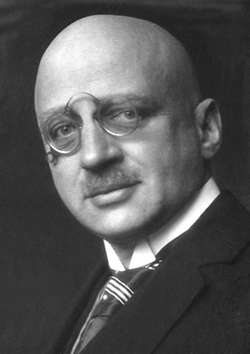
Fritz Haber demonstrated the synthesis of ammonia from nitrogen and hydrogen, later industrialized by Carl Bosch. Synthetic nitrogen fertilizer produced via the Haber-Bosch process now sustains roughly half the world's food supply.
Image source: Haber process
1917
% complete
Henry Ford's Fordson was the first mass-produced, affordable tractor, selling hundreds of thousands of units. Its low price put mechanized power within reach of ordinary farmers and accelerated the replacement of horses on farms.
Image source: Fordson
1939
% complete
Paul Hermann Müller discovered DDT's potent insecticidal properties, earning a Nobel Prize. Widely used after World War II on crops, DDT inaugurated the era of synthetic pesticides before environmental concerns led to restrictions decades later.
Image source: DDT
1944
% complete
Norman Borlaug joined the Rockefeller Foundation's wheat program in Mexico, breeding disease-resistant, short-stalked, high-yield varieties. His work dramatically raised Mexican wheat output and seeded the global Green Revolution.
Image source: Norman Borlaug
1960
% complete
The International Rice Research Institute was established in Los Baños, Philippines, to improve rice productivity in Asia. Its research produced semi-dwarf rice varieties that underpinned Asian food security during the Green Revolution.
Image source: International Rice Research Institute
1966
% complete
IRRI released IR8, a semi-dwarf rice variety yielding up to ten tons per hectare under ideal conditions. IR8 spread rapidly across Asia, helping countries like India and the Philippines avert predicted famines.
Image source: IR8
1966
% complete
India launched a national program combining high-yield seeds, fertilizers, and irrigation, transforming Punjab and other states into breadbaskets. Wheat production soared, ending chronic food deficits and dependence on grain imports.
Image source: Green Revolution in India
Oct 1970
% complete
Norman Borlaug received the Nobel Peace Prize for his role in boosting world food supply through improved wheat varieties. Often called the father of the Green Revolution, he is credited with saving hundreds of millions from starvation.
1974
% complete
Monsanto brought glyphosate, sold as Roundup, to market as a broad-spectrum systemic herbicide. It became the world's most widely used weed killer and later paired with genetically engineered resistant crops.
Image source: Glyphosate
1983
% complete
Scientists created the first transgenic plants using Agrobacterium tumefaciens as a gene vector, demonstrating that foreign DNA could be stably inserted into plant genomes. This breakthrough opened the door to commercial biotech crops.
Image source: Genetically modified organism
1990
% complete
Farmers began using satellite GPS positioning to guide equipment and map field variability, enabling variable-rate application of inputs. Precision agriculture reduced waste, lowered costs, and increased efficiency in input use.
Image source: Precision agriculture
May 1994
% complete
The Flavr Savr tomato became the first commercially grown genetically engineered food approved for sale in the United States. Engineered to ripen slowly, it marked the debut of GM foods in supermarkets despite limited commercial success.
1996
% complete
Herbicide-tolerant soybeans were introduced commercially, allowing farmers to spray glyphosate over fields without harming crops. Adoption was extraordinarily rapid, and GM crops soon dominated soybean, corn, and cotton acreage in the Americas.
Image source: Roundup Ready
1996
% complete
Corn and cotton expressing Bacillus thuringiensis (Bt) proteins were commercialized, giving plants built-in protection against insect pests. Bt crops reduced insecticide spraying and significantly improved yields in pest-prone regions.
Image source: Genetically modified maize
2000
% complete
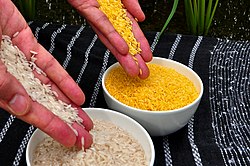
Scientists engineered rice to produce beta-carotene, giving the grain its golden color and providing a source of vitamin A. Golden Rice became a flagship example of biofortification aimed at reducing malnutrition in developing countries.
Image source: Golden rice
2010
% complete
Unmanned aerial vehicles equipped with multispectral cameras began surveying crop health, detecting stress, pests, and irrigation needs. Drones made high-resolution field monitoring affordable and complemented satellite imagery in precision farming.
Image source: Agricultural drone
2015
% complete
Researchers adapted CRISPR-Cas9 genome editing to modify crop traits such as disease resistance, drought tolerance, and nutritional content with unprecedented precision. Gene-edited crops promised faster development than traditional GMOs.
Image source: CRISPR gene editing
2016
% complete
Venture-backed companies scaled up indoor vertical farms using LED lighting, hydroponics, and climate control to grow produce year-round near urban markets. Controlled-environment agriculture offered water savings and pesticide-free production independent of weather.
Image source: Vertical farming
Or browse the full history timeline directory, with more than 2,000 topics.
This History of Agriculture Technology timeline was generated with the help of AI, using information found on the internet.
We work hard to keep these timelines accurate, but mistakes do get through. If you spot one, email us at [email protected] and we'll fix it for future visitors.
Generate yours with AI or build it from scratch, for free.
Export your timeline, add your own events, edit or remove AI-generated events, and much more
No credit card required.
Cancel anytime.
Cancel anytime.
You can create an unlimited number of timelines with up to 10 events on each one, customize how they look, export them to PDF, PNG, PowerPoint, CSV, and Excel, and share them with a link. Paid plans raise the event limit and add features like spreadsheet imports and collaborators.
Yes. You can cancel your subscription from your account page at any time, and you will not be charged again. Your subscription stays active for the rest of the period you already paid for.
Yes. We will email you a reminder before the annual renewal, and we will also email you a receipt.
Yes. You can email us within 15 days of any payment, and we will issue you a full refund.
Check out our pricing docs or send us an email anytime: [email protected].