-
Use Cases
-
Resources
-
Pricing
The history of comic books traces the evolution of sequential art from late 19th-century newspaper comic strips through the birth of the American comic book in the 1930s, the Golden Age of superheroes like Superman and Batman, the controversial Comics Code era, the underground comix movement, the rise of the graphic novel, and today's diverse global industry shaped by manga, independent publishers, and blockbuster film adaptations. More Less
1828 - 1882
% complete
Taking into account comic strips, Steve Geppi divides the history of comics into ages beginning with the Victorian Age, from 1828 to 1882, a period added before the Golden Age due to consideration of comic strips in the general history of comics.
Image source: American comic book
1946 - 1956
% complete
Steve Geppi's periodization includes an Atom Age from 1946 to 1956. Savage sets the ending of the Atom Age — the period in which there was a prevalence of atomic-bomb narratives and horror stories — in 1954, the year that the Comics Code Authority prohibited most of what had appeared prior to 1954.
Apr 1960
% complete
Dick Lupoff's article 'Re-Birth', published in issue one of the fanzine Comic Art in April 1960, was an early discussion of the revival of superheroes that helped shape how fans and historians understood the new era of comics.
Feb 1966
% complete
The first use of the terms 'Golden Age' and 'Silver Age' together as comic periodization was in a letter from a reader published in Justice League of America #42 (February 1966), stating: 'If you guys keep bringing back the heroes from the Golden Age, people 20 years from now will be calling this decade the Silver Sixties!' Michael Uslan says this natural hierarchy of gold–silver–bronze, akin to Olympic medals, soon took hold in common parlance.
1986 - 1992
% complete
In A Complete History of American Comic Books, Shirrel Rhoades cites Steve Geppi's periodization, which includes a Copper Age from 1986 to 1992, following the Bronze Age and preceding the Chrome Age.
1992 - 1999
% complete
Geppi's periodization, cited by Rhoades, defines a Chrome Age from 1992 to 1999, an era associated with the speculator boom and bust in the comics market following the rise of creator-owned publishers like Image Comics.
2000
% complete
Comics creator Tom Pinchuk proposed the name Diamond Age (2000–present) for the period starting with the appearance of Marvel's Ultimate line, offering an alternative label for the contemporary era of comics.
Image source: Ultimate Marvel
1842
% complete
The history of American comics began in the 19th century in mass print media, in the era of sensationalist journalism, where newspaper comics served as further entertainment for mass readership. In the 20th century, comics became an autonomous art medium and an integral part of American culture.
1842
% complete
In 1842, the work Histoire de Mr. Vieux Bois was published in the United States, marking the start of the history of American comics. The version published in the U.S. (in Brother Jonathan, Vol. I, No. IX, September 14, 1842) was an unlicensed copy of Rodolphe Töpffer's original work, done without Töpffer's authorization.
Image source: Histoire de Mr. Vieux Bois
1849
% complete
In 1849, Journey to the Gold Diggins by Jeremiah Saddlebags by James A. and Donald F. Read appeared, continuing the early development of American illustrated humor and narrative picture stories that would eventually evolve into comics.
1882 - 1938
% complete
According to Shirrel Rhoades citing Steve Geppi, the Platinum Age ran from 1882 to 1938 and preceded the Golden Age. The late 19th century Platinum Age was characterized by a gradual introduction of the key elements of the American mass comics.
1892
% complete
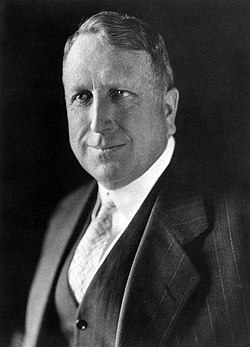
In 1892, William Randolph Hearst published cartoons in his first newspaper, The San Francisco Examiner, contributing to the growing role of newspaper comics as entertainment for mass readership during the era of sensationalist journalism.
Image source: William Randolph Hearst
1894
% complete
In 1894, Joseph Pulitzer published in the New York World the first color strip, designed by Walt McDougall, showing that printing technique had already advanced enough to enable this kind of publication.
Image source: New York World
1894
% complete
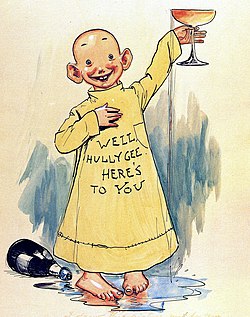
Also in 1894 and still in the New York World, Richard F. Outcault began a series of full-page large drawings teeming with humorous details, staging street urchins, one of whom wore a blue nightgown that turned yellow in 1895 — the famous Yellow Kid.
Image source: Richard F. Outcault
1896
% complete
Fierce competition between Hearst and Pulitzer in 1896 led to the enticing away of Outcault by Hearst to work in the New York Journal, exemplifying the newspaper circulation wars that fueled early comic strip development.
Image source: New York Journal-American
Oct 25, 1896
% complete
On October 25, 1896, the Yellow Kid pronounced his first words in a speech balloon; previously his words had been written on his shirt. This marked a key step in the development of speech balloons in American comics.
Image source: The Yellow Kid
1897
% complete
Published in 1897, the Yellow Kid magazine consisted of sheets that had previously appeared in newspapers, and it was the first magazine of its kind, foreshadowing the later emergence of the comic book format.
1903 - 1905
% complete
From 1903 to 1905, Gustave Verbeek wrote his comic series The Upside-Downs of Old Man Muffaroo and Little Lady Lovekins, an innovative strip designed to be read one way and then flipped upside down to continue the story.
Image source: Gustave Verbeek
1933
% complete
The first American-style true comic book, published independently of a newspaper (Famous Funnies: A Carnival of Comics), appeared in 1933. Although the first comic books were themselves newspaper-strip reprints, comics soon featured original material.
Image source: Famous Funnies
1938
% complete
The first appearance of Superman in Action Comics #1 in 1938, published by National Allied Publications (a corporate predecessor of DC Comics), launched the Golden Age of Comic Books, an era of American comic books running from 1938 to 1956.
Image source: Action Comics 1
1938 - 1956
% complete
The Golden Age of Comic Books describes an era of American comic books from 1938, with the first appearance of Superman in Action Comics #1, to 1956, which introduced the modern version of the Flash. It established the superhero as the dominant genre in American comics.
Image source: Golden Age of Comic Books
1956 - 1970
% complete
The Silver Age of Comic Books began in 1956 with a resurgence of interest in superheroes and lasted until 1970. During this period, publishers introduced new and popular superheroes, and the medium saw renewed creativity and commercial success.
1956
% complete
The Silver Age of Comic Books began in 1956 with a resurgence of interest in superheroes, conventionally dated to the introduction of DC's second incarnation of The Flash, which revitalized the superhero genre after its postwar decline.
1970 - 1985
% complete
The Bronze Age of Comic Books is an informal name for a period in the history of American superhero comic books usually said to run from 1970 to 1985. Publishers introduced new and popular superheroes and thereby became the leading comics publisher during this era.
1984
% complete
The website Copper Age Comics proposes that the Copper Age began in 1984 with Marvel's Secret Wars limited series, marking a shift toward event-driven crossover storytelling in mainstream superhero comics.
Image source: Secret Wars
1985
% complete
DC Comics's Crisis on Infinite Earths event marked the mid-1980s transition into the Modern Age of Comic Books, which is generally considered to have begun in 1985 and continues through the present day. Internet comic communities also use it to mark the start of the so-called 'Iron Age'.
Image source: Crisis on Infinite Earths
1985
% complete
The Modern Age of Comic Books is a period in the history of American superhero comic books which is generally considered to have begun in 1985 and continues through the present day, characterized by darker themes, deconstruction of the superhero genre, and greater diversity of creators and characters.
Image source: Modern Age of Comic Books
1991
% complete
According to the website Copper Age Comics, the Copper Age ended in 1991 with Jim Lee's X-Men series, closing out an era before the industry upheavals of the early 1990s transformed the direct market.
Image source: X-Men (comic book)
1992
% complete
In 1992, a group of Marvel artists (including Jim Lee) defected to form the creator-owned Image Comics; this is often marked as the beginning of the Modern Age, which continues to the present.
Image source: Image Comics
1997 - 2020
% complete
Diamond Comic Distributors, founded by Steve Geppi, held a monopoly over direct market distribution between 1997 and 2020, shaping how comic books reached retailers throughout the late Modern Age of comics.
2004
% complete
One periodization places a transitional era ending around 2004 with the publication of Marvel's 'Avengers Disassembled' and DC Comics' 'Infinite Crisis', marking a shift in the tone and continuity of major superhero universes.
2011
% complete
One periodization marks the beginning of the Postmodern Age around 2011 with the publication of Ultimate Fallout #4, the first appearance of Miles Morales, which continues to the present. Internet communities also mark 2011 with DC's New 52 reboot ending the 'Iron Age'.
Image source: Miles Morales
Or browse the full history timeline directory, with more than 2,000 topics.
This History of Comic Books timeline was generated with the help of AI, using information found on the internet.
We work hard to keep these timelines accurate, but mistakes do get through. If you spot one, email us at [email protected] and we'll fix it for future visitors.
Generate yours with AI or build it from scratch, for free.
Export your timeline, add your own events, edit or remove AI-generated events, and much more
No credit card required.
Cancel anytime.
Cancel anytime.
You can create an unlimited number of timelines with up to 10 events on each one, customize how they look, export them to PDF, PNG, PowerPoint, CSV, and Excel, and share them with a link. Paid plans raise the event limit and add features like spreadsheet imports and collaborators.
Yes. You can cancel your subscription from your account page at any time, and you will not be charged again. Your subscription stays active for the rest of the period you already paid for.
Yes. We will email you a reminder before the annual renewal, and we will also email you a receipt.
Yes. You can email us within 15 days of any payment, and we will issue you a full refund.
Check out our pricing docs or send us an email anytime: [email protected].