-
Use Cases
-
Resources
-
Pricing
Marvel Comics is one of the world's largest comic book publishers, founded in 1939 as Timely Publications by Martin Goodman. It rose to prominence in the 1960s under editor Stan Lee and artists like Jack Kirby and Steve Ditko, creating beloved characters such as Spider-Man, the X-Men, Iron Man, and the Hulk. Marvel revolutionized the superhero genre with flawed, relatable heroes and complex storytelling, later expanding into blockbuster films, television, and multimedia franchises. More Less
1939
% complete
Martin Goodman founded Timely Publications, the company that would eventually become Marvel Comics, publishing its first comic book, Marvel Comics #1, in October 1939.
Image source: Marvel Comics

Oct 1, 1939
% complete
Marvel Comics #1 introduced the android Human Torch by Carl Burgos and Namor the Sub-Mariner by Bill Everett, two of Marvel's earliest superheroes who became rivals.
Image source: Human Torch (android)
1941
% complete
At just 19 years old, Stan Lee was named interim editor-in-chief of Timely Comics, beginning a decades-long career that would shape the company's identity.
Image source: Stan Lee
Mar 1, 1941
% complete
Created by Joe Simon and Jack Kirby, Captain America debuted punching Adolf Hitler on his cover, becoming a patriotic symbol during World War II.
Image source: Captain America
1951
% complete
Following a postwar decline in superhero comics, Goodman's company became Atlas Comics, focusing on westerns, horror, romance, and science fiction titles.
Image source: Atlas Comics (1950s)
Nov 1, 1961
% complete
Written by Stan Lee with art by Jack Kirby, Fantastic Four #1 introduced flawed, relatable heroes and is widely credited with launching the modern superhero era.
Image source: Fantastic Four
May 1, 1962
% complete
Stan Lee and Jack Kirby introduced Bruce Banner and the Hulk, a scientist transformed into a raging green giant, exploring themes of rage and duality.
Image source: Hulk
Aug 1, 1962
% complete
Stan Lee, Larry Lieber, and Jack Kirby adapted the Norse god Thor into a superhero, bringing mythology into the Marvel universe.
Image source: Thor (Marvel Comics)
Aug 1, 1962
% complete
Created by Stan Lee and Steve Ditko, teenage Peter Parker became one of comics' most beloved characters, proving young heroes could carry their own series.
Image source: Spider-Man
Mar 1, 1963
% complete
Stan Lee, Larry Lieber, Don Heck, and Jack Kirby created Tony Stark, a wealthy industrialist whose armored alter ego reflected Cold War anxieties.
Image source: Iron Man
Jul 1, 1963
% complete
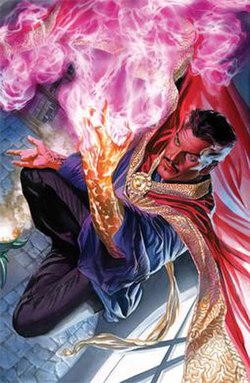
Steve Ditko's surreal artwork defined Doctor Strange, Marvel's Master of the Mystic Arts, expanding the publisher into supernatural storytelling.
Image source: Doctor Strange
Sep 1, 1963
% complete
Stan Lee and Jack Kirby introduced mutant heroes led by Professor Xavier, using superpowers as an allegory for prejudice and persecution.
Image source: X-Men '97
Sep 1, 1963
% complete
Marvel's premier superhero team formed when Iron Man, Thor, Hulk, Ant-Man, and Wasp joined forces, creating a flagship ensemble title.
Image source: Avengers (comics)
Apr 1, 1964
% complete
Blind lawyer Matt Murdock gained superhuman senses from radioactive waste, created by Stan Lee and Bill Everett, later refined by Frank Miller.
Image source: Daredevil (Marvel Comics character)
Jul 1, 1966
% complete
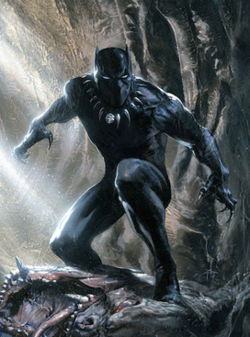
Created by Stan Lee and Jack Kirby, T'Challa, king of Wakanda, became the first Black superhero in mainstream American comics.
Image source: Black Panther (character)
Mar 1, 1968
% complete
Carol Danvers first appeared in Marvel Super-Heroes #13 and later became Ms. Marvel and Captain Marvel, rising to become one of Marvel's leading heroes.
1970
% complete
Frustrated over creator rights and credit, Kirby departed Marvel to create the Fourth World saga at DC, marking the end of an era.
Image source: Jack Kirby
Oct 1, 1974
% complete
Len Wein and John Romita Sr. created Wolverine, whose popularity exploded after joining the relaunched X-Men, becoming Marvel's breakout star.
Image source: Wolverine (character)
May 1, 1975
% complete
Chris Claremont and Len Wein assembled a new international X-Men team including Storm, Colossus, Nightcrawler, and Wolverine, revitalizing the franchise.
Image source: Giant-Size X-Men
May 1, 1984
% complete
Marvel's first major company-wide crossover united its heroes against the Beyonder and introduced Spider-Man's black costume, setting a template for event comics.
Image source: Secret Wars
Oct 1, 1986
% complete
Frank Miller's acclaimed run on Daredevil elevated the title to critical acclaim and demonstrated that mature, gritty storytelling could thrive at Marvel.
Image source: Daredevil: Born Again
May 1, 2006
% complete
Mark Millar and Steve McNiven's Civil War pitted Iron Man against Captain America over superhero registration, becoming one of Marvel's best-selling events.
Mar 1, 2007
% complete
Following the Civil War crossover, Steve Rogers was assassinated, generating massive media attention before his eventual return.
Image source: The Death of Captain America
Aug 1, 2011
% complete
Brian Michael Bendis and Sara Pichelli introduced Afro-Latino teen Miles Morales in Ultimate Fallout #4, diversifying Marvel's roster of iconic heroes.
Image source: Miles Morales
Oct 1, 2012
% complete
Marvel NOW! renumbered and relaunched major titles with new creative teams and diverse leads, reflecting lessons learned from DC's New 52.
Image source: Marvel Now!
Feb 1, 2014
% complete
G. Willow Wilson and Adrian Alphona introduced Kamala Khan, Marvel's first Muslim headlining hero, to widespread acclaim and commercial success.
Image source: Kamala Khan
Aug 1, 1986
% complete
Universal's Howard the Duck was a notorious box office failure that discouraged Marvel film adaptations for years, though it later gained cult status.
Image source: Howard the Duck (film)
May 3, 2002
% complete
Sam Raimi's Spider-Man grossed over $800 million worldwide, proving superhero films could be blockbusters and reviving interest in Marvel properties.
Image source: Spider-Man (2002 film)
May 2, 2008
% complete
Marvel Studios self-financed Iron Man, starring Robert Downey Jr., launching the interconnected Marvel Cinematic Universe that transformed Hollywood.
Image source: Iron Man (2008 film)
Aug 31, 2009 - Dec 31, 2009
% complete
The Walt Disney Company purchased Marvel Entertainment, providing resources that fueled the MCU's expansion and integrated Marvel into global pop culture.
Image source: Marvel Entertainment
May 4, 2012
% complete
Joss Whedon's The Avengers grossed over $1.5 billion worldwide, cementing the MCU as the most successful film franchise in history.
Image source: The Avengers (2012 film)
Feb 16, 2018
% complete
Ryan Coogler's Black Panther earned over $1.3 billion and three Academy Awards, celebrated as a cultural milestone for Black representation in cinema.
Image source: Black Panther (film)
Or browse the full history timeline directory, with more than 2,000 topics.
This History of Marvel Comics timeline was generated with the help of AI, using information found on the internet.
We work hard to keep these timelines accurate, but mistakes do get through. If you spot one, email us at [email protected] and we'll fix it for future visitors.
Generate yours with AI or build it from scratch, for free.
Export your timeline, add your own events, edit or remove AI-generated events, and much more
No credit card required.
Cancel anytime.
Cancel anytime.
You can create an unlimited number of timelines with up to 10 events on each one, customize how they look, export them to PDF, PNG, PowerPoint, CSV, and Excel, and share them with a link. Paid plans raise the event limit and add features like spreadsheet imports and collaborators.
Yes. You can cancel your subscription from your account page at any time, and you will not be charged again. Your subscription stays active for the rest of the period you already paid for.
Yes. We will email you a reminder before the annual renewal, and we will also email you a receipt.
Yes. You can email us within 15 days of any payment, and we will issue you a full refund.
Check out our pricing docs or send us an email anytime: [email protected].