-
Use Cases
-
Resources
-
Pricing
20000 BC
Fragments from Xianrendong Cave in Jiangxi, China, are generally dated to about 20,000 years ago and are among the oldest known pottery. Hunter-gatherers made the vessels from coarse clay, probably for cooking and processing food, demonstrating that ceramics predate agriculture.
18000 BC
Pottery fragments from Yuchanyan Cave in Hunan, China, date to approximately 18,000 years ago. Their early dates show that ceramic technology emerged independently or through very early regional networks long before settled farming communities.
14500 BC
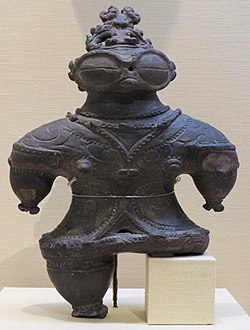
The earliest Jōmon pottery appeared in Japan by about 14,500 BC. These vessels, often made by coiling and fired at low temperatures, are among the oldest pottery traditions in the world and were used by communities that remained largely mobile.
Image source: Jōmon period
7000 BC
By the seventh millennium BC, pottery was widespread in the Levant and northern Mesopotamia. Neolithic communities developed more regular forms for storing grain, water, and oils, while clay figurines and decorated vessels became part of domestic and ritual life.
Image source: Neolithic
7000 BC
At Mehrgarh in present-day Pakistan, early farming communities produced pottery by the seventh millennium BC. The assemblage documents the development of ceramic containers alongside agriculture, livestock keeping, craft specialization, and increasingly permanent settlement.
Image source: Mehrgarh
6500 BC - 3800 BC
During the Ubaid period, communities in southern Mesopotamia made finely painted pottery with geometric and animal designs. Standardized forms and distribution over a broad area reveal expanding exchange networks and shared cultural practices.
Image source: Ubaid period
3500 BC
The fast potter's wheel emerged in Mesopotamia during the fourth millennium BC, following earlier slow-turning devices. It enabled faster production of thinner, more symmetrical vessels and transformed pottery into a more specialized craft.
Image source: Potter's wheel
3500 BC - 30 BC
Egyptian faience, a glazed non-clay composition made largely from quartz or sand, was used for beads, amulets, figurines, and vessels. Its bright blue and green surfaces imitated precious stones and carried strong religious associations.
Image source: Egyptian faience
3300 BC - 1300 BC
Potters of the Indus Valley Civilization produced wheel-made and hand-built vessels decorated with geometric patterns, plants, animals, and human motifs. Ceramic production supported household use, trade, ritual activity, and the growth of urban centers.
Image source: Indus Valley Civilisation
2000 BC - 1450 BC
Kamares ware, produced in Minoan Crete, is recognized for thin walls, vibrant polychrome decoration, and dynamic spirals and plant forms. Its manufacture reflects advanced wheel throwing and the elite exchange networks of Bronze Age Aegean palaces.
1500 BC - 221 BC
Chinese potters progressively developed high-temperature firing and stoneware bodies during the Bronze Age and later periods. These technologies produced harder, more durable vessels and laid foundations for the later development of porcelain.
Image source: Chinese ceramics
630 BC - 480 BC
Attic black-figure pottery used slip-painted silhouettes, incised details, and controlled oxidizing and reducing firings. Workshops such as those of Exekias created narrative vessels that are major sources for Greek mythology, social history, and artistic practice.
Image source: Black-figure pottery
530 BC - 300 BC
Red-figure pottery reversed the black-figure technique by leaving figures in the red clay color and painting the background black. The method allowed more naturalistic anatomy, overlapping forms, and detailed brushwork, especially in Attic vase painting.
Image source: Red-figure pottery
50 BC - 400
Roman workshops produced glossy red tableware known as terra sigillata, often impressed with molds and maker stamps. Large-scale centers in Italy, Gaul, and North Africa distributed standardized ceramics throughout the empire.
Image source: Terra sigillata
200 - 750
Lead-glazed ceramics with green, amber, and brown colors developed in China during the late Han and succeeding periods. The sancai tradition became especially prominent under the Tang dynasty for figurines, vessels, and tomb goods.
600 - 1000
Chinese kiln centers gradually combined kaolin-rich clay, feldspathic materials, and high-temperature firing to create translucent, vitrified bodies now called porcelain. The technology matured during the Tang and Song periods and became one of China's most influential exports.
Image source: Porcelain
618 - 907
Tang-period sancai ware used flowing lead glazes in amber, green, cream, and blue on vessels and tomb figures. Camel and horse sculptures, musicians, and officials reveal the cosmopolitan culture and international trade of the Tang empire.
Image source: Tang dynasty
960 - 1279
Song potters refined celadon glazes that produce translucent green and blue-green surfaces through iron-bearing glaze chemistry and controlled kiln atmospheres. Centers such as Longquan, Yue, and Ru became models of restrained ceramic beauty.
Image source: Celadon
1004
Jingdezhen's imperial and commercial kilns grew around local kaolin and petuntse resources. From the Song period onward, the city developed into China's leading porcelain center, coordinating specialized labor, large kilns, and production for domestic and overseas markets.
1368 - 1644
Ming kilns, especially at Jingdezhen, perfected cobalt-blue decoration beneath a clear glaze. Blue-and-white porcelain traveled through Asian, Middle Eastern, and European trade networks and became a defining global luxury commodity.
800 - 1000
Potters in the Abbasid world developed lusterware, applying metallic compounds over glazed vessels and firing them in a reducing atmosphere. The resulting iridescent surfaces adapted techniques associated with glass and metalwork to luxury ceramics.
Image source: Lustreware
1100 - 1400
Middle Eastern potters formulated fritware from quartz, glassy frit, and clay to imitate the whiteness of Chinese porcelain. It became an important body for painted and glazed wares in Iran, Syria, Egypt, and neighboring regions.
1200 - 1500
The cylindrical albarello developed in the Islamic Mediterranean and spread into European pharmacies. Tin-glazed surfaces provided a white ground for inscriptions and decoration while the narrow waist made jars easier to handle and store.
1400 - 1600
Italian maiolica used an opaque tin glaze as a bright surface for colorful painted decoration. Renaissance workshops in Faenza, Urbino, Deruta, and other cities created narrative wares, heraldic services, and technically ambitious vessels.
1500 - 1700
Ottoman workshops at İznik produced richly decorated quartz-based ceramics with cobalt blue, turquoise, green, and the characteristic bole red. Their floral designs influenced tiles and vessels used in Ottoman architecture and court culture.
1500 - 1800
Maritime trade carried large quantities of Chinese porcelain to Europe, where rulers and merchants collected it as a prestigious exotic good. European demand encouraged specialized export forms, armorial decoration, and later attempts to reproduce the material.
1708
Johann Friedrich Böttger and Ehrenfried Walther von Tschirnhaus developed Europe's first successful hard-paste porcelain at Meissen under Augustus the Strong. The factory began production in 1710 and transformed European luxury ceramics.
Image source: Meissen porcelain
1750 - 1850
Transfer printing allowed engraved designs to be transferred onto ceramic surfaces more quickly and consistently than hand painting. English factories used the process extensively for wares sold to expanding middle-class and colonial markets.
1759
Josiah Wedgwood combined scientific experimentation, refined bodies, modelled decoration, and organized factory production. His creamware, jasperware, and marketing methods made fashionable ceramics more affordable and helped define industrial-era pottery.
Image source: Josiah Wedgwood
1775
Founded by royal charter in Denmark, the Royal Porcelain Manufactory exemplified European state and court efforts to establish domestic porcelain production. It later became known for painted tableware and distinctive blue decoration.
1919 - 1933
The Bauhaus treated ceramics as both a craft and a component of modern industrial design. Its pottery workshop at Dornburg and Weimar, associated with artists including Gerhard Marcks and Theodor Bogler, explored functional forms and systematic production.
Image source: Bauhaus
1920 - 1939
Art Deco ceramics used streamlined geometry, vivid glazes, stylized figures, and new industrial methods. European and American factories marketed decorative wares that reflected modern urban culture, luxury, machinery, and mass consumption.
Image source: Art Deco
1920 - 1970
The studio pottery movement emphasized individual makers, hand processes, expressive surfaces, and the artistic status of functional vessels. Bernard Leach, Shoji Hamada, and their followers helped establish independent pottery studios in Britain, the United States, and elsewhere.
1947 - 1971
Beginning in 1947, Pablo Picasso worked with the Madoura pottery workshop in Vallauris, France, producing plates, pitchers, figurines, and painted or incised vessels. His experiments helped bring ceramics into the center of postwar modern art.
Image source: Pablo Picasso
1954 - 2002
Peter Voulkos challenged the boundary between pottery and sculpture with large, aggressively altered stoneware forms. His teaching and work at institutions including Black Mountain College and the University of California, Berkeley strongly influenced American contemporary ceramics.
1960
Research into ceramic matrix composites combined ceramic fibers with ceramic or glass-ceramic matrices to improve toughness and thermal performance. These materials later found applications in aerospace, energy systems, braking components, and high-temperature engineering.
Image source: Ceramic matrix composite
1970
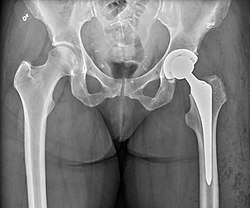
Alumina and later zirconia ceramics began to be used in orthopedic joint replacements because of their hardness, corrosion resistance, and low wear. Improvements in purity, processing, and surface finish made ceramic bearings important in modern medical implants.
Image source: Hip replacement
1990
Additive manufacturing techniques for ceramic pastes, powders, and slurries began enabling complex shapes that are difficult to make with conventional molds. Digital fabrication expanded both artistic practice and the production of technical ceramic components.
Image source: 3D printing
Or browse the full history timeline directory, with more than 2,500 topics.
This History of Ceramics timeline was generated with the help of AI, using information found on the internet.
We work hard to keep these timelines accurate, but mistakes do get through. If you spot one, email us at [email protected] and we'll fix it for future visitors.
Generate yours with AI or build it from scratch, for free.
Export your timeline, add your own events, edit or remove AI-generated events, and much more
No credit card required.
Cancel anytime.
Cancel anytime.
You can create an unlimited number of timelines with up to 10 events on each one, customize how they look, export them to PDF, PNG, PowerPoint, CSV, and Excel, and share them with a link. Paid plans raise the event limit and add features like spreadsheet imports and collaborators.
Yes. You can cancel your subscription from your account page at any time, and you will not be charged again. Your subscription stays active for the rest of the period you already paid for.
Yes. We will email you a reminder before the annual renewal, and we will also email you a receipt.
Yes. You can email us within 15 days of any payment, and we will issue you a full refund.
Check out our pricing docs or send us an email anytime: [email protected].