-
Use Cases
-
Resources
-
Pricing
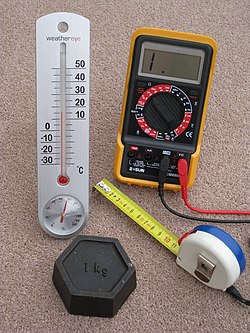
The history of measurement traces humanity's efforts to quantify length, weight, volume, and time. Early civilizations used body-based units like the cubit and foot, while trade drove the need for standardization. Landmark developments include the Magna Carta's call for uniform measures, the French Revolution's creation of the metric system, and the 1960 establishment of the International System of Units (SI), which today provides a universal scientific standard. More Less
3000 BCE - 1795
% complete
Before the establishment of the decimal metric system in France during the French Revolution in the late 18th century, many units of length were based on parts of the human body. Units such as the cubit, foot, hand, and digit were convenient and portable, but they varied from person to person and place to place.
Image source: History of measurement
3000 BCE
% complete
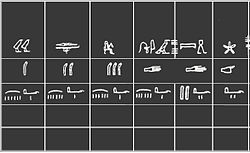
Among the most widespread ancient units was the cubit, defined as the length of the forearm from the elbow to the tip of the middle finger. Because it derived from the human body, its value differed across cultures, illustrating the inherent variability of anthropometric measures used throughout antiquity.
Image source: Cubit
2650 BCE
% complete
The oldest known metal standard for length corresponds to a Sumerian unit of measurement and dates from around 2650 BCE. This early artifact demonstrates how one of the world's first literate civilizations sought fixed, physical references for measuring distance, laying an early foundation for the science of metrology.
2500 BCE - 1795
% complete
The foot, another body-based measure, became one of the most enduring units of length in history. Used by many civilizations including the Greeks, Romans, and later European peoples, it persisted for millennia until decimal reformers sought more rational and universal standards.
Image source: Foot (unit)
2500 BCE
% complete
Smaller body-derived units such as the palm or hand and the digit (finger width) served as convenient subdivisions of larger measures like the cubit. These fractional relationships allowed craftsmen and builders to express measurements at practical scales without standardized instruments.
100 BC
% complete
The Roman mille passus, or thousand paces, established an early version of the mile. As Roman roads and administration spread across Europe, this distance measure endured and evolved into the statute mile still used in customary systems today, exemplifying the longevity of inherited units.
Image source: Mile
900
% complete
In medieval Europe, weights and measures varied widely between towns, kingdoms, and markets. Merchants faced confusion from differing standards, which eventually prompted efforts to codify systems such as avoirdupois weight, built on multiples of a base stone unit.
Image source: Avoirdupois
1300
% complete
The stone emerged as a fundamental unit of mass in the British Isles, traditionally equal to 14 pounds. Larger commercial units were defined as multiples of the stone, creating a hierarchical system of weights suited to trade in wool, grain, and other commodities.
Image source: Stone (unit)
1300
% complete
In the avoirdupois system, other units were multiples of 2, 8, and 160 times the stone, corresponding to 28, 112, and 2240 pounds — approximately 12.7 kg, 50.8 kg, and 1016 kg respectively. These large units facilitated wholesale trade in bulk goods like wool and coal.
1500
% complete
The long ton, equal to 2240 pounds (1016.047 kg), became the standard 'ton' in Britain and Commonwealth countries. Rooted in the avoirdupois hierarchy, it was especially important in shipping, where cargo capacities were reckoned in tons of displacement and freight.
Image source: Ton
1800
% complete
The short ton, equal to 2000 pounds (907.18474 kg), became the customary ton in the United States. Its divergence from the British long ton illustrates how customary systems drifted apart after American independence, complicating transatlantic commerce until metric alternatives emerged.
Image source: Short ton
1900 - 2026
% complete
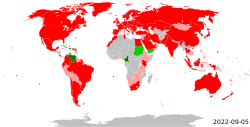
Despite the metric system's global ascendancy, customary units endure in daily life in several countries. Miles, pounds, and feet remain embedded in road signs, commerce, and culture in places like the United States and the United Kingdom, a living legacy of humanity's long history of body-based and traditional measurement.
Image source: Imperial and US customary measurement systems
1585
% complete
Although the Indians had long used decimal numbers for mathematical computation, it was Simon Stevin who in 1585 first advocated the use of decimal numbers for everyday purposes in his booklet De Thiende ('the tenth'). His work argued that decimal fractions could simplify commerce, surveying, and measurement for ordinary people.
Image source: Simon Stevin
1585
% complete
Beyond mathematics, De Thiende proposed that decimal divisions be applied to units of money and measurement. This vision directly influenced later reformers who designed decimal currencies and, ultimately, fully decimalized systems of weights and measures.
Image source: De Thiende
1595
% complete
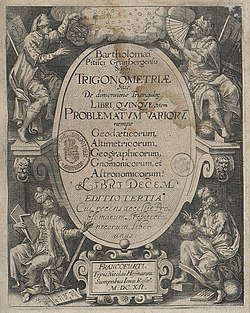
Stevin's clumsy notation for decimal fractions was overcome with the introduction of the decimal point, generally attributed to Bartholomaeus Pitiscus, who used this notation in his trigonometrical tables published in 1595. This small typographic innovation made decimal arithmetic dramatically easier and paved the way for decimal metrology.
Image source: Bartholomaeus Pitiscus
Jul 4, 1790
% complete
In his report, Jefferson proposed calling his base unit of length a 'foot', suggesting it should be either 3/10 or 1/3 of the length of a pendulum having a period of one second — echoing the 'standard' proposed by John Wilkins over a century previously. Congress declined to adopt the scheme.
Image source: Thomas Jefferson
Jul 4, 1790
% complete
In 1790, Thomas Jefferson submitted a report to the United States Congress in which he proposed the adoption of a decimal system of coinage and of weights and measures. The plan reflected Enlightenment ideals of rationality and uniformity, though only the decimal currency portion was ultimately enacted.
1792
% complete
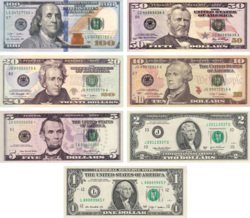
While Jefferson's full proposal for decimal weights and measures stalled, the United States did adopt a decimal system of coinage, with the dollar divided into 100 cents. This made American money one of the earliest decimal currencies, demonstrating the practicality of decimal division.
Image source: United States dollar
1668
% complete
Wilkins suggested calling his base unit of length derived from the seconds pendulum a 'foot'. The idea of anchoring measurement to a reproducible physical constant, rather than an arbitrary royal decree or body part, was revolutionary and influenced both Jefferson and the French metric designers.
Image source: Seconds pendulum
1668
% complete
In his 1668 essay, John Wilkins proposed a universal measure — a decimal system based on natural phenomena rather than human anatomy. He suggested deriving the base unit of length from the length of a pendulum with a period of one second, anticipating key principles of the later metric system.
Image source: John Wilkins
1670
% complete
In 1670, Gabriel Mouton, a French vicar and scientist, published a proposal essentially similar to John Wilkins' universal measure. His base unit of length would have been 1/1000 of a minute of arc (about 1.852 m) of geographical latitude, tying length to the dimensions of the Earth itself.
1670
% complete
Mouton's insight that a unit of length should be derived from the Earth's dimensions foreshadowed the definition of the metre as a fraction of the meridian. Though not adopted in his lifetime, his work is recognized as an important precursor to the metric system.
1789
% complete
The upheaval of the French Revolution provided the political opportunity for sweeping reform of weights and measures. Revolutionaries viewed the chaotic patchwork of feudal measures as a symbol of oppression and demanded a system that was uniform, rational, and 'for all people, for all time'.
Image source: French Revolution
1790
% complete
The French National Assembly charged the Academy of Sciences with devising a new measurement system. Leading scientists, including Lagrange and Laplace, recommended a decimal structure and a length unit derived from the Earth's meridian, combining the ideas of Wilkins and Mouton into a coherent design.
1792 - 1799
% complete
Astronomers Jean-Baptiste Delambre and Pierre Méchain surveyed the meridian arc between Dunkirk and Barcelona to determine the length of the metre as one ten-millionth of the quarter meridian. Despite wars and revolution, their painstaking triangulation produced the data needed to materialize the new standard.
Image source: Arc measurement of Delambre and Méchain
1795
% complete
France formally legislated the decimal metric system in 1795, replacing the bewildering variety of traditional units with a single decimal framework. Prefixes indicated multiples and submultiples of ten, making conversion between units radically simpler than in any prior system.
1799
% complete
The metric system, first described in 1668 in Wilkins' visionary proposal, was officially adopted by France in 1799 when the metre and kilogram standards were deposited in the national archives. This marked the birth of the first truly international-ready system of measurement.
1800
% complete
Within the metric system, the tonne (or metric ton), equal to 1000 kilograms or one megagram, provided a convenient large-mass unit comparable to the customary ton. It replaced the long ton of 2240 pounds and the short ton of 2000 pounds in most international trade.
Image source: Tonne
1800 - 1900
% complete
Over the course of the 19th century, country after country legislated the metric system, drawn by its simplicity and its advantages for science, engineering, and trade. What began as a French revolutionary project gradually became the default language of measurement across continental Europe and beyond.
Image source: Metric system
1875
% complete
Building on France's example, international treaties in the late 19th century established permanent bodies to maintain and disseminate metric standards. Signatory nations received copies of the international prototype metre and kilogram, cementing the metric system's role in global science and commerce.
Image source: Metre Convention
1900 - 2000
% complete
Over the 20th century the metric system became the dominant system worldwide, adopted by nearly every nation and used universally in science. However, several countries, including the United States, China, and the United Kingdom, continue to use their customary units, such as the mile, alongside metric measures.
Or browse the full history timeline directory, with more than 2,000 topics.
This History of Measurement timeline was generated with the help of AI, using information found on the internet.
We work hard to keep these timelines accurate, but mistakes do get through. If you spot one, email us at [email protected] and we'll fix it for future visitors.
Generate yours with AI or build it from scratch, for free.
Export your timeline, add your own events, edit or remove AI-generated events, and much more
No credit card required.
Cancel anytime.
Cancel anytime.
You can create an unlimited number of timelines with up to 10 events on each one, customize how they look, export them to PDF, PNG, PowerPoint, CSV, and Excel, and share them with a link. Paid plans raise the event limit and add features like spreadsheet imports and collaborators.
Yes. You can cancel your subscription from your account page at any time, and you will not be charged again. Your subscription stays active for the rest of the period you already paid for.
Yes. We will email you a reminder before the annual renewal, and we will also email you a receipt.
Yes. You can email us within 15 days of any payment, and we will issue you a full refund.
Check out our pricing docs or send us an email anytime: [email protected].