
-
Use Cases
-
Resources
-
Pricing
The abacus is an ancient calculating tool that evolved across civilizations and remains useful for teaching arithmetic and mental math today. More Less
Build a timeline like this one in minutes, for free. Start Yours →
Part of our collection of invention and technology timelines.
2700 BC - 2300 BC
The Sumerian abacus appeared between 2700 and 2300 BC, representing one of the earliest known counting devices.
Image source: Abacus

500 BC
The earliest archaeological evidence for the use of the Greek abacus dates to the 5th century BC.
400 BC
A play by Alexis from the 4th century BC mentions an abacus and pebbles used for accounting.
400 BC
Diogenes and Polybius used the abacus as a metaphor for human behavior, comparing changing human fortunes to pebbles that sometimes stood for more and sometimes for less.
300 BC
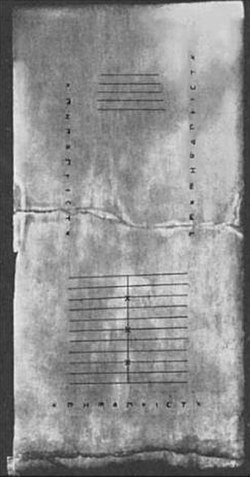
The Salamis Tablet dates to 300 BC. It is the oldest counting board discovered so far.
Image source: Salamis Tablet
1 BC
Writing in the 1st century BC, Horace referred to a wax abacus: a board coated with thin black wax on which columns and figures were inscribed with a stylus.
1 AD
An archaeological example of the Roman abacus, shown in reconstruction, dates to the 1st century AD.
1846 AD
The Salamis Tablet was found on the Greek island of Salamis in 1846, providing important archaeological evidence of ancient counting practices.
1851 AD
The Darius Vase was unearthed in 1851 and is associated with the same broad ancient counting-board evidence as the Salamis Tablet.
200 BC
The earliest known written documentation of the Chinese abacus dates to the 2nd century BC.
Build a timeline like this one in minutes, for free. Start Yours →
This History of the Abacus timeline was generated with the help of AI, using information found on the internet.
We work hard to keep these timelines accurate, but mistakes do get through. If you spot one, email us at [email protected] and we'll fix it for future visitors.
Generate yours with AI or build it from scratch, for free.

