-
Use Cases
-
Resources
-
Pricing
1540
Hernando de Soto's expedition traveled through the Southeast in 1540 and encountered Indigenous societies in the region associated with Choctaw ancestors. European diseases, violence, and disruption introduced enduring changes even though sustained colonial settlement came later.
1699
French explorers and colonists made sustained contact with Choctaw communities around the turn of the eighteenth century. The Choctaw became important diplomatic and military partners of France in the competition for the lower Mississippi Valley.
1700 - 1763
During the eighteenth century, many Choctaw towns allied with French Louisiana through trade, diplomacy, and military cooperation. The relationship was significant but not uniform: Choctaw towns retained political independence and sometimes pursued separate policies.
1729 - 1731
Choctaw warriors aided the French against the Natchez during the conflict that followed the Natchez uprising. The war altered the regional balance of power and intensified French-Choctaw military and diplomatic ties.
1747 - 1750
Choctaw and British-allied forces, including Native groups connected to the Creek and Chickasaw spheres, fought during a period of intensified imperial rivalry. The conflict demonstrated how European competition affected Indigenous diplomacy and warfare.
1763
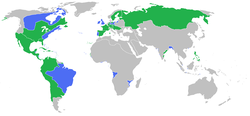
The Treaty of Paris ended the Seven Years' War and transferred France's mainland North American possessions east of the Mississippi to Britain, while Spain received Louisiana from France. The change forced the Choctaw to navigate a new imperial power and shifting trade networks.
Image source: Treaty of Paris (1763)
1765
Choctaw leaders concluded agreements with British officials at Mobile after the British takeover of French colonial territory. The negotiations addressed trade, alliance, and territorial relations while confirming that Choctaw diplomacy remained central to imperial politics.
1775 - 1783
The American Revolution divided or complicated Choctaw diplomacy as the new United States, Britain, Spain, and colonial agents competed for influence in the Southeast. Choctaw communities sought to protect their towns and trade while managing pressure from multiple powers.
Jan 3, 1786
The Treaty of Hopewell established formal relations between the United States and the Choctaw after the Revolution. It recognized a U.S.-defined boundary and promised peace, but its provisions also reflected the expanding republic's effort to place Choctaw lands within a federal treaty system.
Image source: Treaty of Hopewell
Oct 24, 1801
Under the Treaty of Fort Adams, the Choctaw ceded a large tract in present-day Mississippi to the United States. The agreement opened land to American settlement and accelerated the loss of Choctaw territory.
Image source: Treaty of Fort Adams
Nov 16, 1805
The Treaty of Mount Dexter transferred additional Choctaw land to the United States. The cession was negotiated amid pressure from federal officials, land speculators, and settlers, contributing to the shrinking of the Choctaw homeland.
Image source: Treaty of Mount Dexter
Oct 24, 1816
The Treaty of Fort Confederation required the Choctaw to cede more than five million acres in Mississippi. In return, the United States promised payments and reserved lands, but the agreement further undermined Choctaw territorial security.
Oct 18, 1820
The Treaty of Doak's Stand proposed exchanging much of the Choctaw homeland for land west of the Mississippi. Choctaw negotiators resisted or disputed the agreement, and the U.S. Senate did not ratify it in its original form.
1824
Choctaw leaders traveled to Washington, D.C., to appeal directly to federal officials about land loss, treaty obligations, and the future of their people. The delegation illustrated Choctaw diplomatic efforts to defend sovereignty through American political institutions.
May 28, 1830
President Andrew Jackson signed the Indian Removal Act, authorizing the federal government to negotiate removal treaties with southeastern Indigenous nations. The policy created the legal and political framework for the forced displacement of the Choctaw and other peoples.
Image source: Indian Removal Act
Sep 27, 1830
The Treaty of Dancing Rabbit Creek ceded approximately 10.5 million acres of Choctaw land to the United States. It provided for removal to Indian Territory or allotments for those who stayed, becoming the legal foundation for the first large-scale Indian removal under the Indian Removal Act.
Image source: Treaty of Dancing Rabbit Creek
1831 - 1833
Beginning in 1831, thousands of Choctaw were removed from Mississippi to lands west of the Mississippi River. The journeys involved exposure, hunger, disease, inadequate supplies, and deaths, and are remembered as the Choctaw Trail of Tears.
Image source: Choctaw Trail of Tears
1831 - 1833
Some Choctaw remained in Mississippi rather than remove west, often by obtaining or claiming individual land allotments under the Treaty of Dancing Rabbit Creek. They faced state discrimination, land loss, and pressure to assimilate, but preserved enduring communities.
Image source: Mississippi Band of Choctaw Indians
1831 - 1842
Implementation of the removal treaty involved applications, surveys, allotments, and disputes over who could retain land in Mississippi. Fraud, administrative obstacles, and settler pressure caused many Choctaw allottees to lose their property.
1834
After removal, the Choctaw established governmental institutions in Indian Territory and adopted a constitution in the 1830s. The new political system helped organize national leadership, courts, schools, and community affairs despite continuing U.S. interference.
1840 - 1860
The Choctaw Nation developed schools in Indian Territory, supported partly by treaty funds and national resources. Education became an important expression of Choctaw nation-building and included instruction in literacy, English, and community leadership.
1861 - 1865
During the American Civil War, the Choctaw Nation signed a treaty with the Confederacy, influenced by regional conditions, slavery, political alliances, and the absence of reliable federal protection. Choctaw people served in Confederate-aligned forces, while others supported the Union or avoided the conflict.
1866 - 1885
The postwar treaties recognized citizenship claims for people formerly enslaved by Choctaw and Chickasaw citizens, but implementation was contested. Disputes over Choctaw Freedmen citizenship continued for generations and remain significant in discussions of tribal membership and political rights.
Apr 28, 1866
After the Civil War, the United States imposed a new treaty on the Choctaw and Chickasaw. It ended their Confederate alliance, required emancipation of enslaved people held in the nations, reduced territorial rights, and prepared the way for later federal changes in Indian Territory.
1887 - 1907
Federal allotment policies divided communally held Choctaw lands into individual allotments and opened so-called surplus lands to non-Native settlement. The process caused extensive land loss and disrupted Choctaw political, economic, and social institutions.
Jun 28, 1898
The Curtis Act extended federal authority over Indian Territory and directed the dismantling of tribal courts and governments. It weakened Choctaw self-government and accelerated allotment and the transformation of communal lands into individually held parcels.
Image source: Curtis Act of 1898
Nov 16, 1907
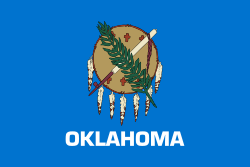
Oklahoma statehood brought former Indian Territory under a new state government. Although Choctaw political institutions had been severely curtailed, Choctaw people continued to maintain communities, cultural practices, and claims to governmental authority.
Image source: Oklahoma
1918
Choctaw soldiers in the U.S. Army used their language to transmit military messages during World War I. Their service became an early example of Indigenous-language military communications later associated with the more widely known Navajo Code Talkers.
Image source: Choctaw code talkers
Jun 18, 1934
The Indian Reorganization Act ended the general allotment policy and encouraged federally recognized tribes to adopt written constitutions and reorganize their governments. Its effects varied, but it created new opportunities for Choctaw political reconstruction.
1945
The Mississippi Band of Choctaw Indians received federal recognition, strengthening the legal standing of Choctaw communities that had remained in Mississippi. Recognition supported later development of tribal institutions, economic programs, schools, and cultural initiatives.
1971
The Choctaw Nation of Oklahoma regained federal recognition after decades in which its elected government had been restricted. Restoration enabled the nation to rebuild governmental services and exercise a stronger role in political and economic affairs.
Image source: Choctaw Nation of Oklahoma
1979
The Choctaw Nation of Oklahoma adopted a new constitution during the period of modern tribal self-determination. The constitution established contemporary governmental structures and supported the expansion of national programs.
1990 - 2025
Choctaw communities and governments expanded language classes, immersion programs, dictionaries, digital resources, and intergenerational teaching. These efforts respond to the effects of removal, boarding schools, and language shift while strengthening contemporary Choctaw identity.
Oct 30, 1990
The Native American Languages Act declared federal policy supporting the preservation and use of Indigenous languages. The law provided an important policy foundation for Choctaw language education, revitalization, and cultural transmission.
2021
The Choctaw Cultural Center opened in Calera, Oklahoma, presenting Choctaw history, art, language, traditions, and contemporary life. The institution provides a major venue for education, cultural preservation, and public interpretation of Choctaw history.
2021 - 2025
Debates over the citizenship rights of Choctaw Freedmen continued into the twenty-first century, involving treaty interpretation, tribal law, ancestry, and the legacy of slavery. The controversy reflects the continuing importance of historical agreements in defining citizenship and sovereignty.
Or browse the full history timeline directory, with more than 2,500 topics.
This Choctaw History timeline was generated with the help of AI, using information found on the internet.
We work hard to keep these timelines accurate, but mistakes do get through. If you spot one, email us at [email protected] and we'll fix it for future visitors.
Generate yours with AI or build it from scratch, for free.
Export your timeline, add your own events, edit or remove AI-generated events, and much more
No credit card required.
Cancel anytime.
Cancel anytime.
You can create an unlimited number of timelines with up to 10 events on each one, customize how they look, export them to PDF, PNG, PowerPoint, CSV, and Excel, and share them with a link. Paid plans raise the event limit and add features like spreadsheet imports and collaborators.
Yes. You can cancel your subscription from your account page at any time, and you will not be charged again. Your subscription stays active for the rest of the period you already paid for.
Yes. We will email you a reminder before the annual renewal, and we will also email you a receipt.
Yes. You can email us within 15 days of any payment, and we will issue you a full refund.
Check out our pricing docs or send us an email anytime: [email protected].