-
Use Cases
-
Resources
-
Pricing
1600 - 1699
In the 17th century, Spanish authorities in Florida used cimaron or cimarrón for Christianized natives who left mission villages to live independently in the woods.
Image source: Seminole
1700 - 1799
The Seminole developed in Florida during the 18th century as a heterogeneous Native American people, formed chiefly from Lower Creek communities and other Indigenous migrants.
1700 - 1725
Native American refugees from northern conflicts, including the Yuchi and Yamasee after the Yamasee War in South Carolina, migrated into Spanish Florida in the early 18th century.
1700 - 1799
The Seminole identify as yat'siminoli, or “free people,” reflecting ancestors’ long resistance to efforts to subdue them or convert them to Roman Catholicism.
1750 - 1799
During the second half of the 18th century, Lower Creeks such as Chief Billy Emathla fled towns in Georgia and neighboring areas for Florida, seeking to escape Upper Creek dominance and colonial pressure.
1763
After Britain took Florida from Spain in 1763, British authorities broadly called Florida’s Native inhabitants Seminoles, Creeks, or Seminole-Creeks.
1775 - 1821
From the late 18th century, escaped slaves from Southern plantations settled near Seminole towns and paid tribute, further expanding and diversifying Seminole society.
Image source: Black Seminoles
1813 - 1814
By the Creek War, the Seminole population in Florida numbered about 4,000 and consisted primarily of Lower Creeks from Georgia.
1884 - 1886
After removal, the Seminole population in Oklahoma was estimated at about 3,000 in 1884, according to an enumeration published in 1886.
1900 - 1910
At the turn of the 20th century, Seminoles still spoke mostly Afro-Seminole Creole, a Florida language related to other African-based Creole languages.
1910
The 1910 census recorded only 1,729 Seminoles, a marked decline from earlier population estimates.
2000
Indigenous peoples have practiced Green Corn rituals for centuries. By 2000, religious tension between Green Corn Dance participants and Christians, particularly Baptists, had declined.
2000
In 2000, Mikasuki was restricted to Florida and was spoken natively by about 1,600 people, primarily members of the Miccosukee Tribe. The youngest native speaker was born in 1960.
2000
In the 2000 United States census, 12,431 people self-reported as Seminole American.
1700 - 1799
A dynasty of chiefs associated with the Alachua chiefdom, founded in eastern Florida by Cowkeeper during the 18th century, became important in Seminole political leadership.
1818
In 1818, Billy Emathla was identified as chief of a Yuchi town of approximately 75 people associated with Mikasuki villages east of Tallahassee.
1825 - 1849
Beginning in 1825, Micanopy served as principal chief of the unified Seminole until his death in 1849 after removal to Indian Territory.
1849 - 1853
Micanopy’s sister’s son, John Jumper, became principal chief in 1849 and held the position until his death in 1853.
1853
After John Jumper died in 1853, his brother Jim Jumper became principal chief of the Seminole.
1866 - 1872
A division among the Seminoles persisted until 1872, although the groups cooperated for mutual defense and remained self-governing through the 19th century.
1868
The 1868 Florida Constitution, created by the Reconstruction legislature, granted the Seminoles one seat in the state house and one in the senate.
1885
After white Democrats regained control of Florida’s legislature, they removed the Seminole legislative representation provision from the constitution ratified in 1885.
1900 - 1929
In the early 20th century, Florida Seminoles reestablished limited relations with the United States government after the Seminoles in Oklahoma and Florida had experienced little official contact.
1906
In 1906, Florida Governor Napoleon B. Broward began an effort to drain the Everglades and convert its wetlands into farmland.
1930
In 1930, the Florida Seminoles received 5,000 acres of reservation land in south Florida. Members gradually moved onto the land.
1930 - 1941
Before World War II, Florida Seminoles divided between more traditional people and those willing to adapt to reservation life and changing outside institutions.
1946
In 1946, the Department of the Interior established the Indian Claims Commission to consider compensation claims by tribes whose lands had been seized by the federal government.
1957
Many traditional people living near the Tamiami Trail organized separately from the federally recognized Seminole Tribe of Florida and received state recognition as the Miccosukee in 1957.
1957
In 1957, reservation Seminoles reorganized their government, established formal relations with the United States, and received federal recognition as the Seminole Tribe of Florida.
Aug 1961
The Oklahoma and Florida Seminoles filed claims before the August 1961 deadline, seeking compensation for lands taken during periods of conflict.
1962
The Miccosukee Tribe of Indians in Florida received federal recognition in 1962. Its members had largely retained traditional practices and the Mikasuki language.
1976
The Miccosukee and allied Traditional groups filed suit against the settlement because they opposed accepting money in place of their claim for the return of lands in Florida.
1976 - 1990
The Oklahoma and Florida tribes entered negotiations over allocation of the judgment, creating their first sustained contact in more than a century since removal.
Apr 1976
After combining the claims, the Indian Claims Commission awarded the Seminole a total of $16 million in April 1976, finding that they had exclusively occupied and used 24 million acres at the time of the 1823 treaty.
1990
In 1990, the settlement was divided with three-quarters awarded to the Seminole Tribe of Oklahoma and one-quarter to the Florida Seminoles, including the Miccosukee.
1750 - 1799
After Anglo-American colonists raided Seminole settlements in the mid-18th century, Seminoles retaliated by attacking the Southern Colonies, particularly Georgia, reportedly with Spanish encouragement.
Image source: Seminole Wars
1784
After the American Revolutionary War, Britain reached a settlement with Spain and transferred East Florida and West Florida back to Spanish control.
Image source: History of Florida
1817 - 1818
General Andrew Jackson’s 1817–1818 campaign against the Seminoles became known as the First Seminole War.
1819 - 1821
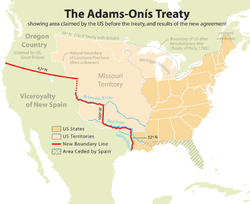
The United States and Spain signed the Adams–Onís Treaty in 1819; it took effect in 1821 and transferred Florida to the United States.
Image source: Adams–Onís Treaty
1821 - 1823
After the United States acquired Florida, many enslaved African Americans and Black Seminoles escaped from Cape Florida to the British Bahamas, especially Andros Island. Contemporary accounts recorded groups of 120 in 1821 and about 300 in 1823.
1823
Under settler pressure, the United States made the Treaty of Camp Moultrie with the Seminoles, taking approximately 24 million acres in northern Florida.
Image source: Treaty of Moultrie Creek
1832
The United States signed the Treaty of Payne’s Landing with several Seminole chiefs in 1832, helping precipitate the conflict over removal.
Image source: Treaty of Payne's Landing
1835
The U.S. Army arrived in 1835 to enforce the Treaty of Payne’s Landing, beginning the Second Seminole War.
Image source: Second Seminole War
1835 - 1837
Seminole forces opposed combined U.S. Army and militia forces that grew from roughly 6,000 troops at the outset to about 9,000 at the height of deployment in 1837.
1837
In 1837, Osceola was arrested while attending negotiations under a flag of truce, an action widely regarded as a breach of honor.
1842
After a full decade of fighting, the Second Seminole War ended in 1842. About 3,800 Seminoles and Black Seminoles were ultimately forcibly removed to Indian Territory.
1855 - 1858
Later skirmishes from 1855 to 1858 constituted the Third Seminole War. Perhaps 200 survivors retreated deep into the Everglades, to land settlers did not want.
Image source: Seminole Wars
1861 - 1866
From 1861 to 1866, a Seminole chief led those who supported the Union and fought in the Indian Brigade during the Civil War.
Jul 1864
In July 1864, Secretary of War James A. Seddon received word that A. McBride had raised a company of 65 Seminoles who volunteered to fight for the Confederacy.
1767 - 1821
The Seminole developed a thriving trade network during the British and second Spanish periods, roughly from 1767 to 1821.
1950 - 1969
In the mid-20th century, Seminole communities in Florida and Oklahoma revived old crafts and traditions while seeking revenue from tourists traveling on the new interstate highway system.
1979
In 1979, the Seminoles opened the first casino on Indian land, a tribally operated bingo hall that helped inaugurate the multibillion-dollar Native American gaming industry.
2000 - 2021
In the 21st century, gaming became highly lucrative for the tribes, and fewer Seminoles relied on crafts as their primary source of income.
Dec 7, 2006
On December 7, 2006, the Seminole Tribe of Florida purchased the Hard Rock Café chain of restaurants.
Image source: Hard Rock Cafe
2007
In 2007, the Seminole Tribe purchased the Hard Rock Café and subsequently rebranded or opened several casinos and gaming resorts under the Hard Rock name.
Or browse the full history timeline directory, with more than 2,500 topics.
This Seminole History timeline was generated with the help of AI, using information found on the internet.
We work hard to keep these timelines accurate, but mistakes do get through. If you spot one, email us at [email protected] and we'll fix it for future visitors.
Generate yours with AI or build it from scratch, for free.
Export your timeline, add your own events, edit or remove AI-generated events, and much more
No credit card required.
Cancel anytime.
Cancel anytime.
You can create an unlimited number of timelines with up to 10 events on each one, customize how they look, export them to PDF, PNG, PowerPoint, CSV, and Excel, and share them with a link. Paid plans raise the event limit and add features like spreadsheet imports and collaborators.
Yes. You can cancel your subscription from your account page at any time, and you will not be charged again. Your subscription stays active for the rest of the period you already paid for.
Yes. We will email you a reminder before the annual renewal, and we will also email you a receipt.
Yes. You can email us within 15 days of any payment, and we will issue you a full refund.
Check out our pricing docs or send us an email anytime: [email protected].