-
Resources
-
Pricing
Tlingit History traces the enduring story of the Tlingit people, their rich cultural traditions, clan-based society, relationships with the land and sea, encounters with colonial powers, and continuing efforts to protect their sovereignty and heritage. More Less
Build a timeline like this one in minutes, for free. Start Yours →
Part of our collection of American history timelines.
1741
In 1741, Vitus Bering and Aleksei Chirikov became separated during their exploratory voyage in the North Pacific. The division of their routes led to separate encounters with the Alaskan and Tlingit regions.
1741
Vitus Bering reached Kayak Island in 1741, an encounter that contributed to European geographic knowledge of the Alaskan coast and its Indigenous peoples.
Image source: Vitus Bering
1741
Aleksei Chirikov traveled to the western shores of the Alexander Archipelago in 1741. His voyage became one of the earliest Russian exploratory contacts with the coastal world of the Tlingit.
Image source: Aleksei Chirikov
1774
In 1774, Juan Josef Pérez Hernández was sent north by Antonio María de Bucareli y Ursúa, the viceroy of New Spain, to explore as far as 60 degrees north latitude.
1774
Juan Crespí participated in the First Bucareli Expedition of 1774 alongside Juan Josef Pérez Hernández and Tomás de la Peña Suria, contributing to Spain's exploration of the northwest coast.
1774
Tomás de la Peña Suria, also identified as Savaria, accompanied the 1774 expedition that explored the Pacific coast toward the northern limit assigned by Spain.
1775
The Second Bucareli Expedition departed in 1775 as part of Spain's effort to investigate and assert its claims along the northwest coast of North America.
Image source: Bruno de Heceta
1775
Bruno de Hezeta commanded the Santiago during the Second Bucareli Expedition. The voyage extended Spanish exploration into waters connected with the Tlingit coastal region.
1775
Juan Francisco de la Bodega y Quadra led the Sonora as de Hezeta's second-in-command during the 1775 expedition, helping survey the northwestern coast.
Image source: Juan Francisco de la Bodega y Quadra
1778
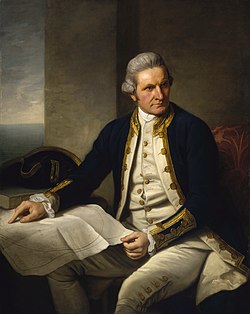
James Cook's 1778 expedition used existing Spanish geographic information while exploring the northwest coast, bringing another European maritime power into contact with the Tlingit region.
Image source: James Cook
1778
During his 1778 voyage, James Cook acquired the journals of Francisco Antonio Mourelle and maps produced from the first two Bucareli expeditions. These materials informed British exploration of the northwest coast.
1779
The Third Bucareli Expedition took place in 1779, continuing Spain's exploration of the northern Pacific coast and waters near Tlingit lands.
1779
Ignacia de Arteaga officially led the Third Bucareli Expedition aboard the Princesa in 1779, making her the expedition's formal commander.
1779
The experienced explorer Bodega y Quadra accompanied the Third Bucareli Expedition aboard the Favorita in 1779, strengthening Spain's navigational and surveying effort.
1791
In 1791, Alessandro Malaspina explored the Alaskan coast as far north as Prince William Sound. The glacier later named for him commemorates this period of exploration.
Image source: Alejandro Malaspina
1790 - 1805
From the 1790s onward, Russian settlement in Tlingit lands developed through trade as well as coercion and conflict, creating sustained pressure on Tlingit communities.
Image source: Russian colonization of North America
1790 - 1805
Russian expansion in Tlingit territory included periods of peaceful trade. Commercial relationships existed alongside competition over resources, political authority, and access to coastal settlements.
1802 - 1805
The Russian-Tlingit War unfolded from 1802 to 1805 as Tlingit communities resisted Russian settlement and colonial expansion in their homelands.
Image source: Battle of Sitka
1804
The Battle of Sitka in 1804 was the decisive culmination of the Russian-Tlingit War. It marked a major confrontation over control of Sitka and the surrounding region.
Image source: Battle of Sitka
1805
The Russian-Tlingit War concluded in 1805 after years of conflict between Tlingit communities and Russian colonial forces seeking control of Tlingit lands.
1852
In 1852, Chilkat Tlingit warriors attacked and burned Fort Selkirk, a Hudson's Bay Company post at the junction of the Yukon and Pelly Rivers.
Image source: Fort Selkirk
1855
In 1855, an alliance of Tongass Tlingit, also known as Stikines, and Haida raided Puget Sound in an expedition aimed at enslavement.
Image source: Tlingit
1800 - 1899
During the 19th century, Serbian and Montenegrin immigrants intermarried with Tlingit people, partly because they shared the Russian Orthodox faith.
1900
St. Nicholas Russian Orthodox Church in Juneau was built by Orthodox Tlingit and Serbian community members. Its history reflects religious ties and intermarriage between Tlingit people and Serbian and Montenegrin immigrants.
1912
Two Tlingit brothers founded the Alaska Native Brotherhood in Sitka in 1912 to pursue rights and privileges enjoyed by white residents. The organization became a major vehicle for Alaska Native political activism.
Image source: Alaska Native Brotherhood/Sisterhood
1912
The Alaska Native Sisterhood followed the founding of the Alaska Native Brotherhood. It provided an important organizational role for Alaska Native women in the struggle for civil rights and equality.
Dec 18, 1971
President Richard Nixon signed the Alaska Native Claims Settlement Act on December 18, 1971. The Tlingit were a driving force behind the legislation, which established land and financial settlements for Alaska Native peoples.
Image source: Alaska Native Claims Settlement Act
1973
In 1973, the Indian Claims Commission awarded the Angoon clans $90,000 for clan property destroyed during the 1882 Angoon Bombardment.
Image source: Angoon bombardment
Feb 16, 1988
In 1988, Alaska designated February 16 as a state holiday honoring Elizabeth Peratrovich, an Alaska Native Sisterhood member and prominent Tlingit civil rights advocate.
Image source: Elizabeth Peratrovich
1867 - 1884
After the Alaska Purchase, the Army and Navy governed Alaska until 1884. Military rule was characterized by inconsistency, violence, and legal ambiguity for Tlingit communities.
Image source: Alaska
Mar 1867
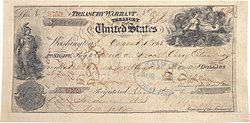
In March 1867, the United States purchased Alaska from Russia. The transfer placed Tlingit homelands under American authority and began a new period of colonial administration.
Image source: Alaska Purchase
Feb 1869
During the February 1869 Kake War, the USS Saginaw destroyed three deserted villages and two forts near present-day Kake, demonstrating the violence of early U.S. military rule.
Image source: Kake War
Dec 1869
The December 1869 Wrangell Bombardment followed an incident in which Lowan, a Stikine, bit off a white woman's finger. Soldiers killed Lowan and another Stikine, after which U.S. forces bombarded Wrangell.
Image source: Wrangell, Alaska
1878
The first American industrial fish canneries in Tlingit territory were established in 1878 at Klawock, or Lawáak, and Sitka. Their arrival connected Tlingit communities to an expanding commercial fishing industry.
Image source: Klawock, Alaska
Oct 1882
In October 1882, U.S. naval forces destroyed the Tlingit village of Angoon. The operation was commanded by Edgar C. Merriman, with the USRC Thomas Corwin under Michael A. Healy.
1884
Military rule in Alaska ended in 1884. The change followed years of inconsistent and violent administration that had affected Tlingit communities throughout the region.
Image source: Organic act
Build a timeline like this one in minutes, for free. Start Yours →
Or browse the full history timeline directory, with more than 2,500 topics.
This Tlingit History timeline was generated with the help of AI, using information found on the internet.
We work hard to keep these timelines accurate, but mistakes do get through. If you spot one, email us at [email protected] and we'll fix it for future visitors.
Generate yours with AI or build it from scratch, for free.
Export your timeline, add your own events, edit or remove AI-generated events, and much more
No credit card required.
15-day money-back guarantee.
You can create an unlimited number of timelines with up to 10 events on each one, customize how they look, export them to PDF, PNG, PowerPoint, CSV, and Excel, and share them with a link. Timelines made with Timeline Maker AI keep every event the generator created, and you can add up to 5 events of your own. Paid plans remove the event limit, add spreadsheet imports and hide Preceden's branding, and the higher-priced plan also adds collaborators, a custom logo and a custom domain.
Yes. You can cancel your subscription from your account page at any time, and you will not be charged again. Your subscription stays active for the rest of the period you already paid for.
Yes. We email you a reminder 15 days before your annual renewal, and we email you a receipt after every payment.
Yes. You can email us within 15 days of any payment, and we will issue you a full refund.
Check out our pricing docs or send us an email anytime: [email protected].