
-
Resources
-
Pricing
The cotton gin, invented by Eli Whitney in 1793, mechanized the removal of seeds from short-staple cotton and transformed the economy and society of the American South. More Less
Build a timeline like this one in minutes, for free. Start Yours →
400 - 499
A single-roller cotton gin came into use in India by the fifth century. The device mechanically separated cotton fibers from their seeds and represents one of the earliest known forms of cotton-ginning technology.
Image source: Cotton gin
400 - 499
The earliest evidence of the cotton gin is found in Buddhist paintings in the Ajanta Caves in western India. The paintings depict a single-roller gin, providing visual evidence of early cotton-processing machinery.
Image source: Ajanta Caves

1100 - 1199
Between the twelfth and fourteenth centuries, dual-roller gins appeared in India. Their paired rollers improved the mechanical removal of seeds from cotton.
1100 - 1199
Dual-roller cotton gins also appeared in China between the twelfth and fourteenth centuries, forming part of the wider development of roller-based cotton processing in Asia.
1200 - 1299
During the early Delhi Sultanate era, a worm-gear roller gin was invented in the Indian subcontinent. Its geared mechanism became an important development in the history of roller gins.
1500 - 1599
By the sixteenth century, the Indian version of the dual-roller gin was prevalent throughout the Mediterranean cotton trade, extending the technology beyond South Asia.
1500 - 1599
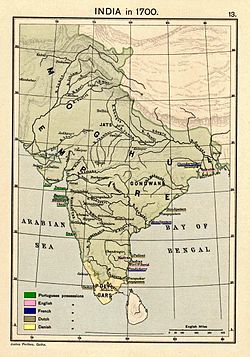
The worm-gear roller gin came into use in the Mughal Empire sometime around the sixteenth century. The design continued the long development of mechanically assisted cotton processing in the Indian subcontinent.
Image source: Mughal Empire
1500 - 2026
The worm-gear roller gin continued to be used in the Indian subcontinent through the present day, according to the supplied historical account.
1700 - 1799
The Indian roller cotton gin, known as the churka or charkha, was introduced to the United States in the mid-eighteenth century and adopted in the southern United States.
1772
Hugo Krebs made modifications to the Indian roller gin in 1772. The changes remained limited in practical use to long-staple cotton.
1788
Joseph Eve made further modifications to the Indian roller gin in 1788. Like earlier improvements, the resulting machines were limited primarily to long-staple cotton.
1793
American inventor Eli Whitney created a modern mechanical cotton gin in 1793. His machine was designed to process short-staple cotton, which earlier roller-gin modifications handled poorly.
Oct 28, 1793
Eli Whitney applied for a patent for his cotton gin on October 28, 1793. The application formalized his claim to the newly developed mechanical design.
Image source: Eli Whitney
Mar 14, 1794
Whitney's cotton-gin patent was granted on March 14, 1794. The patent covered the machine that became associated with the rapid expansion of short-staple cotton production.
1796
William Longstreet had received a patent for a cotton-gin improvement by 1796. His patent formed part of the early effort to refine machinery for processing short-staple cotton.
1796
John Murray had also been issued a patent for an improvement to the cotton gin by 1796. Multiple patented designs emerged as inventors sought alternatives and refinements.
1796
Robert Watkins was among the contemporary inventors issued a patent for a cotton-gin improvement by 1796. These competing designs reflected the intense experimentation that followed Whitney's invention.
1796
By 1796, Hodgen Holmes had been issued a patent for an improvement to the cotton gin. His work was part of the wave of attempts to develop effective short-staple cotton machinery.
1807
Although Whitney's patent had been granted in 1794, it was not validated until 1807. This later validation marked an important legal stage in the history of the invention.
1840
In 1840, Fones McCarthy received a patent for a smooth-cylinder cotton gin. The machine was a roller gin and represented a significant later development in cotton-processing equipment.
1883
The pamphlet Woman as Inventor, published in 1883, claimed that Catharine Littlefield Greene suggested the brush-like component used to separate seeds and cotton in Whitney's gin.
Image source: Catharine Littlefield Greene
1790
The number of enslaved people in the United States was approximately 700,000 in 1790. This figure preceded the major expansion of cotton production associated with the cotton gin.
1793
The cotton gin helped transform the American South into a rapidly expanding cotton-producing region. Its effects connected mechanical innovation with plantation agriculture, labor exploitation, and growing dependence on cotton.
Image source: King Cotton
1793
The invention of the cotton gin increased demand for enslaved labor in the American South. By making short-staple cotton profitable to process, the machine helped reverse the region's economic decline during the late eighteenth century.
1830
United States cotton production stood at approximately 750,000 bales in 1830. The figure provides a benchmark for the expansion associated with mechanized ginning.
1850
By 1850, cotton production had expanded to approximately 2.85 million bales. The increase illustrates the enormous growth of cotton cultivation and processing in the United States.
1850
By 1850, the number of enslaved people had risen to approximately 3.2 million. The increase occurred alongside the expansion of cotton production and the demand for agricultural labor.
1801 - 1899
The invention of the cotton gin led to increased demand for precision manufacturing and contributed to the invention of many machine tools in the early nineteenth century.
1861
Fones McCarthy's patent expired in 1861. After its expiration, McCarthy-type gins could be manufactured more freely and entered wider international circulation.
1861
After McCarthy's patent expired, McCarthy-type gins were manufactured in Britain and sold around the world. The end of patent protection facilitated their international distribution.
1865 - 1880
For a decade and a half after the end of the Civil War in 1865, innovative ginning features became widely used in the United States. This period helped modernize American ginning practice.
1879
In 1879, while running his father's gin in Rutersville, Texas, Robert S. Munger invented additional system-ginning techniques. These innovations became part of the modernization of American cotton gins.
Image source: Robert S. Munger
1900 - 1999
In the middle of the twentieth century, gins using rotating blades replaced machines using reciprocating blades. The change represented a major shift in the operating mechanisms of modern gins.
Build a timeline like this one in minutes, for free. Start Yours →
Or browse the full history timeline directory, with more than 3,000 topics.
This Cotton Gin timeline was generated with the help of AI, using information found on the internet.
We work hard to keep these timelines accurate, but mistakes do get through. If you spot one, email us at [email protected] and we'll fix it for future visitors.
Generate yours with AI or build it from scratch, for free.
Export your timeline, add your own events, edit or remove AI-generated events, and much more
No credit card required.
15-day money-back guarantee.
You can create an unlimited number of timelines with up to 10 events on each one, customize how they look, export them to PDF, PNG, PowerPoint, CSV, and Excel, and share them with a link. Timelines made with Timeline Maker AI keep every event the generator created, and you can add up to 5 events of your own. Paid plans remove the event limit, add spreadsheet imports and hide Preceden's branding, and the higher-priced plan also adds collaborators, a custom logo and a custom domain.
Yes. You can cancel your subscription from your account page at any time, and you will not be charged again. Your subscription stays active for the rest of the period you already paid for.
Yes. We email you a reminder 15 days before your annual renewal, and we email you a receipt after every payment.
Yes. You can email us within 15 days of any payment, and we will issue you a full refund.
Check out our pricing docs or send us an email anytime: [email protected].