-
Use Cases
-
Resources
-
Pricing
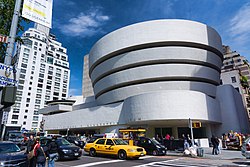
Frank Lloyd Wright (1867–1959) was an influential American architect known for pioneering the Prairie School style and organic architecture. Over a career spanning more than 70 years, he designed over 1,000 structures, including masterpieces like Fallingwater, Taliesin, and the Solomon R. Guggenheim Museum, profoundly shaping modern architecture. More Less
Jun 8, 1867
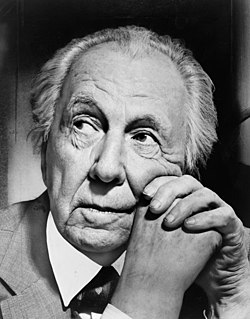
Frank Lincoln Wright, later Frank Lloyd Wright, was born in Richland Center, Wisconsin, to William Carey Wright, a preacher and musician, and Anna Lloyd Jones, a teacher. He would go on to become one of the most influential architects in American history.
Image source: Frank Lloyd Wright
1885
Wright's parents divorced in 1885 after years of marital tension. The event deeply affected the young Wright, who later changed his middle name from Lincoln to Lloyd in honor of his mother's family, the Lloyd Joneses.
1886 - 1887
Wright enrolled at the University of Wisconsin–Madison to study civil engineering but never completed his degree. He left after about a year to pursue practical experience in architecture.
1888
Wright was hired as a draftsman by the Chicago firm of Adler & Sullivan, where he worked under Louis Sullivan, whom he revered as his 'Lieber Meister' (dear master). He became head draftsman and gained invaluable experience during the city's rebuilding boom.
Image source: Dankmar Adler

1889 - 1898
Wright continuously remodeled his Oak Park home and added an adjoining studio in 1898, which served as the workplace for his early Prairie School designs. It is now a museum operated by the Frank Lloyd Wright Trust.
Image source: Frank Lloyd Wright Home and Studio

1893 - 1894
The William H. Winslow House in River Forest, Illinois, is considered Wright's first mature independent commission. Its low-pitched roof, horizontal emphasis, and restrained ornamentation anticipated his signature Prairie Style.
Image source: Winslow House (River Forest, Illinois)

1893
After being dismissed from Adler & Sullivan for taking private commissions on the side, Wright opened his own architectural practice in Chicago's Schiller Building, beginning one of the most prolific careers in architecture.
1901 - 1902
Built in Highland Park, Illinois, the Willits House is often regarded as the first fully expressed Prairie School house, featuring cruciform plan, low horizontal lines, and integration with its landscape.
Image source: Willits House

1903 - 1905
Located in Buffalo, New York, this sprawling Prairie-style complex is among Wright's finest early works, featuring intricate art glass windows and an integrated design that unified house, conservatory, and carriage house.
Image source: Darwin D. Martin House

1905 - 1908
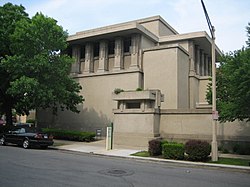
Unity Temple, a Unitarian church in Oak Park, Illinois, is celebrated as one of the first public buildings in America constructed of reinforced concrete and a landmark of modern architecture.
Image source: Unity Temple
This Frank Lloyd Wright timeline was generated with the help of AI, using information found on the internet.
We work hard to keep these timelines accurate, but mistakes do get through. If you spot one, email us at [email protected] and we'll fix it for future visitors.
Generate yours with AI or build it from scratch, for free.