-
Use Cases
-
Resources
-
Pricing
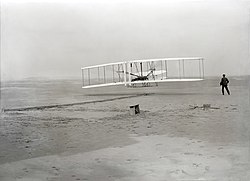
Orville and Wilbur Wright were American aviation pioneers who achieved the first sustained, controlled, powered airplane flight on December 17, 1903, near Kitty Hawk, North Carolina. Running a bicycle shop in Dayton, Ohio, they applied meticulous engineering and wind tunnel research to solve the problems of flight control, launching the age of aviation. More Less
Apr 16, 1867
% complete
Wilbur Wright was born on a farm near Millville, Indiana, the third of seven children of Milton Wright, a bishop in the Church of the United Brethren in Christ, and Susan Koerner Wright. Wilbur would grow up to become the elder of the two famous aviation brothers, known for his analytical mind and leadership.
Image source: Wright brothers
Aug 19, 1871
% complete
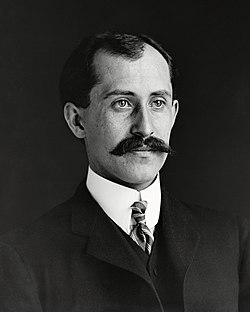
Orville Wright was born in Dayton, Ohio, four years after his brother Wilbur. Orville showed an early aptitude for mechanical tinkering and entrepreneurship, traits that would complement Wilbur's intellectual depth throughout their partnership.
Jun 1, 1884
% complete
The Wright family returned to their longtime home of Dayton, Ohio, after years of moves caused by Bishop Milton Wright's church duties. Dayton became the permanent base from which the brothers would launch their careers and their historic experiments in flight.
1885
% complete
Wilbur was struck in the face with a stick during an ice-skating game, losing several front teeth. Complications from the injury, combined with the recent death of his mother, led him to abandon plans for Yale and instead remain at home reading extensively, deepening his scientific interests.
Dec 1, 1892
% complete
The brothers opened a bicycle sales and repair shop in Dayton, later manufacturing bicycles under their own brands. The profits from this thriving business would eventually fund their aeronautical experiments, while the mechanical skills they honed proved invaluable to building aircraft.
Image source: Wright Cycle Company
Aug 9, 1896
% complete
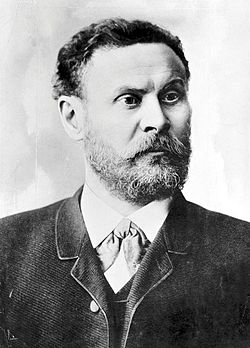
German glider pioneer Otto Lilienthal died in a crash during one of his flights. News of his death rekindled the Wright brothers' childhood fascination with flight and convinced them that controlled human flight might be achievable, prompting them to seriously study the problem.
Image source: Otto Lilienthal
May 30, 1899
% complete
Wilbur wrote to the Smithsonian Institution requesting publications on aerial navigation. The brothers began intensive study of the work of Lilienthal, Langley, Chanute, and others, concluding that control was the key unsolved problem of flight.
Jul 27, 1899
% complete
Wilbur devised the idea of twisting the wings of an aircraft to control roll, inspired by watching birds twist their wings. The brothers tested the concept with a five-foot biplane kite flown in Dayton, confirming that lateral control through wing warping worked.
Image source: Wing warping
Oct 6, 1900 - Oct 23, 1900
% complete
The Wrights traveled to Kitty Hawk, North Carolina, chosen for its steady winds and soft sand, to test a full-size glider based on published lift tables. They achieved some glides but found the lift less than expected, returning home eager to refine their design.
Image source: Wright Glider
Jul 27, 1901 - Aug 17, 1901
% complete
Flying a larger glider with more than double the wing area, the brothers made hundreds of glides near Kitty Hawk. Though it was the heaviest flying machine yet successfully handled, performance again disappointed, and Wilbur remarked that man would not fly for fifty years.
Sep 27, 1901
% complete
Back in Dayton, the brothers built a small wind tunnel to systematically test wing shapes and airfoil designs. Their experiments revealed errors in the accepted lift tables and produced data that allowed them to design wings with confidence for the first time.
Image source: Wind tunnel
Sep 19, 1902 - Nov 23, 1902
% complete
Using their corrected aerodynamic data, the brothers flew their new glider nearly a thousand times at Kill Devil Hills, achieving glides over 600 feet. With the addition of a movable rudder linked to the wing warping, they achieved full three-axis control — the key breakthrough enabling powered flight.
Mar 23, 1903
% complete
The Wrights filed a patent application for their system of aerodynamic control, which was granted in May 1906. The patent covered the three-axis control method rather than the airplane itself, becoming central to later legal battles over aviation patents.
Image source: Wright brothers patent war
Feb 12, 1903
% complete
When no manufacturer would provide a light enough engine with sufficient power, mechanic Charlie Taylor built a twelve-horsepower aluminum-block gasoline engine in just six weeks. It weighed around 180 pounds, making powered flight mechanically feasible.
Image source: Wright Flyer
Dec 17, 1903
% complete
At Kill Devil Hills, Orville piloted the Wright Flyer on its first sustained, controlled, powered flight, covering 120 feet in about 12 seconds. Three more flights followed that day, the longest covering 852 feet in 59 seconds with Wilbur at the controls, marking the birth of modern aviation.
May 23, 1904 - Dec 9, 1904
% complete
Unable to continue testing at windy, remote Kitty Hawk, the brothers flew the Flyer II from a cow pasture near Dayton called Huffman Prairie. After initial struggles with weak launches, they developed a catapult launching system and made over a hundred flights, including circles and figure eights.
Image source: Huffman Prairie
Jun 23, 1905
% complete
The redesigned Flyer III made its first flight at Huffman Prairie. After further refinements, it became capable of genuinely useful flight; by October 1905, the brothers could circle, bank, turn figure eights, and stay aloft for over half an hour, flying until fuel ran out.
Image source: Wright Flyer III
Oct 5, 1905
% complete
Wilbur flew the Flyer III for more than 39 minutes, covering roughly 24 miles over Huffman Prairie. Convinced they now had a truly practical airplane, the Wrights stopped flying publicly and began seeking buyers for their invention.
Jan 1, 1906 - Dec 31, 1907
% complete
For more than two years, the Wrights struggled to sell their invention, facing skepticism from the U.S. Army and fears of press coverage stealing their ideas. They finally secured a U.S. Army Signal Corps contract in February 1908 for a heavier-than-air flying machine.
Image source: Wright Company
Aug 8, 1908
% complete
After years of European skepticism, Wilbur demonstrated the Wright Flyer at Le Mans, France. His effortless banking turns and precision control electrified observers and instantly transformed the brothers into international celebrities, silencing doubters across Europe.
Sep 17, 1908
% complete
During an Army trial flight at Fort Myer, Virginia, a propeller split caused Orville to crash, killing passenger Lt. Thomas Selfridge — the first person killed in a powered airplane accident. Orville suffered serious injuries, and the trials were delayed until 1909.
Image source: Thomas Selfridge
Sep 17, 1908
% complete
Their sister Katharine rushed from her teaching post to Orville's bedside, nursing him and managing publicity during his recovery. A skilled communicator, she became an essential part of the Wright enterprise and accompanied her brothers on many public occasions thereafter.
Image source: Katharine Wright Haskell
Aug 2, 1909
% complete
Having completed the required trials at Fort Myer, including carrying a passenger at speeds exceeding 40 miles per hour, the Wrights delivered the first heavier-than-air military aircraft to the U.S. Army Signal Corps, receiving $30,000 and inaugurating American military aviation.
Image source: Wright Model A
Sep 1, 1909
% complete
Wilbur conducted demonstration flights in Germany and Italy attended by royalty and dignitaries, including Kaiser Wilhelm II's interest in the German trials. These flights cemented international contracts and established the Wrights' reputation worldwide.
Oct 4, 1909
% complete
Wilbur flew around the Statue of Liberty and along the Hudson River before millions of spectators in New York City. The spectacular flights brought the miracle of flight directly to urban America and drew enormous publicity for the brothers.
Image source: Hudson–Fulton Celebration
Nov 22, 1909
% complete
The brothers formed the Wright Company to manufacture airplanes commercially, with a factory in Dayton and a flying school at Huffman Prairie that trained pilots including early military aviators. The company produced dozens of aircraft before being sold in 1915.
1910
% complete
As aviation advanced rapidly, the Wrights found themselves increasingly embroiled in patent litigation against Glenn Curtiss and others, which consumed much of their energy. The lawsuits, which the courts largely upheld in 1914, are often blamed for slowing American aviation development.
May 30, 1912
% complete
Wilbur died of typhoid fever in Dayton at age 45. He never married and devoted his life entirely to aviation. His death deeply affected Orville, who carried on the business but gradually withdrew from active management of the Wright Company.
Oct 15, 1915
% complete
Orville sold his interest in the Wright Company and retired as an independent experimenter. In 1919 the firm merged to form Wright-Martin (later Curtiss-Wright), continuing the Wright name in American aerospace for decades to come.
Dec 17, 1948
% complete
Twelve years after Orville's death in 1948, the original 1903 Wright Flyer went on display at the Smithsonian following a long dispute over claims by Samuel Langley's supporters. Orville had insisted on proper credit, and the historic aircraft remains there today as the centerpiece of aviation history.
Or browse the full history timeline directory, with more than 2,000 topics.
This Wright Brothers timeline was generated with the help of AI, using information found on the internet.
We work hard to keep these timelines accurate, but mistakes do get through. If you spot one, email us at [email protected] and we'll fix it for future visitors.
Generate yours with AI or build it from scratch, for free.
Export your timeline, add your own events, edit or remove AI-generated events, and much more
No credit card required.
Cancel anytime.
Cancel anytime.
You can create an unlimited number of timelines with up to 10 events on each one, customize how they look, export them to PDF, PNG, PowerPoint, CSV, and Excel, and share them with a link. Paid plans raise the event limit and add features like spreadsheet imports and collaborators.
Yes. You can cancel your subscription from your account page at any time, and you will not be charged again. Your subscription stays active for the rest of the period you already paid for.
Yes. We will email you a reminder before the annual renewal, and we will also email you a receipt.
Yes. You can email us within 15 days of any payment, and we will issue you a full refund.
Check out our pricing docs or send us an email anytime: [email protected].