-
Use Cases
-
Resources
-
Pricing
The history of commercial airlines traces the development of passenger air travel from early experimental flights in the early 20th century to today's vast global industry. Key milestones include the first scheduled airline services, the rise of flag carriers, the introduction of jet aircraft, airline deregulation, and the growth of low-cost carriers that made flying accessible to millions worldwide. More Less
Nov 16, 1909
% complete
DELAG, founded in Frankfurt, Germany, became the world's first airline to carry paying passengers. Using Zeppelin airships, it offered scheduled flights between German cities, marking the birth of commercial air travel more than a decade before fixed-wing passenger airlines.
Image source: DELAG
Jan 1, 1914
% complete
The St. Petersburg–Tampa Airboat Line became the world's first scheduled fixed-wing passenger airline service, flying across Tampa Bay in a Benoist XIV flying boat. The 23-minute flight carried one passenger at a time and demonstrated the commercial potential of aviation.
Image source: St. Petersburg–Tampa Airboat Line
Oct 7, 1919
% complete
KLM was founded in the Netherlands, making it the oldest airline still operating under its original name. Its first flight took place in May 1920 from Amsterdam to London, establishing a legacy of continuous commercial aviation operations.
Image source: KLM

Nov 1, 1920
% complete
Aeromarine Airways launched scheduled flights between Key West and Havana, Cuba, becoming an early pioneer of international commercial service and demonstrating the feasibility of cross-border passenger routes.
Image source: Aeromarine West Indies Airways
Nov 16, 1920
% complete
Queensland and Northern Territory Aerial Services (Qantas) was founded in Winton, Australia. It grew into the country's flag carrier and is today the third-oldest airline still in operation, playing a pioneering role in long-haul aviation.
Image source: Qantas
Mar 31, 1924
% complete
Imperial Airways was formed through the merger of four British airlines to serve the British Empire with long-distance routes to Africa, India, and Asia. It was a forerunner of BOAC and modern British Airways.
Image source: Imperial Airways
Mar 14, 1927
% complete
Pan Am began as a mail carrier between Key West and Havana and grew into America's premier international airline. It pioneered transoceanic flying boats, jet travel, and computerized reservations systems over six decades of operation.
Image source: Pan Am
Jun 1, 1936
% complete
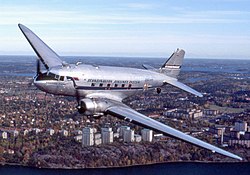
American Airlines introduced the Douglas DC-3, which made passenger air travel profitable without mail subsidies for the first time. Its reliability, range, and comfort transformed airlines worldwide and dominated air transport for decades.
Image source: Douglas DC-3
Jun 28, 1939
% complete
The Yankee Clipper, a Boeing 314 flying boat, carried passengers from New York to Southampton, England, inaugurating regular transatlantic passenger service and shrinking the world for wealthy travelers of the era.
Image source: Boeing 314 Clipper
May 2, 1952
% complete
BOAC's de Havilland Comet became the world's first commercial jet airliner, cutting travel times dramatically. Though later grounded after fatal structural failures caused by metal fatigue, it ushered in the Jet Age.
Image source: De Havilland Comet
Oct 26, 1958
% complete
Pan Am's Boeing 707 flew its first New York-to-Paris route, launching successful American jet travel. The 707 made intercontinental jet travel affordable and mass-market, cementing Boeing's dominance in commercial aviation.
Image source: Boeing 707
May 12, 1959
% complete
Sud Aviation's Caravelle entered service with Air France and SAS, proving jets could profitably serve shorter regional routes and inspiring the design of future narrow-body jetliners.
Image source: Sud Aviation Caravelle
Feb 1, 1964
% complete
Eastern Air Lines put the trijet Boeing 727 into service. Capable of operating from shorter runways, it became one of the best-selling airliners in history and opened jet service to hundreds of smaller airports.
Image source: Boeing 727
Jan 22, 1970
% complete
Pan Am flew the first Boeing 747 from New York to London, introducing wide-body 'jumbo jet' travel. With roughly double the capacity of previous aircraft, the 747 slashed per-seat costs and democratized long-haul flying.
Image source: Boeing 747
Jan 21, 1976
% complete
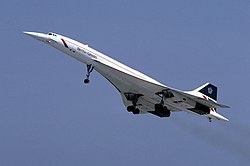
British Airways and Air France launched Concorde passenger service, flying at twice the speed of sound. Despite its engineering marvel status, high operating costs limited sales, and it served until retirement in 2003.
Image source: Concorde
Jun 18, 1971
% complete
Southwest Airlines began intrastate Texas service with a no-frills, point-to-point, low-fare model. After deregulation, its approach spread globally and reshaped airline economics, inspiring carriers like Ryanair and easyJet.
Image source: Southwest Airlines
Oct 24, 1978
% complete
President Jimmy Carter signed the Airline Deregulation Act, gradually removing federal control over fares, routes, and market entry. The act transformed the industry, spurring competition, lower fares, hub-and-spoke networks, and waves of new carriers.
Image source: Airline Deregulation Act
Apr 30, 1981
% complete
People Express Airlines began flying from Newark with radically low fares and minimal service, demonstrating post-deregulation competition. Its rapid rise and eventual absorption by Continental illustrated the volatility of the new market.
Image source: People Express Airlines (1980s)
Mar 22, 1988
% complete
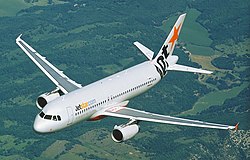
Air France received the first Airbus A320, the first commercial airliner with digital fly-by-wire controls. The A320 family became one of the best-selling aircraft lines ever, challenging Boeing's narrow-body dominance.
Image source: Airbus A320 family
May 1, 1990
% complete
Under Michael O'Leary, Ryanair rebranded itself after Southwest's model, slashing fares and fees. Following EU aviation liberalization, it expanded aggressively across Europe, making cheap air travel accessible to millions.
Image source: Ryanair
Jun 7, 1995
% complete
United Airlines introduced the Boeing 777, the largest twin-engine airliner at the time. Designed entirely on computers, it offered long-range efficiency that allowed direct transpacific flights and became a workhorse of global fleets.
Image source: Boeing 777
May 14, 1997
% complete
United Airlines, Lufthansa, Air Canada, SAS, and Thai Airways formed Star Alliance, the first multilateral airline alliance. Alliances enabled global networks, code-sharing, and shared loyalty programs, and were soon followed by Oneworld and SkyTeam.
Image source: Star Alliance
Sep 11, 2001
% complete
Hijacked airliners were used in terrorist attacks on the United States, killing thousands. The industry faced immediate grounding, plummeting demand, new security regimes like the TSA, bankruptcies, and years of restructuring.
Image source: September 11 attacks
Oct 24, 2003
% complete
British Airways and Air France retired Concorde after 27 years of supersonic service, ending commercial supersonic passenger flight. High costs, limited demand, and the 2000 Paris crash contributed to its demise.
Oct 25, 2007
% complete
Singapore Airlines flew the first commercial Airbus A380 from Singapore to Sydney. The double-deck superjumbo could carry over 500 passengers, though changing market preferences toward efficient twinjets led Airbus to end production in 2021.
Image source: Airbus A380
Oct 26, 2011
% complete
All Nippon Airways launched the composite-bodied Boeing 787, offering major fuel savings and enabling many new long-haul thin routes. Its carbon-fiber construction marked a materials revolution in airliner design.
Image source: Boeing 787 Dreamliner
Jan 15, 2015
% complete
Qatar Airways debuted the Airbus A350, a highly efficient composite wide-body rivaling the 787 and 777. It quickly became central to long-haul fleets seeking reduced fuel burn and emissions.
Image source: Airbus A350
Oct 29, 2018
% complete
A Boeing 737 MAX 8 crashed into the Java Sea, killing all 189 aboard. A second crash by Ethiopian Airlines in March 2019 led to a worldwide grounding of the 737 MAX, a crisis that cost Boeing billions and prompted regulatory reform.
Image source: Lion Air Flight 610
Mar 1, 2020
% complete
Global lockdowns and border closures cut passenger traffic by over 60%, the worst downturn in aviation history. Airlines sought bailouts, parked thousands of aircraft, accelerated retirements, and restructured amid massive losses.
Image source: Impact of the COVID-19 pandemic on commercial air transport
Dec 1, 2021
% complete
United Airlines flew a Boeing 737 MAX 8 from Chicago to Washington with passengers using 100% sustainable aviation fuel in one engine, a milestone in the industry's push toward decarbonization and net-zero emissions goals.
Image source: Aviation biofuel
Or browse the full history timeline directory, with more than 2,000 topics.
This History of Commercial Airlines timeline was generated with the help of AI, using information found on the internet.
We work hard to keep these timelines accurate, but mistakes do get through. If you spot one, email us at [email protected] and we'll fix it for future visitors.
Generate yours with AI or build it from scratch, for free.
Export your timeline, add your own events, edit or remove AI-generated events, and much more
No credit card required.
Cancel anytime.
Cancel anytime.
You can create an unlimited number of timelines with up to 10 events on each one, customize how they look, export them to PDF, PNG, PowerPoint, CSV, and Excel, and share them with a link. Paid plans raise the event limit and add features like spreadsheet imports and collaborators.
Yes. You can cancel your subscription from your account page at any time, and you will not be charged again. Your subscription stays active for the rest of the period you already paid for.
Yes. We will email you a reminder before the annual renewal, and we will also email you a receipt.
Yes. You can email us within 15 days of any payment, and we will issue you a full refund.
Check out our pricing docs or send us an email anytime: [email protected].