-
Use Cases
-
Resources
-
Pricing
The history of aviation traces humanity's journey from early dreams of flight through hot air balloons and gliders to powered airplanes, jets, and spacecraft. Beginning with the Wright Brothers' historic 1903 flight at Kitty Hawk, aviation rapidly evolved through two World Wars, the dawn of commercial air travel, the jet age, and supersonic flight, transforming global transportation, warfare, and exploration. More Less
Nov 21, 1783
% complete
Joseph-Michel and Jacques-Étienne Montgolfier launched the first manned free flight in a hot air balloon over Paris, carrying Pilâtre de Rozier and the Marquis d'Arlandes. This pioneering ascent demonstrated that humans could fly, marking the birth of aerial navigation.
Image source: Montgolfier brothers
1853
% complete
Sir George Cayley, often called the father of aerodynamics, built a glider that reportedly carried his coachman across a Yorkshire valley. His research into lift, drag, and stability laid the scientific foundations for powered flight.
Image source: George Cayley
1891 - Aug 10, 1896
% complete
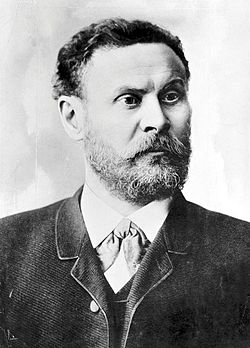
German engineer Otto Lilienthal made more than 2,000 successful glider flights, publishing influential data on wing shapes and lift. He died in a gliding accident in 1896, but his work directly inspired the Wright brothers.
Image source: Otto Lilienthal
Dec 17, 1903
% complete
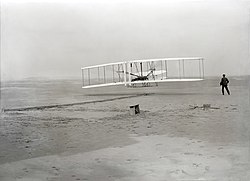
Orville Wright piloted the Wright Flyer for 12 seconds over 120 feet at Kitty Hawk, North Carolina, achieving the first sustained, controlled, powered heavier-than-air flight in history and launching the age of aviation.
Image source: Wright Flyer
Jan 23, 1909
% complete
Louis Blériot's monoplane first flew in early 1909 and later became famous as the aircraft he used to cross the English Channel, proving the practicality of monoplane designs and boosting European aviation.
Image source: Blériot XI
Jul 25, 1909
% complete
French aviator Louis Blériot flew his Type XI monoplane from Calais to Dover, becoming the first person to cross the English Channel by air. The 37-minute feat won a £1,000 prize and stunned the world.
Image source: Louis Blériot
Aug 1, 1911
% complete
Harriet Quimby earned her pilot's license from the Aero Club of America, becoming the first certified female pilot in the United States. In 1912 she also became the first woman to fly across the English Channel.
Image source: Harriet Quimby
Jan 1, 1914
% complete
The St. Petersburg–Tampa Airboat Line began operating the world's first scheduled passenger airline service using Benoist XIV flying boats, carrying passengers across Tampa Bay in about 20 minutes.
Image source: St. Petersburg–Tampa Airboat Line
Jul 28, 1914 - Nov 11, 1918
% complete
World War I transformed airplanes from fragile curiosities into essential weapons of war. Reconnaissance planes evolved into fighters and bombers, dogfights emerged, and legendary aces like Manfred von Richthofen rose to fame.
Image source: Aviation in World War I
Jul 10, 1940 - Oct 31, 1940
% complete
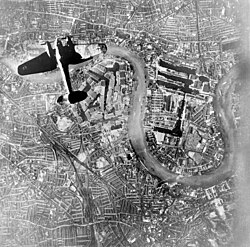
The Royal Air Force defeated the German Luftwaffe in the first major military campaign fought entirely by air forces, relying on Spitfires, Hurricanes, and radar to prevent a German invasion of Britain.
Image source: Battle of Britain
Jun 14, 1919 - Jun 15, 1919
% complete
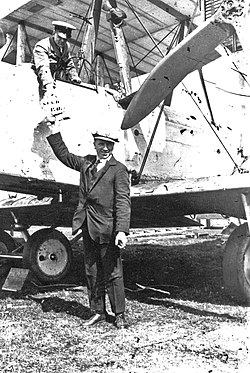
John Alcock and Arthur Brown flew a modified Vickers Vimy bomber nonstop from St. John's, Newfoundland to Clifden, Ireland, completing the first nonstop transatlantic flight and winning the Daily Mail prize.
Image source: Transatlantic flight of Alcock and Brown
Apr 6, 1924 - Sep 28, 1924
% complete
Two U.S. Army Air Service Douglas World Cruisers completed the first circumnavigation of the globe by air, covering roughly 26,000 miles in 175 days with numerous stops along the way.
Image source: First aerial circumnavigation
May 20, 1927 - May 21, 1927
% complete
Charles Lindbergh flew the Spirit of St. Louis solo nonstop from New York to Paris in 33.5 hours, winning the Orteig Prize and igniting worldwide enthusiasm for aviation.
Image source: Spirit of St. Louis
May 20, 1932 - May 21, 1932
% complete
Amelia Earhart became the first woman to fly solo nonstop across the Atlantic Ocean, flying from Newfoundland to Ireland in nearly 15 hours and earning the Distinguished Flying Cross.
Image source: Amelia Earhart
Jun 7, 1936
% complete
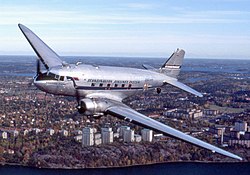
The Douglas DC-3 revolutionized air travel by making passenger service profitable without subsidies. Its reliability, range, and comfort made it one of the most significant transport aircraft ever built.
Image source: Douglas DC-3
May 6, 1937
% complete
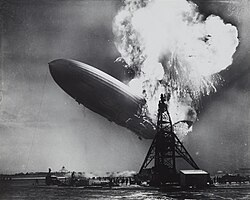
The German zeppelin Hindenburg caught fire while landing at Lakehurst, New Jersey, killing 36 people. The catastrophe, broadcast live on radio, effectively ended the age of passenger airships.
Image source: Hindenburg disaster
Aug 27, 1939
% complete
The Heinkel He 178 made its first flight in August 1939, demonstrating turbojet propulsion. By 1944 the Messerschmitt Me 262 became the first operational jet fighter, heralding the end of the propeller era.
Image source: Messerschmitt Me 262
Oct 14, 1947
% complete
Flying the Bell X-1 rocket plane Glamorous Glennis, Chuck Yeager became the first person to exceed the speed of sound in level flight, opening the era of supersonic flight.
Image source: Bell X-1
May 2, 1952
% complete
The British de Havilland Comet entered service with BOAC as the world's first commercial jet airliner, cutting travel times dramatically, though structural failures later grounded the fleet and reshaped safety engineering.
Image source: De Havilland Comet
Oct 26, 1958
% complete
Pan Am inaugurated Boeing 707 transatlantic jet service between New York and Paris, making intercontinental jet travel affordable for millions and cementing America's dominance in airliner manufacturing.
Image source: Boeing 707
Apr 12, 1961
% complete
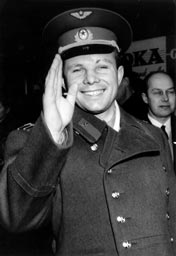
Soviet cosmonaut Yuri Gagarin orbited Earth aboard Vostok 1, becoming the first human in space. His 108-minute flight marked the ultimate extension of humanity's conquest of the skies.
Image source: Vostok 1
Jan 22, 1970
% complete
Pan Am launched the world's first wide-body jumbo jet on the New York–London route. The 747's massive capacity slashed fares and democratized long-haul international air travel.
Image source: Boeing 747
Jan 21, 1976 - Nov 26, 2003
% complete
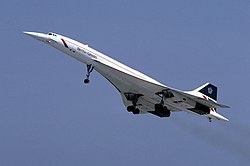
British Airways and Air France began Concorde services, flying passengers at twice the speed of sound. The Anglo-French jet crossed the Atlantic in under three hours until its retirement in 2003.
Image source: Concorde
Dec 14, 1986 - Dec 23, 1986
% complete
Dick Rutan and Jeana Yeager flew the Rutan Voyager nine days nonstop around the world without refueling, an endurance record demonstrating remarkable advances in lightweight composite aircraft design.
Image source: Rutan Voyager
Jun 7, 1995
% complete
United Airlines put the Boeing 777 into service, the first airliner designed entirely with computer-aided tools and the largest twin-engine jet of its time, setting new standards for efficiency and range.
Image source: Boeing 777
Oct 4, 2004
% complete
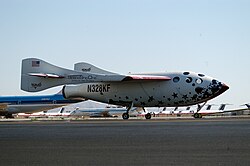
Burt Rutan's SpaceShipOne reached space twice within two weeks, winning the $10 million Ansari X Prize and proving private companies could build reusable crewed spacecraft, launching the commercial spaceflight industry.
Image source: SpaceShipOne
Oct 25, 2007
% complete
Singapore Airlines operated the first commercial Airbus A380 flight from Singapore to Sydney. The double-deck superjumbo became the largest passenger airliner ever built, though production ended in 2021.
Image source: Airbus A380
Oct 26, 2011
% complete
All Nippon Airways launched the first Boeing 787 Dreamliner commercial flight. With its composite airframe and advanced engines, the 787 cut fuel consumption by about 20 percent, redefining long-haul economics.
Image source: Boeing 787 Dreamliner
Jan 15, 2015
% complete
Qatar Airways inaugurated Airbus A350 XWB service, introducing a carbon-composite wide-body designed for exceptional fuel efficiency and passenger comfort, competing directly with the Boeing 787 and 777.
Image source: Airbus A350
Mar 9, 2015 - Jul 26, 2016
% complete
Bertrand Piccard and André Borschberg flew Solar Impulse 2 around the world using only solar power, completing a 16-month journey that demonstrated the potential of clean-energy aviation.
Image source: Solar Impulse
Or browse the full history timeline directory, with more than 2,000 topics.
This History of Aviation timeline was generated with the help of AI, using information found on the internet.
We work hard to keep these timelines accurate, but mistakes do get through. If you spot one, email us at [email protected] and we'll fix it for future visitors.
Generate yours with AI or build it from scratch, for free.
Export your timeline, add your own events, edit or remove AI-generated events, and much more
No credit card required.
Cancel anytime.
Cancel anytime.
You can create an unlimited number of timelines with up to 10 events on each one, customize how they look, export them to PDF, PNG, PowerPoint, CSV, and Excel, and share them with a link. Paid plans raise the event limit and add features like spreadsheet imports and collaborators.
Yes. You can cancel your subscription from your account page at any time, and you will not be charged again. Your subscription stays active for the rest of the period you already paid for.
Yes. We will email you a reminder before the annual renewal, and we will also email you a receipt.
Yes. You can email us within 15 days of any payment, and we will issue you a full refund.
Check out our pricing docs or send us an email anytime: [email protected].