-
Use Cases
-
Resources
-
Pricing
Oct 15, 1844
% complete
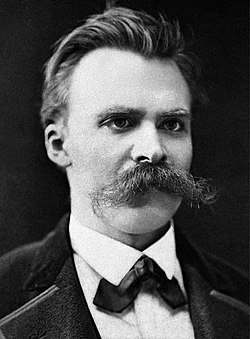
Friedrich Wilhelm Nietzsche was born on October 15, 1844, in the village of Röcken near Lützen in Prussia. He was named after King Friedrich Wilhelm IV of Prussia, who shared his birthday. His father, Carl Ludwig Nietzsche, was a Lutheran pastor.
Image source: Friedrich Nietzsche
Jul 30, 1849
% complete
Nietzsche's father died of a brain ailment when Friedrich was only four years old, an event that profoundly shaped his childhood. The family moved to Naumburg shortly afterward to live with his grandmother and aunts.
Image source: Carl Ludwig Nietzsche
Oct 1858 - Sep 1864
% complete
Nietzsche attended the renowned Pforta boarding school from 1858 to 1864, where he received a rigorous classical education. There he studied Greek, Latin, and literature, and wrote his first essays and poems, laying the foundation for his later philological work.
Image source: Pforta
Oct 1864
% complete
In October 1864, Nietzsche enrolled at the University of Bonn to study theology and classical philology. He soon abandoned theology and followed his mentor Friedrich Ritschl to the University of Leipzig.
Image source: University of Bonn
Nov 1865
% complete
While browsing in a Leipzig bookshop in November 1865, Nietzsche encountered Schopenhauer's 'The World as Will and Representation,' which deeply influenced his early philosophical thinking with its pessimism and emphasis on will.
Image source: Arthur Schopenhauer
Nov 8, 1868
% complete
Nietzsche met composer Richard Wagner in Leipzig in November 1868 through a mutual acquaintance. This began one of the most significant friendships of his life; he admired Wagner's music and cultural vision, though the relationship later collapsed dramatically.
Image source: Richard Wagner
Feb 13, 1869
% complete
At just 24 years old, without completing his doctorate, Nietzsche was appointed professor of classical philology at the University of Basel in February 1869, based on Ritschl's strong recommendation. He also renounced his Prussian citizenship and remained stateless for life.
Image source: University of Basel
Aug 1870 - Oct 1870
% complete
During the Franco-Prussian War, Nietzsche served briefly as a medical orderly, witnessing the horrors of war firsthand. He contracted dysentery and diphtheria during this period, which damaged his health permanently.
Image source: Franco-Prussian War
Jun 2, 1879
% complete
Plagued by severe migraines, eye problems, vomiting, and near-blindness, Nietzsche resigned his chair at Basel in June 1879 with a modest pension. He then began nearly a decade of wandering across Europe seeking a climate suitable for his health.
Jun 1881
% complete
Nietzsche first visited Sils-Maria in the Swiss Alps in summer 1881 and returned almost every year until 1888. The landscape inspired some of his most important ideas, including the concept of eternal recurrence, which he claimed came to him by the rock at Lake Silvaplana.
Image source: Sils im Engadin/Segl
1882
% complete
Disgusted by Wagner's Christianity, German nationalism, and antisemitism evident in 'Parsifal,' Nietzsche definitively broke with the composer. He later attacked Wagner viciously in 'The Case of Wagner' and 'Nietzsche contra Wagner.'
Image source: Parsifal
Apr 1882
% complete
In Rome in April 1882, Nietzsche met Lou Salomé through Paul Rée. He proposed marriage twice and was rejected both times. The trio planned a commune, but jealousy and misunderstandings ended the friendship painfully, inspiring parts of 'Thus Spoke Zarathustra.'
Image source: Lou Andreas-Salomé
Nov 26, 1887
% complete
Danish critic Georg Brandes wrote to Nietzsche after reading his works, beginning an important correspondence. Brandes later delivered the first lectures introducing Nietzsche's philosophy to Europe and coined the term 'aristocratic radicalism' to describe it.
Image source: Georg Brandes
1872
% complete
Nietzsche's first major book examined the origins of Greek tragedy through the tension between Apollonian order and Dionysian chaos. It championed Wagnerian art but was poorly received by classical scholars, damaging his academic reputation.
Image source: The Birth of Tragedy
1873 - 1876
% complete
Between 1873 and 1876, Nietzsche published four essays collectively known as 'Untimely Meditations,' critiquing contemporary German culture, David Strauss, and education, while honoring Schopenhauer and Wagner as exemplars.
Image source: Untimely Meditations
May 1878
% complete
'Human, All Too Human' marked Nietzsche's break from Romanticism and Wagner, adopting an aphoristic style and a more positivist, scientific outlook influenced by French moralists like Voltaire and La Rochefoucauld.
Image source: Human, All Too Human
1881
% complete
'Daybreak: Thoughts on the Prejudices of Morality' continued Nietzsche's critique of morality, beginning his sustained attack on Christian ethics and preparing the ground for his mature philosophy of revaluing values.
Image source: The Dawn of Day
Aug 1882
% complete
'The Gay Science' introduced key themes such as the death of God and eternal recurrence. Its famous aphorism 125, 'God is dead,' articulated Nietzsche's diagnosis of the collapse of traditional European values.
Image source: The Gay Science
Jan 1883 - Feb 1883
% complete
Nietzsche wrote the first part of 'Thus Spoke Zarathustra' in about ten days in Rapallo in early 1883. Parts II, III, and IV followed over subsequent years. The poetic masterpiece introduced the Übermensch and eternal recurrence through the prophet Zarathustra.
Image source: Thus Spoke Zarathustra
Apr 1885
% complete
The fourth part of 'Thus Spoke Zarathustra' was privately printed in 1885 in only forty copies, which Nietzsche distributed to close friends. It depicts Zarathustra confronting his 'higher men' and ultimately rejecting them.
Aug 1886
% complete
'Beyond Good and Evil: Prelude to a Philosophy of the Future' offered a penetrating critique of past philosophers' dogmatism, examined the will to power, and challenged conventional morality, selling only a little over a hundred copies initially.
Image source: Beyond Good and Evil
1887
% complete
In 1887, Nietzsche published a second expanded edition of 'The Gay Science,' adding a fifth book and appendix of poems that further developed themes of nihilism, the death of God, and amor fati.
Nov 1887
% complete
This three-essay work traced the origins of moral concepts like guilt and bad conscience, contrasting 'master morality' with 'slave morality' born of ressentiment. It is considered one of his most systematic and influential works.
Image source: On the Genealogy of Morality
Jan 1888 - Dec 1888
% complete
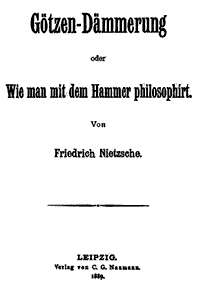
In his last active year, Nietzsche wrote prolifically despite declining health, producing 'Twilight of the Idols,' 'The Antichrist,' 'Ecce Homo,' 'Nietzsche contra Wagner,' and numerous notes intended for a magnum opus on the will to power.
Image source: Twilight of the Idols
Sep 1888
% complete
Written in Turin in 1888, this polemic dissected Wagner's decadence and cultural influence, marking the public settling of scores with his former idol and diagnosing modern art as a symptom of decline.
Image source: The Case of Wagner
Jan 3, 1889
% complete
In Turin on January 3, 1889, Nietzsche reportedly suffered a breakdown, allegedly throwing his arms around a beaten horse before collapsing. The exact cause remains debated—possibly a stroke, general paresis from syphilis, or another neurological condition. He never fully recovered his sanity.
Apr 1889 - Apr 1897
% complete
After brief stays in clinics in Jena and Basel, Nietzsche was cared for by his mother Franziska in Naumburg until her death in April 1897. During this time he experienced periods of lucidity but remained mentally incapacitated.
Image source: Friedrich Nietzsche
1894
% complete
Elisabeth founded the Nietzsche-Archiv, first in Naumburg and later in Weimar, becoming the gatekeeper of his manuscripts. Her selective editing shaped early reception of his philosophy, notably producing the misleading compilation 'The Will to Power.'
Image source: Nietzsche Archive
Apr 20, 1897
% complete
After their mother died in 1897, Nietzsche's sister Elisabeth Förster-Nietzsche moved him to Weimar, where she controlled his care and, controversially, edited and distorted his unpublished writings to fit nationalist and antisemitic agendas.
Image source: Elisabeth Förster-Nietzsche
Aug 25, 1900
% complete
Nietzsche died on August 25, 1900, in Weimar, likely of pneumonia complicated by a stroke. He was buried beside his parents in Röcken. His philosophy went on to profoundly influence existentialism, postmodernism, psychology, and 20th-century thought.
Or browse the full history timeline directory, with more than 2,000 topics.
This Friedrich Nietzsche timeline was generated with the help of AI, using information found on the internet.
We work hard to keep these timelines accurate, but mistakes do get through. If you spot one, email us at [email protected] and we'll fix it for future visitors.
Generate yours with AI or build it from scratch, for free.
Export your timeline, add your own events, edit or remove AI-generated events, and much more
No credit card required.
Cancel anytime.
Cancel anytime.
You can create an unlimited number of timelines with up to 10 events on each one, customize how they look, export them to PDF, PNG, PowerPoint, CSV, and Excel, and share them with a link. Paid plans raise the event limit and add features like spreadsheet imports and collaborators.
Yes. You can cancel your subscription from your account page at any time, and you will not be charged again. Your subscription stays active for the rest of the period you already paid for.
Yes. We will email you a reminder before the annual renewal, and we will also email you a receipt.
Yes. You can email us within 15 days of any payment, and we will issue you a full refund.
Check out our pricing docs or send us an email anytime: [email protected].