-
Use Cases
-
Resources
-
Pricing
Georgia O'Keeffe (1887–1986) was an influential American modernist artist known as the 'Mother of American Modernism.' Her career spanned over seven decades, during which she created iconic works featuring enlarged flowers, New York skyscrapers, and Southwestern landscapes. Her bold abstractions and unique artistic vision made her one of the most celebrated artists of the 20th century. More Less
Nov 15, 1887
% complete
Georgia Totto O'Keeffe was born on a dairy farm in Sun Prairie, Wisconsin, the second of seven children. Her rural upbringing in the American Midwest would deeply influence her artistic vision and her lifelong fascination with nature, flowers, and the landscape.
Image source: Georgia O'Keeffe
1905 - 1906
% complete
O'Keeffe enrolled at the Art Institute of Chicago in 1905, where she studied with John Vanderpoel and ranked at the top of her class. A bout of typhoid fever interrupted her studies, forcing her to return home to recover in 1906.
Image source: School of the Art Institute of Chicago
1907 - 1908
% complete
O'Keeffe studied at the Art Students League in New York City under William Merritt Chase, winning the League's William Merritt Chase still-life prize for her oil painting 'Dead Rabbit with Copper Pot.' She worked as a commercial illustrator afterward to support herself.
Image source: Art Students League of New York
1912
% complete
At the University of Virginia, O'Keeffe took a summer art course taught by Alon Bement of Columbia Teachers College, who introduced her to Arthur Wesley Dow's radical ideas about composition based on line, color, and mass, which transformed her approach to art.
Dec 11, 1924
% complete
After Stieglitz's divorce from his first wife was finalized, he and O'Keeffe married. The couple spent summers at the Stieglitz family estate at Lake George, New York, and winters in New York City, maintaining a complex but artistically fruitful relationship.
Image source: Alfred Stieglitz
1915
% complete
While teaching in Columbia, South Carolina, O'Keeffe produced a series of innovative abstract charcoal drawings based on personal feelings and sensations. These works represented a pioneering move toward pure abstraction in American art and became the foundation of her career.
1916 - 1918
% complete
O'Keeffe taught at West Texas State Normal College in Canyon, Texas, where the vast, flat landscape of the Panhandle inspired a series of powerful watercolors. Her Texas years marked the beginning of her lifelong engagement with the American Southwest.
Image source: West Texas A&M University
1918 - 1937
% complete
Stieglitz began photographing O'Keeffe in 1918, creating an extraordinary series of more than 300 portraits over two decades. The photographs documented her evolution as an artist and became among the most famous bodies of photographic portraiture in American art history.
Jun 1918
% complete
With financial support from Stieglitz, O'Keeffe left teaching and moved to New York City to devote herself entirely to painting. She lived and worked with Stieglitz, beginning one of the most consequential artistic partnerships in American modern art.
1924
% complete
O'Keeffe began creating her iconic magnified close-up paintings of flowers, such as 'Petunia No. 2.' By enlarging blossoms to monumental scale, she forced viewers to see the beauty and abstract qualities of forms often overlooked in everyday life.
1925 - 1929
% complete
Living on the 30th floor of the Shelton Hotel, O'Keeffe painted a striking series of cityscapes and skyscrapers, including 'Radiator Building — Night, New York.' These works offered a distinctive, often poetic view of the modern American city.
1929
% complete
O'Keeffe traveled to Taos, New Mexico, with friend Rebecca Strand, beginning a transformative connection with the Southwest. The stark landscapes, adobe architecture, and brilliant light of New Mexico inspired some of her most celebrated paintings, including images of churches, bones, and desert vistas.
1931
% complete
Inspired by the sun-bleached bones she found in the New Mexico desert, O'Keeffe painted this iconic work, presenting the skull against a background evoking the American flag. She described the bones as strangely more alive than the animals that once wore them.
Image source: Cow's Skull: Red, White, and Blue
1934
% complete
O'Keeffe bought a house at Ghost Ranch, north of Abiquiu, New Mexico. The dramatic red and yellow cliffs and desert terrain surrounding Ghost Ranch became the primary subject of her paintings for decades and her principal summer home.
Image source: Ghost Ranch
1939
% complete
Commissioned by the Dole advertising agency, O'Keeffe spent months in Hawaii, where she painted lush images of tropical flowers, waterfalls, and coastlines. The resulting paintings, including 'Hibiscus with Plumeria,' added a vivid new chapter to her body of work.
1945
% complete
O'Keeffe purchased a dilapidated adobe house in Abiquiu, New Mexico, which she renovated with the help of friend Maria Chabot. The home became her winter residence and studio, complementing Ghost Ranch as the center of her life in the Southwest.
1949
% complete
After settling Stieglitz's estate, O'Keeffe made New Mexico her permanent home, dividing her time between Ghost Ranch and Abiquiu. The desert landscape became the wellspring of her late work, including her celebrated paintings of the Pedernal mountain.
1959 - 1965
% complete
In her later years, O'Keeffe journeyed around the world, visiting Peru, Japan, India, and other destinations. Aerial views of clouds and rivers from these flights inspired her ambitious late series of cloud paintings, including the monumental 'Sky Above Clouds IV.'
1965
% complete
O'Keeffe created 'Sky Above Clouds IV,' an enormous canvas over eight feet tall and twenty-four feet wide depicting clouds seen from an airplane. It became the largest painting of her career and is now in the collection of the Art Institute of Chicago.
Image source: Sky Above Clouds
1916
% complete
O'Keeffe's friend Anita Pollitzer brought her abstract charcoals to photographer and gallery owner Alfred Stieglitz at his 291 gallery in New York. Stieglitz was deeply impressed and exhibited the drawings without O'Keeffe's knowledge, beginning their famous artistic and personal partnership.
Image source: Anita Pollitzer
Apr 1917
% complete
Alfred Stieglitz gave O'Keeffe her first solo exhibition at his 291 gallery in New York City, showcasing her abstract drawings. This show established her as a significant new voice in American modernism and cemented her relationship with Stieglitz.
Image source: 291 (art gallery)
1927
% complete
The Brooklyn Museum mounted a retrospective exhibition of O'Keeffe's work, an unusual honor for a living female artist at the time. The show affirmed her growing stature as a leading figure in American modernism.
Image source: Brooklyn Museum
1929
% complete
O'Keeffe was among the artists included in the inaugural exhibitions of the newly founded Museum of Modern Art in New York, underscoring her central place in the canon of American modern art alongside contemporaries like Edward Hopper and Charles Demuth.
1946
% complete
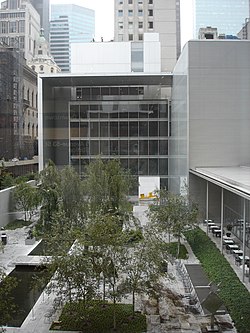
The Museum of Modern Art organized the first retrospective exhibition of O'Keeffe's work in New York, a landmark recognition of her decades of achievement and the first retrospective MOMA devoted to a woman artist.
Image source: Museum of Modern Art
1970
% complete
The Whitney Museum's major O'Keeffe retrospective reintroduced her work to a new generation and sparked a revival of interest in her art. The exhibition toured widely and solidified her reputation as a foundational figure of American modernism.
Image source: Whitney Museum
1977
% complete
President Gerald Ford awarded O'Keeffe the Presidential Medal of Freedom, the highest civilian honor in the United States, recognizing her extraordinary contributions to American art and culture.
Image source: Presidential Medal of Freedom
1933
% complete
After periods of intense work and personal strain, O'Keeffe suffered a nervous breakdown and was hospitalized for two months. Following her recovery, she resumed painting with renewed focus and soon produced some of her most famous works.
Jul 13, 1946
% complete
Alfred Stieglitz died of a stroke, ending O'Keeffe's thirty-year partnership with him. She spent the following years managing his estate, cataloguing his photographs, and organizing the distribution of his collections to museums before permanently settling in New Mexico.
1972
% complete
O'Keeffe began losing her central vision due to macular degeneration, but she continued to create art with assistance, producing watercolors, charcoal drawings, and a late series of clay pots. Her determination to keep working became an inspiration to many.
1976
% complete
O'Keeffe published a best-selling autobiography, a lavishly illustrated volume combining her paintings, photographs, and reflections on her life and art. The book introduced her story to a broad public and became a classic of artist memoirs.
Mar 6, 1986
% complete
Georgia O'Keeffe died in Santa Fe, New Mexico, at the age of 98. She was cremated and her ashes were scattered on the Pedernal, the mountain she painted throughout her life, which she called her own private mountain.
Jul 17, 1997
% complete
The Georgia O'Keeffe Museum opened in Santa Fe, New Mexico, becoming the first museum in the United States dedicated to a female artist. It houses the largest collection of O'Keeffe's work and continues to preserve and study her legacy.
Image source: Georgia O'Keeffe Museum
Or browse the full history timeline directory, with more than 2,000 topics.
This Georgia O'Keeffe timeline was generated with the help of AI, using information found on the internet.
We work hard to keep these timelines accurate, but mistakes do get through. If you spot one, email us at [email protected] and we'll fix it for future visitors.
Generate yours with AI or build it from scratch, for free.
Export your timeline, add your own events, edit or remove AI-generated events, and much more
No credit card required.
Cancel anytime.
Cancel anytime.
You can create an unlimited number of timelines with up to 10 events on each one, customize how they look, export them to PDF, PNG, PowerPoint, CSV, and Excel, and share them with a link. Paid plans raise the event limit and add features like spreadsheet imports and collaborators.
Yes. You can cancel your subscription from your account page at any time, and you will not be charged again. Your subscription stays active for the rest of the period you already paid for.
Yes. We will email you a reminder before the annual renewal, and we will also email you a receipt.
Yes. You can email us within 15 days of any payment, and we will issue you a full refund.
Check out our pricing docs or send us an email anytime: [email protected].