-
Use Cases
-
Resources
-
Pricing
Andy Warhol (1928–1987) was an American artist and leading figure of the Pop Art movement. Known for works like Campbell's Soup Cans and Marilyn Diptych, he blurred the boundaries between commercial and fine art through silkscreen printing, celebrity imagery, and mass production techniques at his studio, The Factory. More Less
Aug 6, 1928
% complete
Andy Warhol was born Andrew Warhola in Pittsburgh, Pennsylvania, to Slovak immigrant parents. He grew up in a working-class family and showed an early interest in art and drawing.
Image source: Andy Warhol
1936
% complete
As a child, Warhol suffered from Sydenham's chorea (St. Vitus' Dance), a complication of rheumatic fever, which kept him bedridden for long periods. During this time, he developed his fascination with celebrities and practiced drawing, listening to radio and collecting pictures of movie stars.
1949
% complete
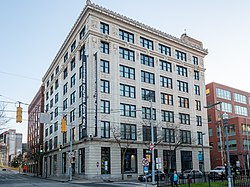
Warhol graduated from the Carnegie Institute of Technology (now Carnegie Mellon University) with a degree in pictorial design. His education there laid the foundation for his career in commercial art.
Image source: Carnegie Mellon University
1949
% complete
After graduating, Warhol moved to New York City and quickly found success as a commercial illustrator, working for magazines like Glamour, Vogue, and Harper's Bazaar. He became one of the most in-demand commercial artists of the 1950s.
1952
% complete
Warhol received recognition for his commercial work, including awards from the Art Directors Club. His distinctive blotted-line technique made his illustrations instantly recognizable and highly sought after.
1952
% complete
Warhol held his first solo exhibition at the Hugo Gallery in New York, showing drawings based on the writings of Truman Capote. The exhibition marked his transition from commercial to fine art.
1954
% complete
Warhol self-published this artist's book featuring whimsical illustrations of cats. It became one of several handmade books he produced in the 1950s that showcased his playful commercial style.
Image source: 25 Cats Name Sam and One Blue Pussy
1962
% complete
Following Marilyn Monroe's death in August 1962, Warhol created the Marilyn Diptych, silkscreening her image fifty times. The work became one of the most iconic artworks of the twentieth century and exemplified his exploration of celebrity and mortality.
Image source: Marilyn Diptych
Jul 9, 1962 - Aug 4, 1962
% complete
Warhol's first solo exhibition of Pop Art paintings, featuring 32 canvases of Campbell's Soup cans, opened at the Ferus Gallery in Los Angeles. The show was a landmark event that helped launch the Pop Art movement in America.
Image source: Campbell's Soup Cans
Nov 6, 1962
% complete
Warhol's first solo exhibition in New York at the Stable Gallery included the Campbell's Soup Cans and his Marilyn Diptych, cementing his reputation as a leading figure in Pop Art.
1963
% complete
Warhol began producing experimental films such as 'Blow Job' and 'Eat', and later 'Empire' and 'Chelsea Girls'. His films pushed the boundaries of duration, narrative, and subject matter in cinema.
Image source: Andy Warhol filmography
Jul 25, 1964
% complete
Warhol filmed the Empire State Building from dusk to dawn in a single static shot lasting over eight hours. The film became a landmark of structural film and minimalist cinema.
Image source: Empire (1965 film)
1972
% complete
Following President Nixon's visit to China, Warhol created a series of silkscreened portraits of Chairman Mao Zedong. The series continued his exploration of political iconography and mass media imagery.
Image source: Mao (Warhol)
1977 - 1979
% complete
In the late 1970s, Warhol produced abstract series including the Oxidation paintings, made with urine on copper pigment, and the large-scale Shadows series. These works showed a more abstract and experimental side of his practice.
1978
% complete
Warhol revisited his earlier iconic images in the Retrospective and Reversal series, repainting works like the Mona Lisa and his own Flowers in negative and altered forms, reflecting on his own artistic legacy.
1983
% complete
Warhol produced the Endangered Species series, highlighting animals like the Siberian tiger and panda, and the Myths series, featuring characters such as Mickey Mouse and Superman. These portfolios blended social commentary with pop imagery.
1984 - 1985
% complete
Warhol collaborated with young neo-expressionist artist Jean-Michel Basquiat on a series of joint paintings, combining Warhol's silkscreen techniques with Basquiat's energetic graffiti-inspired style. The collaboration bridged two generations of New York art.
Image source: Jean-Michel Basquiat
1963
% complete
Warhol opened his famous studio, The Factory, on East 47th Street in Manhattan. The silver-painted space became a hub for artists, musicians, celebrities, and bohemians, and a site of prolific art production.
Image source: The Factory
1965
% complete
Warhol met heiress and socialite Edie Sedgwick, who became his muse and a superstar of his films such as 'Poor Little Rich Girl' and 'Beauty #2'. Their collaboration defined the Factory scene of the mid-1960s.
Image source: Edie Sedgwick
1965 - 1967
% complete
Warhol became the manager of the rock band The Velvet Underground, featuring them in his multimedia project the Exploding Plastic Inevitable. He designed the iconic banana cover for their 1967 debut album.
Image source: The Velvet Underground
1966 - 1967
% complete
Warhol's Exploding Plastic Inevitable combined live performances by The Velvet Underground with films, projections, and light shows. The traveling multimedia spectacle was a pioneering fusion of rock music and visual art.
Image source: Exploding Plastic Inevitable
Jun 3, 1968
% complete
Radical feminist writer Valerie Solanas shot Warhol at The Factory, seriously wounding him. He underwent hours of emergency surgery and survived, but the attack profoundly changed his life and work.
Image source: Valerie Solanas
1969
% complete
Warhol co-founded Interview, a magazine dedicated to celebrity culture, fashion, and candid conversations. It became an influential publication chronicling the worlds of art, film, and nightlife.
Image source: Interview (magazine)
1977 - 1980
% complete
Warhol became a fixture at the famous New York nightclub Studio 54, documenting its celebrities, fashion, and decadent nightlife. His presence there embodied his role as a chronicler of celebrity culture.
Image source: Studio 54
1970 - 1987
% complete
Throughout the 1970s and 1980s, Warhol created commissioned portraits of celebrities and wealthy patrons, including Liza Minnelli, Michael Jackson, and Diana Ross. These works made him a fixture of high society.
1975
% complete
Warhol published 'The Philosophy of Andy Warhol (From A to B and Back Again)', a book of reflections on art, celebrity, business, and life. It became a bestseller and offered insight into his worldview and aphorisms.
Image source: The Philosophy of Andy Warhol
1976 - 1987
% complete
Warhol began dictating a daily diary to his assistant Pat Hackett, chronicling his social life, business dealings, and observations. The diaries were published posthumously in 1989 and became a bestseller.
Image source: The Andy Warhol Diaries
1986 - 1987
% complete
In his final years, Warhol produced a major series based on Leonardo da Vinci's The Last Supper, combining religious imagery with commercial logos. The series was exhibited in Milan in 1987, just before his death.
Feb 22, 1987
% complete
Warhol died at age 58 in New York City from cardiac arrhythmia following routine gallbladder surgery. His death marked the end of an era in American art and celebrity culture.
Apr 1, 1987
% complete
A memorial mass for Warhol was held at St. Patrick's Cathedral in New York, drawing more than 2,000 mourners including artists, celebrities, and friends from every corner of his world. John Richardson delivered a eulogy celebrating his artistic legacy.
May 13, 1994
% complete
The Andy Warhol Museum opened in his hometown of Pittsburgh, becoming the largest museum in North America dedicated to a single artist. It houses thousands of his artworks, films, and archives, preserving his enduring legacy.
Image source: The Andy Warhol Museum
May 9, 2022
% complete
Warhol's 'Shot Sage Blue Marilyn' sold at auction for $195 million, becoming the most expensive work of twentieth-century art ever sold at auction. The sale underscored Warhol's lasting dominance of the art market and his cultural significance.
Image source: Shot Marilyns
Or browse the full history timeline directory, with more than 2,000 topics.
This Andy Warhol timeline was generated with the help of AI, using information found on the internet.
We work hard to keep these timelines accurate, but mistakes do get through. If you spot one, email us at [email protected] and we'll fix it for future visitors.
Generate yours with AI or build it from scratch, for free.
Export your timeline, add your own events, edit or remove AI-generated events, and much more
No credit card required.
Cancel anytime.
Cancel anytime.
You can create an unlimited number of timelines with up to 10 events on each one, customize how they look, export them to PDF, PNG, PowerPoint, CSV, and Excel, and share them with a link. Paid plans raise the event limit and add features like spreadsheet imports and collaborators.
Yes. You can cancel your subscription from your account page at any time, and you will not be charged again. Your subscription stays active for the rest of the period you already paid for.
Yes. We will email you a reminder before the annual renewal, and we will also email you a receipt.
Yes. You can email us within 15 days of any payment, and we will issue you a full refund.
Check out our pricing docs or send us an email anytime: [email protected].